




In late October, AdInMo rolled out a new SaaS model featuring Agentic AI and hybrid monetization tools for mobile developers, delivering a 15–25% uplift in player lifetime value across intrinsic in-app purchases and ad revenue.
Positioning itself as the first and only intrinsic in-game technology to unify the delivery of in-app purchases (IAP) and in-app advertising (IAA) via AI-powered optimization, AdInMo is aiming to make monetization a seamless part of the gameplay experience rather than a disruption.
Following this update, we spoke with AdInMo CEO & Founder Kristan Rivers to dive deeper into how the product works and what it means for mobile studios.
What inspired you to bring in-app purchases (IAP) and in-app advertising (IAA) together through AI-powered optimization?
Mobile gaming is the world’s largest untapped attention economy — over 500 billion minutes of play time every single day. Yet historically, the ecosystem treated IAP and IAA as completely separate disciplines, often managed by different teams with competing priorities. At the very extreme was the hypercasual trend, where IAA completely dominated the monetization mix.
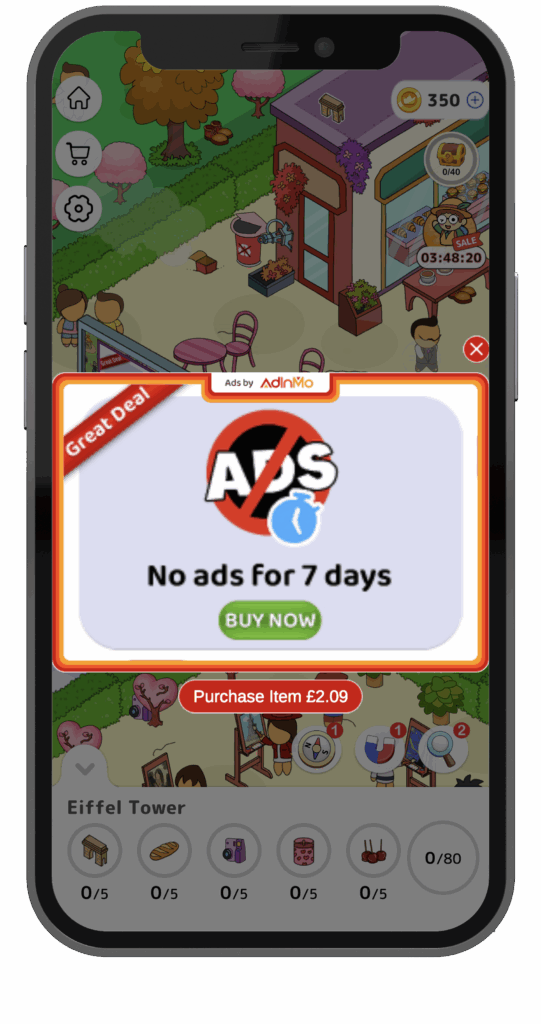
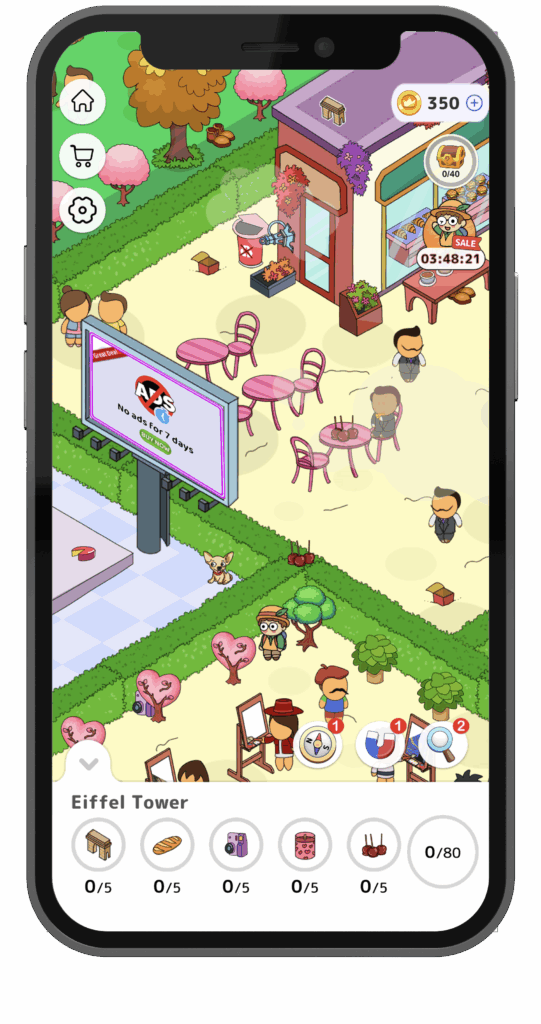
The “aha” moment came from conversations with our game publisher partners. “Remove forced ads” is consistently one of the top-selling IAPs in games we work with. Players are literally paying to escape interruptive monetization. That told us everything: there’s a massive opportunity for monetization that works with the game experience, not against it.
Hybrid monetization is solved when viewed through a unified lens of AI and game experience. Accurately predicting what each player wants, when they want it, and then delivering the offer and allowing it to be purchased and fulfilled while playing the game – not when you start or end a level or other interstitial moments – was the missing piece. Nobody was doing this because nobody had both the data and the placement. We do.
Can you walk us through the development journey of AiQ as a feature for AdInMo’s platform? What were the biggest challenges or unexpected discoveries your team encountered along the way?
AiQ started as a hypothesis: given the in-game interactions with our placements that AdInMo already tracked (our PlayerPersonaFramework), if we know how someone plays, we could predict what they’ll respond to. We spent years building the foundational data layer, the billions of real player sessions across every genre of game.
The biggest challenge? Resisting the temptation to use simulated training data like so many startups resort to. The ability to train on authentic, consented player journeys was a benefit of our several years of working with developers with our intrinsic in-game SDK, and is the only way to build something that actually works in production, globally.
The unexpected benefit was retention. We originally focused purely on optimizing monetization metrics without damaging retention, but consistently saw retention improve after AdInMo integrations.
AiQ’s predictive capabilities enhance AdInMo player interactions by showing the right offer to the right player at the right time, instead of force-feeding irrelevant ads. Turns out, when you stop annoying players, they stick around longer. Who would have guessed that? 😊
NOXGAMES’ Game Producer David Vykopal mentioned that their player lifetime value increased by more than 25%. Can you share additional insights or data on how different genres or game types have benefited under this new model?
David’s results are quite representative of what we’re seeing across the board: 15% to 25% LTV increases in our beta tests across 10 games between July and October 2025.
What’s interesting is the consistency across genres. Nimblebit’s Tiny Tower, a completely different game type from NOXGAMES’ games, saw 20% player-to-payer conversion increases and an improvement of 4% on D7 retention.
The common thread isn’t genre; it’s player lifecycle timing and gameplay context. IAPBoost displays offers at the moment players actually need them: when they need a health boost, when they’re stuck on a level. That’s genre-agnostic. And because it’s intrinsic, players love it.
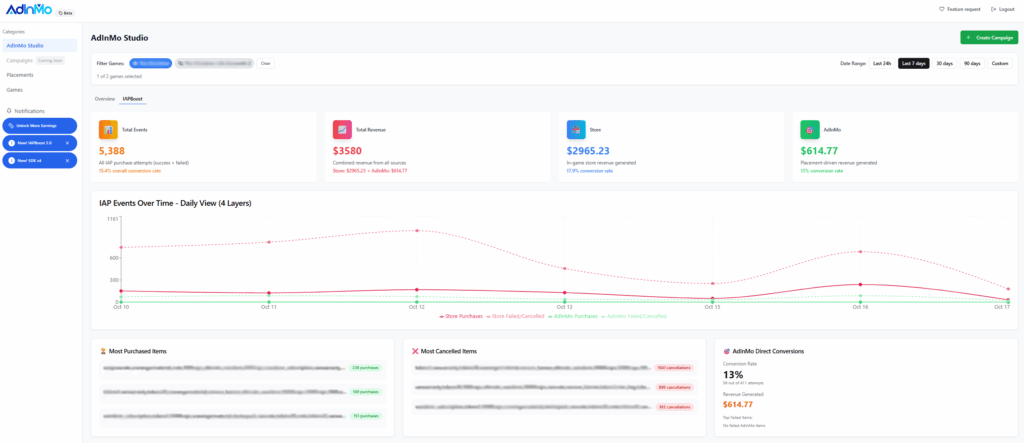
AiQ analyzes billions of player sessions to inform its predictions. What kinds of behavioral or contextual signals does it focus on when optimizing monetization in real time?
The unlock that allows AiQ to work is player agency: the game play signals that show what players actually do, not just what they were forced to see. Where they linger. When they quit or end a level. What they engage with, and what they ignore.
The proprietary magic is taking those signals and turning them into understanding. We’re not relying on device IDs or external tracking. AdInMo is all about contextual gameplay behavior, delivered with complete privacy.
AiQ combines these signals with what we’ve learned from hundreds of millions of unique players and their interactions across every genre. It predicts the most relevant monetization activation for each player at each moment — whether that’s an IAP offer, a cross-promo, or a brand ad — and integrates it without interrupting gameplay.
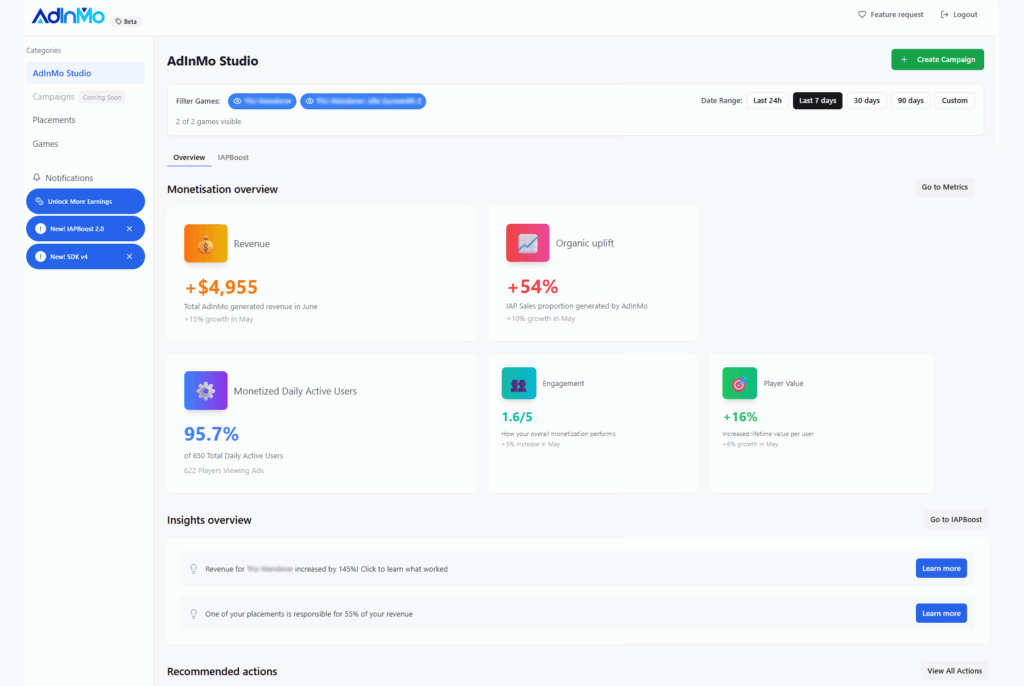
From your perspective, which regions or studio profiles are most likely to adopt this hybrid monetization approach first, and what makes them more receptive to it?
Studios in transition are the fastest adopters. Companies moving from hypercasual to hybrid casual, like NOXGAMES, get it immediately because they’re already rethinking their monetization stack.
Regionally, we’re seeing strong traction in Central and Eastern Europe, Southeast Asia, and MENA. These markets have sophisticated mobile-first developers who are less locked into legacy approaches and are often more willing to experiment.
The studio profile that adopts fastest? Any team that’s tired of the false tradeoff between monetization and retention. Once developers see that happy players and monetized players aren’t mutually exclusive, AdInMo becomes obvious.
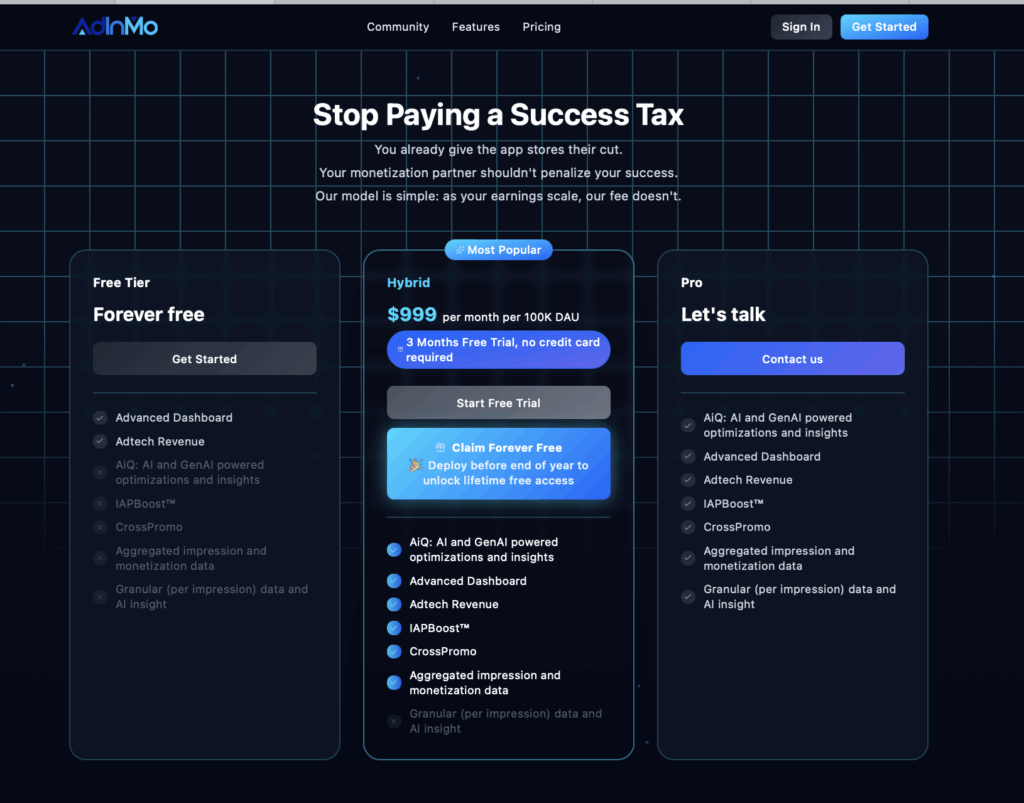
Finally, what’s next for AdInMo? Do you see this as the foundation for a broader ecosystem of AI-driven monetization tools for game developers?
Absolutely. AdInMo is the platform, not merely the product.
Think about what modern game studios already use AI for: procedural content, matchmaking, NPC behavior, and rapid prototyping. We’re applying that same intelligence to the complete monetization picture, using real player data at a scale nobody else has.
Near-term, we’re expanding into retail media integration: imagine seamless in-game shopping experiences that fit naturally into gameplay.
Long-term, every monetization decision in free-to-play gaming will be AI-optimized and personalized. AdInMo is building that future.

CEO & Founder at AdInMo
