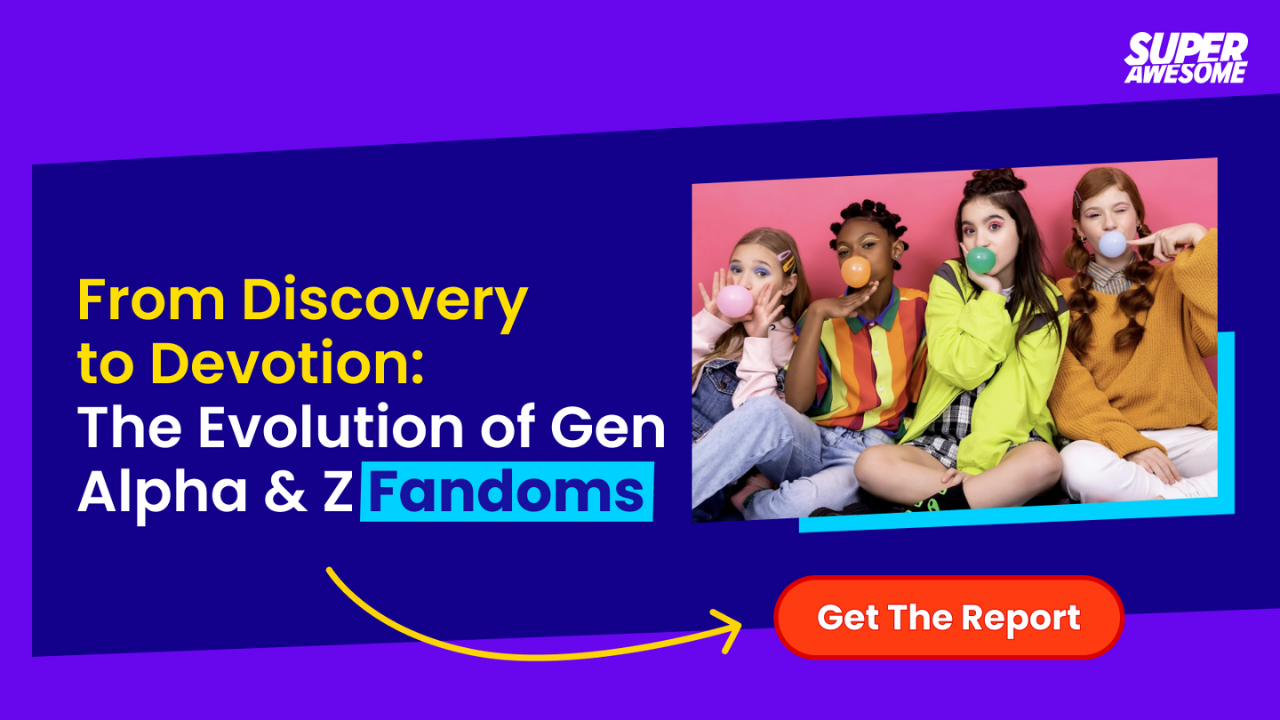

SuperAwesome, a data, technology, and services company for safely engaging Gen Alpha and Gen Z, has released new research based on nearly 2,000 kids and teens aged 4–18 across the US and UK. Titled ‘From Discovery to Devotion: The Evolution of Gen Alpha & Z Fandoms’, it reveals how brands that tap into fandom dynamics to enter youth culture can sustain relevance and drive impact.
The importance of fandoms in young people’s lives is now well established. SuperAwesome’s research found that almost 90% of 4–18-year-olds are connected to a fandom. 56% engage daily, and 80% have spent money on fandoms in the past three months, with nearly 30% spending over $100 / £100.
The number one job for any fandom today is to generate conversation. The research reveals that continuous talkability is critical for brands and IPs to have success in the modern fandom lifecycle: brands must build or become interwoven with rich lore and backstories that fans can contribute to, debate, and remix.
Lore, Community, and Creators: The Engines of Talkability
However, brands do not need to own a franchise or IP to benefit from fandom dynamics. By understanding where a fandom sits within its lifecycle, brands can strategically enter existing fandoms, aligning with moments of peak talkability to drive relevance, engagement, and sales through paid media, creator partnerships, and platform-native content. In particular, creators now play a pivotal role in sustaining the conversation.
42% of US under-18s and 48% of UK under-18s say creators help them stay engaged with fandoms, highlighting creators’ roles as co-authors of fandom culture, not just media distribution channels. Through reactions, explainers, memes, livestreams, and commentary, creators help surface hidden lore, extend jokes, and maintain emotional investment between major content moments.
The most successful fandoms increasingly take on a life of their own, with creator-led communities contributing to and passionately defending the canon. As Gen Alpha and Gen Z immerse themselves in the creator economy, fandom engagement is no longer driven solely by official releases, but by a constant stream of creator-driven participation.
For brand marketers, creators also act as cultural translators, providing a credible, brand-safe way to enter fandoms already in motion. Rather than interrupting fan spaces, creator-led activations allow brands to participate in conversations fans are already having, accelerating awareness and impact without requiring long-term fandom ownership.
From Discovery to Devotion: Where Fandoms Take Shape
In the experimentation and trial phase of fandom development, YouTube emerges as the primary discovery and sampling environment, cited by over one-third of kids and teens as the platform where they first engaged with their top fandom. Roblox, Netflix, Disney+, and TikTok round out the top five platforms for discovery.
After engaging with creator content, the fandom cycle accelerates. Half of US kids and teens (50%) and 41% in the UK go on to consume more fandom content, while many talk about it with friends (US 46% / UK 34%), deepen their engagement with creators (US 41% / UK 30%), or purchase merchandise (US 20% / UK 19%).
Crucially, this lifecycle insight applies just as strongly to brands activating within established fandoms as it does to those building their own. Whether aligning with a major entertainment release, a gaming community, or a creator-led beauty or fashion fandom, brands can use lifecycle signals to identify when and where to show up, maximising impact during moments of cultural momentum rather than relying on sustained long-term loyalty.
Sam Clough, Global Head of Youth Trends and Insights at SuperAwesome, said:
“Fandoms have changed radically from the posters-on-the-wall era. Today, they’re sustained through talkability -conversation, sharing, memes, creator commentary, and community participation. Creators are central to this shift, acting as co-storytellers who keep fandoms culturally alive. To stay relevant, brands must design for this reality and engage fans wherever they are in their journey.”
Sam Clough, Global Head of Youth Trends and Insights at SuperAwesome

Though Fandom churn is now a defining feature of youth culture – with the most significant drop-off in the UK occurring between ages 4–9, while in the US churn rises again during the early teen years – exits from a fandom needn’t be permanent. The research reveals that kids and teens who leave a fandom often return, with triggers including new content or crossovers, or simple nostalgia.
Creators play an important role in sustaining relevance during these periods, extending fandoms by keeping them culturally alive through new interpretations, formats, and community engagement until the next major moment of reactivation.
For brands and IP owners alike, the implications are clear. Continuous talkability, powered by creators, communities, and platform-native content, now fuels the modern fandom lifecycle. Winning strategies recognize fandom engagement as fluid and design activation accordingly.
Download the Full Reports at the Links Below: