
As artificial intelligence continues to reshape game development and competition on Steam intensifies, independent developers and publishers are facing new challenges in bringing their games to market.
Following Rogue Duck Interactive’s success at the Mobidictum Conference 2026 Indie Awards, we sat down with the company’s founder, Dora Özsoy, to discuss Rogue Duck’s plans for 2027, the impact of AI on game development and marketing, the changing dynamics of Steam discoverability, and the future of independent game publishing.
Rogue Duck is changing its game development model in 2027
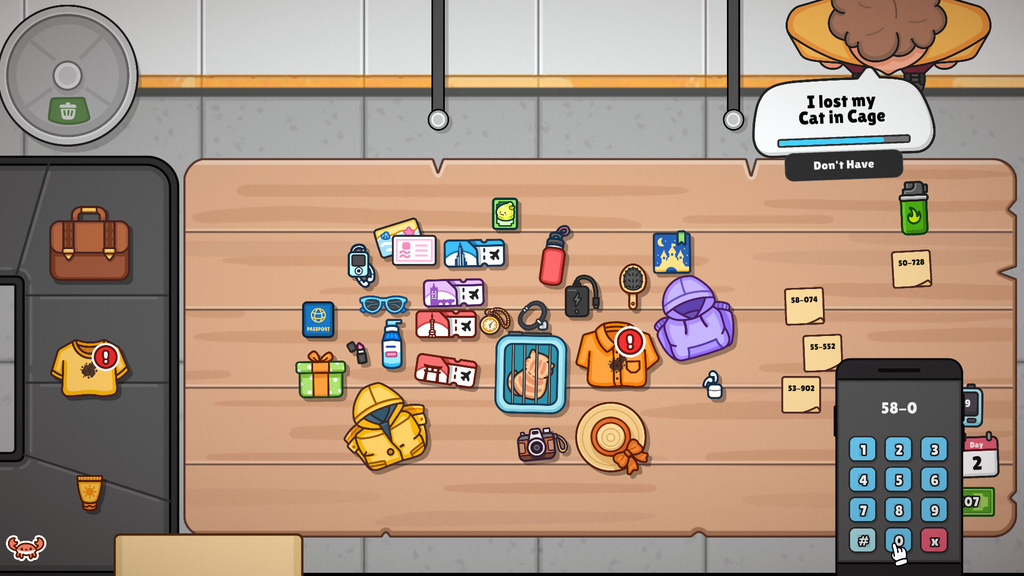
Having won the Visual Excellence award and secured second place in the Game of the Show category with Vending Machine Co. at the Mobidictum Indie Awards 2026, Rogue Duck Interactive attributes much of its artistic strength to its team of young Turkish artists.
Özsoy explained that his connections within both the gaming and game development communities have allowed the company to build an extensive talent network and be selective when assembling its development teams.
However, the company is preparing for a significant change in how these teams operate.
Rogue Duck has been following a development structure similar to Supercell’s cell-based model, with multiple smaller teams working on separate projects. Alongside its internal development operations, the company also publishes externally developed games, providing financial support, marketing services, or a combination of both.
Operating across these two models has allowed Rogue Duck to identify several limitations in its internal development structure.
“When we try to develop seven games simultaneously, our efforts become divided. Two of those projects might turn into something genuinely strong and passionate, while the remaining five fall behind in quality, production speed, or the overall cohesion of the game,” Özsoy explained.
With a distributed workforce operating across different countries and time zones, managing multiple projects has also placed considerable pressure on the company’s leadership.
One potential solution was to introduce additional management layers, stricter project oversight, more structured working arrangements, and potentially regional offices. However, Özsoy believes that the additional bureaucracy and costs would not necessarily contribute to what makes Rogue Duck’s games distinctive.
Instead, starting in 2027, Rogue Duck plans to give developers greater creative autonomy, financially supporting them for a period of time while allowing them to pursue their own projects.
These developers will benefit from the experience they have gained at Rogue Duck and maintain a direct connection with the company as a potential publishing partner.
“It’s difficult to recreate the passion of a team that has come together to make something it genuinely wants to make,” said Özsoy.
Although advancements in AI are changing how games are developed, Özsoy emphasized that the company had been considering this transition before AI reached its current capabilities. The decision is primarily driven by the limitations of its existing structure and the company’s observations of independently developed projects.

AI-assisted game cloning and the importance of game design
As AI tools become more accessible, concerns surrounding game cloning and intellectual property have become increasingly relevant to independent developers.
Rogue Duck has already experienced these challenges firsthand.
Two games that used AI to replicate Rogue Duck’s work were removed from Steam so far. One was a copy of Dice & Fold, while the other combined the visual identity of several Rogue Duck titles with the game design of one of its games.
In the latter case, a Turkish developer approached Rogue Duck directly with a proposal to publish the game. The company responded with a copyright infringement notice.
Özsoy had previously shared comparison images on social media, highlighting how the work of the company’s artists and game designers had been replicated.
“We live in a world where copying has become very normalized,” he said.
Despite these concerns, Özsoy recognizes the advantages AI brings to game development, particularly in programming and rapid prototyping.
According to him, certain prototyping tasks that previously required two or three full-time employees working for three or four days can now be completed in as little as 15 minutes. This allows developers to quickly test whether a game’s core gameplay loop is enjoyable before committing additional resources.
While AI-generated visuals have also improved considerably, Özsoy believes maintaining artistic consistency remains difficult. He is particularly critical of AI’s current capabilities in writing and game design.
“AI is not good at coming up with original ideas or determining what is fun,” he said.
Özsoy argues that generating functional code, visuals, music, and animations does not necessarily result in an original or enjoyable game.
This distinction is particularly important when considering which games are most vulnerable to AI-assisted cloning.
Games built around relatively simple concepts can be replicated more easily, as AI is increasingly capable of implementing an existing idea. However, games with greater mechanical depth require extensive iteration, playtesting, balancing, user interface adjustments, and consideration of the overall player experience.
“If there is no real game design involved, AI can do the rest,” Özsoy explained.
While AI can contribute to the production of more complex games, he does not believe its current capabilities allow developers to create high-quality, mechanically deep experiences from a single prompt.
Özsoy also acknowledged that game cloning existed long before the widespread adoption of AI. The difference today is the speed and accessibility with which developers can produce these copies.
The increasing volume of games is also affecting Steam’s operations. According to Özsoy, build approvals that previously took around three days can now take between 15 and 20 days, with delays reportedly causing even some larger publishers to miss their intended release dates.
Steam discoverability is becoming increasingly difficult
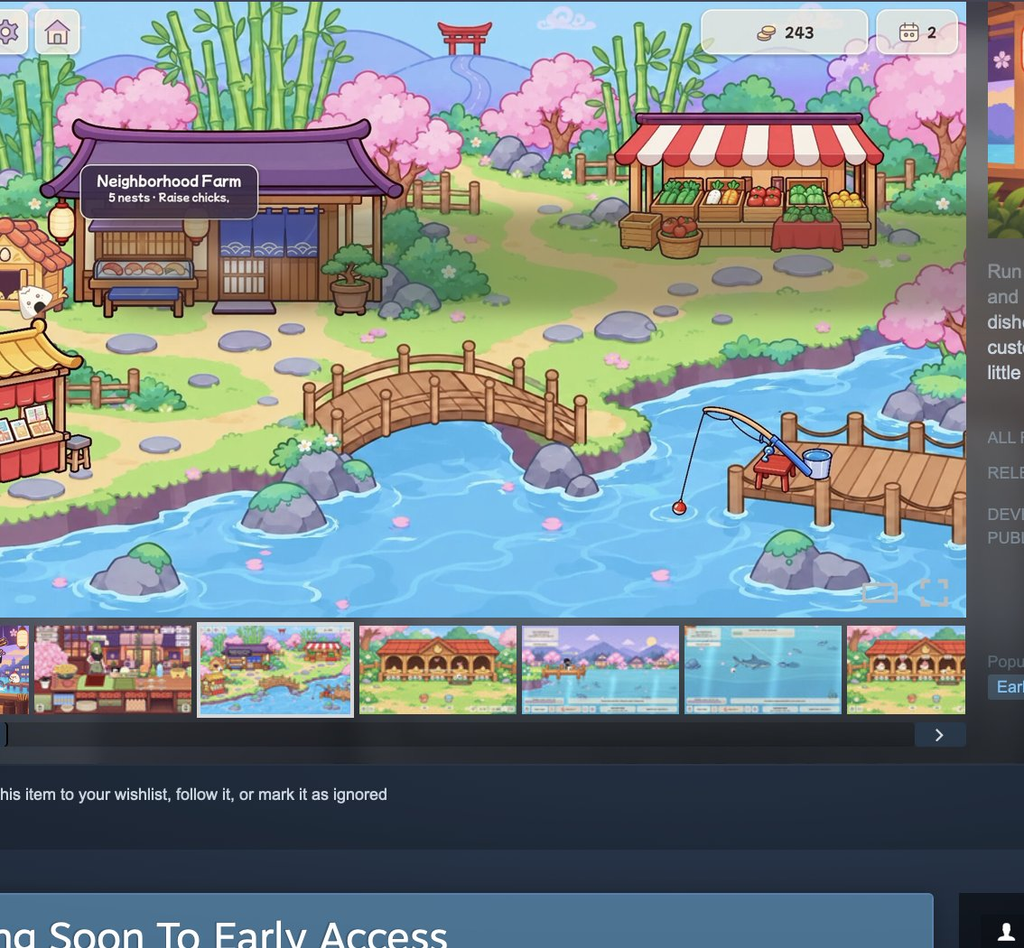
According to SteamDB, more than 21,000 games were released on Steam in 2025. That figure had already been surpassed by November 2026, reflecting the growing competition developers face on the platform.
However, AI is not only lowering the technical barriers to game development. It is also making previously specialized marketing tools accessible to a much wider range of developers.
Özsoy explained that Rogue Duck previously benefited from internally developed marketing tools, including software that scanned Twitch and automated email outreach to content creators.
With AI-assisted programming, even individual developers can now create similar tools, reducing the competitive advantage publishers previously held in this area.
As a result, content creators are receiving increasingly large volumes of outreach, making it more difficult for publishers and developers to reach them.
Competition for storefront traffic and online marketing visibility has also intensified.
“Everyone can make something, but getting what you’ve made in front of people is very difficult,” said Özsoy.
Rogue Duck spends tens of thousands of dollars on marketing every month. Despite its financial resources, established catalogue, and marketing infrastructure, Özsoy acknowledged that the company does not have a definitive solution to the growing discoverability problem.
For smaller independent studios without comparable marketing budgets, the situation presents an even greater challenge.
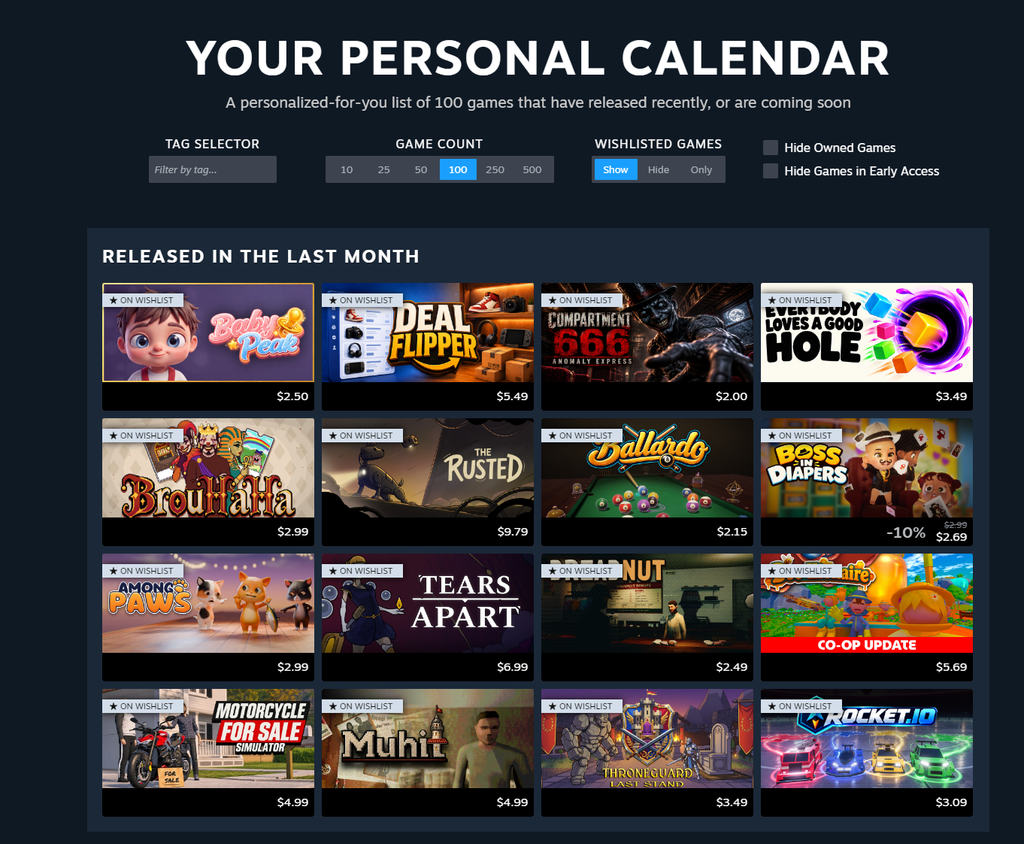
Özsoy also pointed to Steam’s efforts to improve game discovery through features such as personalized calendars, personalized events, and changes to its Daily Deal system.
While these initiatives aim to help games reach relevant audiences, he expects discoverability to remain a significant challenge for developers and publishers in the coming years.
The economics of influencer marketing for indie games
The growing number of game releases could also present opportunities for content creators specializing in particular genres, potentially helping developers reach more relevant audiences.
However, Özsoy believes the economics of paid influencer marketing remain difficult for independent developers.
Content creators accustomed to working with AAA studios and their substantially larger marketing budgets can charge fees that are disproportionate to the production budgets of smaller games.
Özsoy illustrated the problem with the example of a content creator requesting $20,000 for a campaign.
“Twenty thousand dollars is my game’s production budget. How am I supposed to give that to a single person?” he said.
Drawing on his own experience as a content creator, Özsoy also raised concerns about the reliability of influencer marketing compared with conventional advertising platforms.
Whether a creator starts a stream at the agreed time, presents the game effectively, and delivers the expected promotional value are all factors that publishers need to consider before committing a significant portion of their marketing budget.
For smaller independent studios, both the cost of paid influencer campaigns and the uncertainty surrounding their returns can make this marketing channel difficult to pursue.
Even 10,000 Steam wishlists no longer guarantee success
Steam wishlists remain one of the primary metrics developers and publishers use to measure pre-launch interest. However, Özsoy believes their significance as an indicator of commercial performance has weakened considerably.
Previously, Rogue Duck considered 7,000 wishlists a good minimum target, while reaching 10,000 was regarded as a relatively safe position ahead of launch.
A recent release challenged that assumption.
“One of our games recently reached 10,000 wishlists, but it didn’t achieve the success we were looking for. It had a very quiet launch,” Özsoy revealed.
He believes that wishlists are increasingly functioning as bookmarks rather than strong indicators of purchase intent.
As players accumulate larger wishlist libraries, converting that interest into purchases is becoming more difficult. Securing visibility through Steam’s New & Trending section has also become more challenging.
“Even 10,000 wishlists no longer guarantee success,” he said.
Nevertheless, Rogue Duck expects the unnamed title to continue generating sales over the longer term, benefiting from the company’s established catalogue and its reputation among players looking for cozy, colorful games with repetitive gameplay loops.
Publisher sales, bundles, and events also contribute to the long-term commercial performance of its games, reducing the company’s dependence on individual launch windows.
The current challenges facing the PC games market also share similarities with the period of rapid expansion experienced by the mobile games industry.
As competition increased in mobile gaming, an ecosystem of third-party technology and service providers developed to help studios address challenges related to marketing, user acquisition, and monetization.
Whether a similar ecosystem will develop around PC game marketing, offering new solutions for discoverability and wishlist conversion, remains to be seen.
Özsoy acknowledged that the industry is undergoing a period of transformation, although which companies and solutions will successfully address these challenges is still uncertain.

Cozy and strategy games will define Rogue Duck’s 2027 focus
Alongside the changes to its development operations, Rogue Duck will concentrate on two primary genres in 2027: cozy and strategy games.
While the company has established a recognizable brand within the cozy games market, its earlier successes came from strategy titles such as Cardboard Town, Dice & Fold, and Stellar Settlers.
For Özsoy, the decision to devote greater attention to strategy games also reflects the personal interests of himself, his business partner, and the wider team.
“At heart, I’m a strategy game player. I really enjoy strategy games, and I want to support these projects,” he said.
The company has already signed several smaller strategy titles as part of this direction, including Hextalia, a hex-based tower defense game that allows players to control the battlefield and acquire upgrades affecting their towers throughout a run.
According to Özsoy, Rogue Duck has made a significant investment in the game, although the financial details were not disclosed.
The transition to its new operating model is also expected to reduce the workload of the company’s leadership, allowing Özsoy and his business partner to dedicate more time to strategy projects.
Özsoy also expressed his desire to return to hands-on development and create a strategy game himself.
However, the company’s focus on cozy and strategy games does not mean it will rule out opportunities in other genres.
Rogue Duck’s success in the cozy games market originally came from an internal game jam during the Stratera Games period, where the concept for Lost But Found was created.
Recognizing the potential of the project, the team developed it into a full game, which went on to achieve commercial success. Subsequent titles built on that momentum and helped establish the company’s reputation within the genre.
Özsoy remains open to similar opportunities arising from future game jams, internal concepts, or external publishing agreements.
“Right now, we are known for cozy games and successful in strategy games. These will be our two main areas of focus in 2027,” he said.
What does Rogue Duck look for in publishing submissions?
As Rogue Duck places greater emphasis on its publishing operations, the company is looking for original, commercially promising games that complement its existing catalogue.
Özsoy explained that submissions are initially evaluated by a dedicated review team before progressing to further discussions.
The stage of development is among the most important factors in this process.
Rogue Duck does not consider projects that are still at the concept or early prototype stage. While it may consider exceptional pre-demo projects, its primary focus is on games that have already reached the demo stage and generated measurable player data.
Developers approaching the publisher are expected to have a Steam store page and, ideally, a publicly available demo or at least a playtest.
The company evaluates metrics such as playtime, player feedback, and existing wishlist numbers to better understand a game’s potential.
Compatibility with Rogue Duck’s wider catalogue is another important consideration.
The publisher evaluates whether a prospective title could be included in bundles alongside its other games, participate in company-organized events, and fit naturally within its publisher sales.
Beyond commercial potential and production quality, Rogue Duck also has a clear position on the use of AI-generated artwork.
“We do not work with games that use generative AI art,” Özsoy stated.
He cited unresolved legal questions, negative reactions from gaming audiences, and the difficulty of consistently producing high-quality artwork as the primary reasons behind this policy.
Ultimately, Rogue Duck is looking for original games featuring human-created artwork, fitting within its existing catalogue, and having completed at least 60% of their production.
Developers interested in working with Rogue Duck Interactive can submit their projects to [email protected].
Will players eventually embrace games made with AI?
Despite Rogue Duck’s current policy regarding generative AI art, Özsoy believes games developed using AI will eventually achieve commercial success.
He pointed to Hamburger Hill as a recent example of a game that caught his attention despite what he described as extensive use of AI throughout its production, including its visuals and programming.
Although he recognized the game’s shortcomings, Özsoy said he would be interested in purchasing and playing it if its quality improved.
His perspective is based on the relationship between consumer demand and the availability of unique gaming experiences.
If a game offers an experience that players genuinely want and cannot find elsewhere, Özsoy believes the use of AI will not necessarily prevent it from finding an audience.
“AI-made games will sell, and they will succeed. As long as there is an original idea, effort, and quality, AI will be a tool,” he said.
Özsoy also referenced a prediction he had encountered on social media, suggesting that by 2030, disclosing the use of AI in a project could become comparable to disclosing the use of Photoshop.
He expects developers who learn to use AI effectively to produce high-quality games, while consumer attitudes toward the technology may also evolve.
However, this outlook depends on the establishment of appropriate legal and ethical foundations surrounding its use.
For Özsoy, the question is not simply whether AI was used during development, but whether the resulting game provides an original, enjoyable experience that consumers want to engage with.
As AI continues to influence game production, marketing, and distribution, the challenges facing independent developers are evolving alongside the technology itself. While the barriers to creating games may be decreasing, originality, game design expertise, and the ability to reach the right audience remain fundamental to commercial success.
This interview is part of Mobidictum’s one-year media support initiative for award-winning games at the Mobidictum Conference 2026 Indie Awards.