
Hello everyone! 👋
Over the past few years, Türkiye’s gaming industry has undergone one of the most remarkable transformations in its history. What was once recognized primarily as a strong mobile gaming market has rapidly evolved into a diverse ecosystem supported by growing investments, internationally successful studios, technological innovation, and an expanding player community.
For this analysis, I compared publicly available Gaming in Türkiye market reports published between 2023 and 2025, alongside additional public industry sources used for context and verification. While every effort has been made to ensure accuracy, some figures may vary slightly due to different reporting methodologies, publication dates, currency fluctuations, or later revisions. The purpose of this article is to provide an objective overview of the market and share data-driven observations based on the available information.
Türkiye’s Gaming Market Has Entered a New Stage of Growth
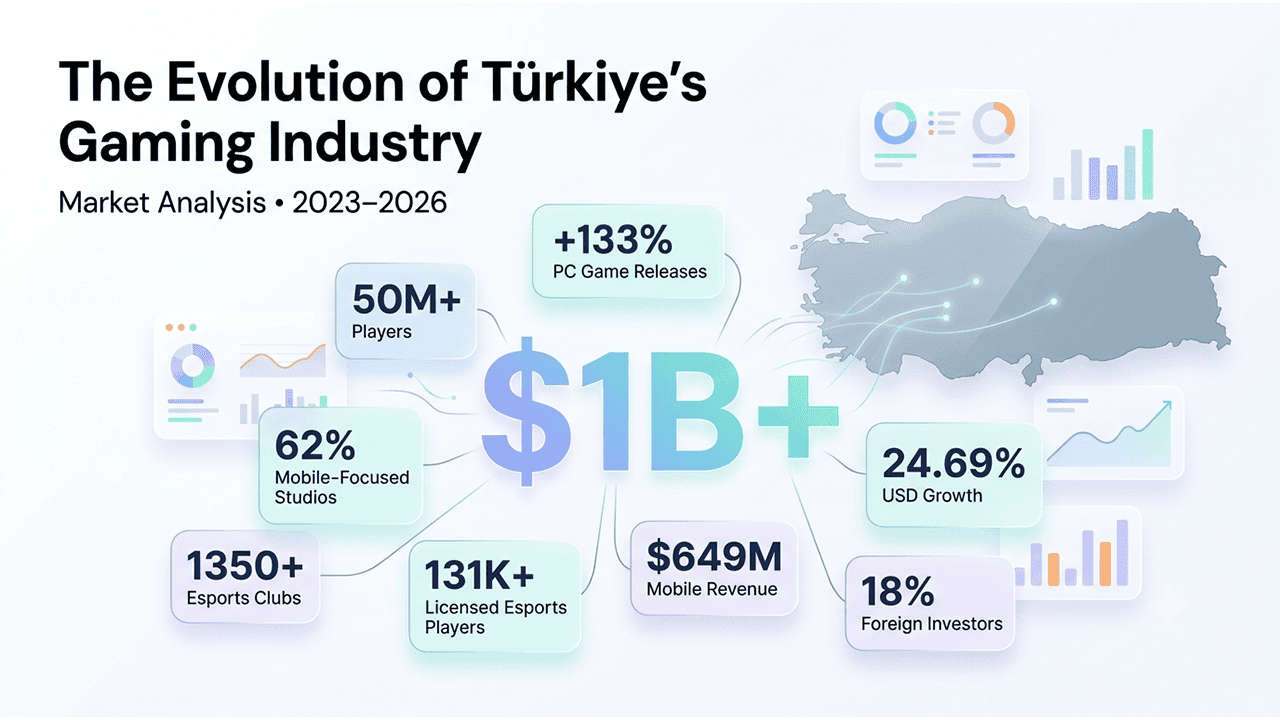
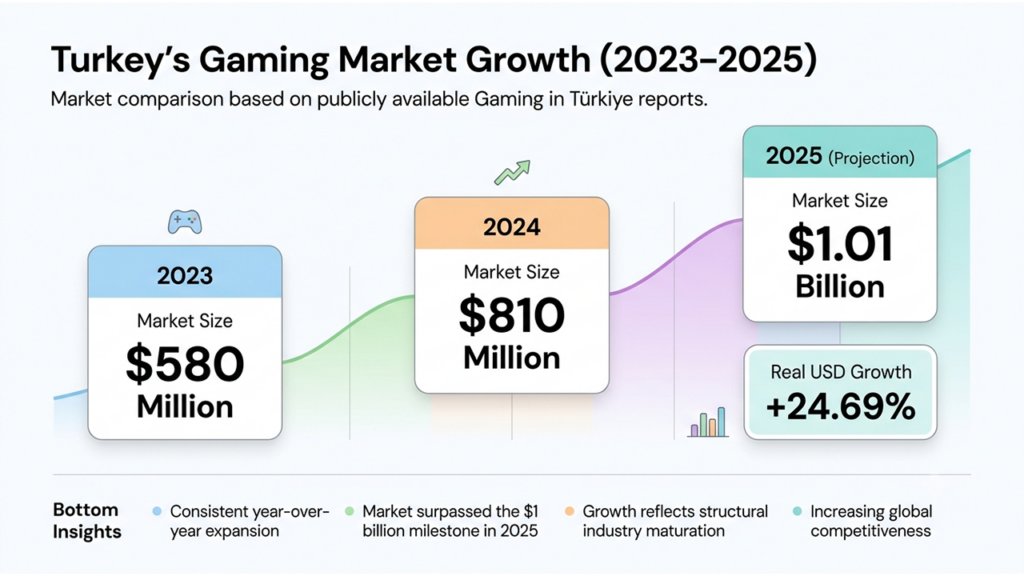
Between 2023 and 2025, Türkiye’s gaming industry demonstrated steady expansion despite a challenging economic environment. The market grew from $580 million in 2023 to $810 million in 2024, with projections placing the market at approximately $1.01 billion in 2025. Even with significant currency volatility during this period, the industry still achieved an estimated 24.69% real growth in U.S. dollar terms, highlighting that this was not simply inflation-driven growth but a genuine expansion of the market.
More importantly, these numbers reflect more than increasing revenue. They signal the transition of Türkiye’s gaming industry into a more mature ecosystem where sustainable business models, stronger studios, and long-term intellectual property development are becoming increasingly important. Supported by a young, digitally connected population and growing international recognition, Türkiye continues strengthening its position as both a game development hub and an export-oriented market within the global gaming industry.
A Growing Player Base Is Strengthening the Ecosystem
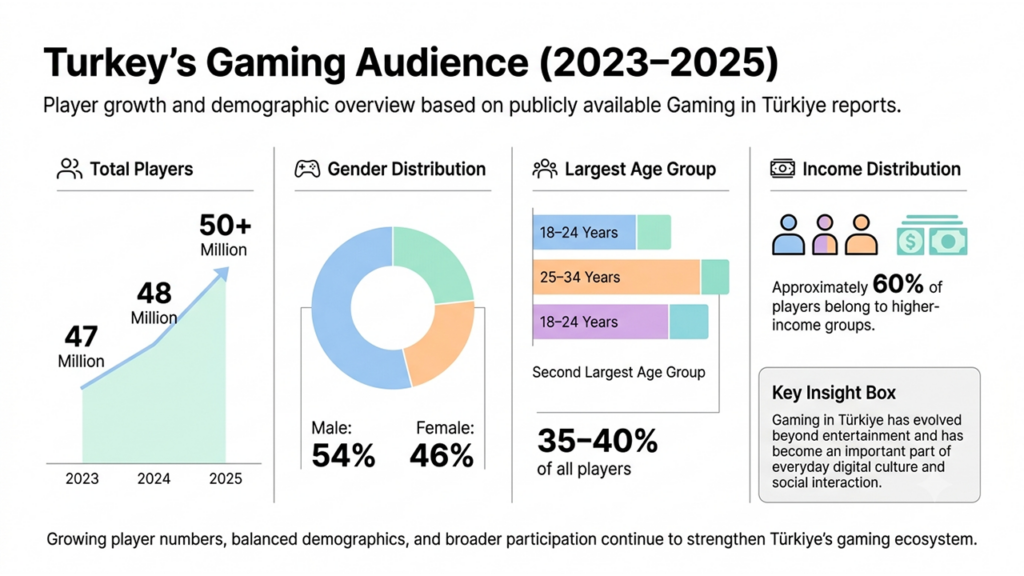
The country’s expanding player base remains one of the strongest indicators of long-term market health. The total number of gamers increased from 47 million in 2023 to 48 million in 2024, surpassing 50 million players in 2025. This consistent growth reflects how gaming has become deeply integrated into everyday entertainment and digital culture across the country.
The 25-34 age group continues to represent the largest gaming audience, accounting for approximately 35-40% of all players, followed closely by the 18-24 demographic. Gender distribution has remained relatively balanced throughout the period, with approximately 54% male and 46% female players, demonstrating that gaming continues to appeal to an increasingly diverse audience.
Income distribution also highlights the market’s broad reach. While around 60% of players belong to higher-income groups, the accessibility of mobile games and affordable microtransactions has enabled wider participation across lower-income segments as well. Gaming in Türkiye is no longer viewed simply as a leisure activity; it has become an important form of entertainment, social interaction, and digital identity for millions of people.
Mobile Gaming Continues to Lead the Industry
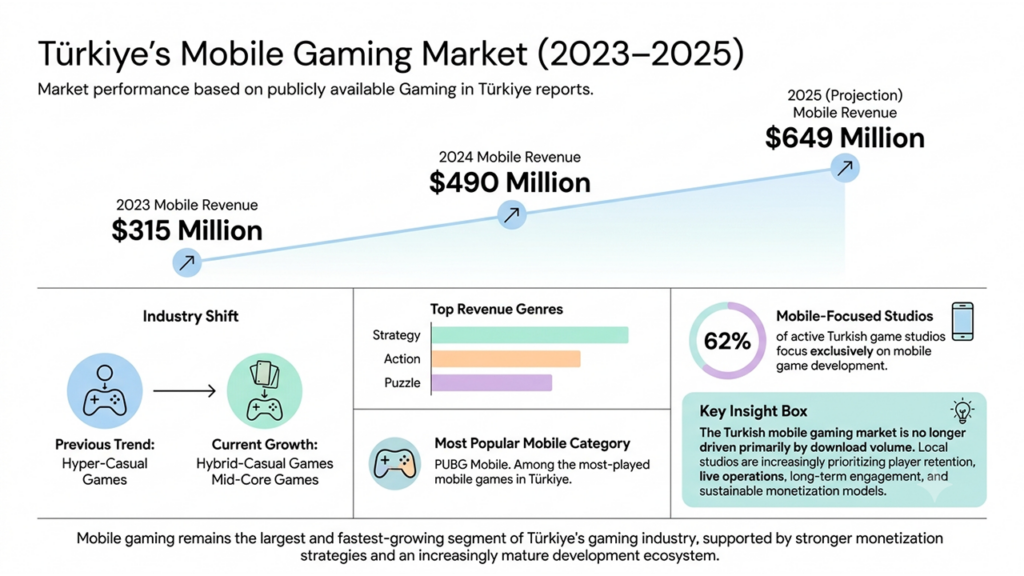
Mobile gaming remains the undisputed driving force behind Türkiye’s gaming ecosystem. Revenue generated by mobile games increased from $315 million in 2023 to $490 million in 2024, with projections reaching approximately $649 million in 2025. This sustained growth reinforces mobile gaming’s dominant role within the country’s overall market.
However, the industry’s evolution is no longer driven purely by download numbers. The dominance of traditional hyper-casual games has gradually given way to hybrid-casual and mid-core experiences that offer stronger long-term engagement and more sustainable monetization models. Strategy, action, and puzzle games now generate a significant share of in-app purchase revenue, while titles such as PUBG Mobile continue to rank among the most-played games in the country.
Another notable indicator of the platform’s importance is the structure of Türkiye’s development ecosystem itself. Approximately 62% of active game studios focus exclusively on mobile development, reflecting where both expertise and commercial opportunities remain strongest. At the same time, many local studios are increasingly shifting their priorities from maximizing downloads to improving player retention, live operations, and long-term revenue generation – an important sign of a maturing industry.
PC and Console Development Is Gaining Momentum
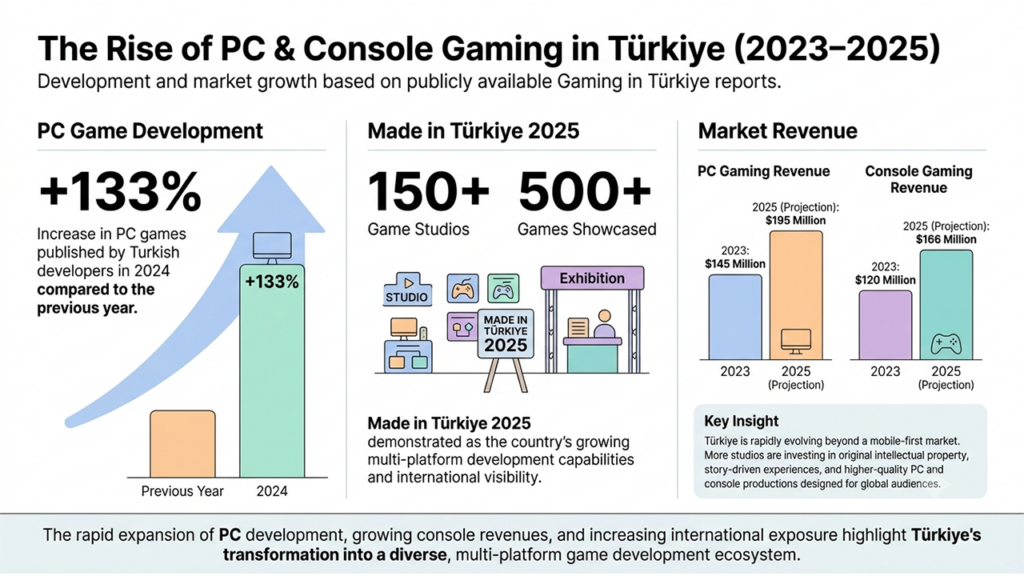
Although mobile gaming continues to dominate revenue, Türkiye’s PC and console ecosystem has experienced significant acceleration since 2024. One of the clearest indicators of this momentum is the number of PC games released by Turkish developers, which increased by 133% compared to the previous year. This remarkable growth highlights the industry’s expanding creative ambitions and its willingness to compete in larger international markets.
Events such as Made in Türkiye 2025, where more than 150 studios showcased over 500 games, further demonstrated the country’s growing ability to develop projects across multiple platforms. At the same time, PC gaming revenue is projected to increase from $145 million in 2023 to approximately $195 million in 2025, while the console market is expected to grow from $120 million to around $166 million during the same period.
Together, these trends suggest that Türkiye is steadily evolving beyond its reputation as a mobile-first market. More studios are investing in original intellectual property, story-driven experiences, and higher-production-value projects designed for global audiences. As development capabilities continue to diversify, the country’s position within the international gaming ecosystem is becoming increasingly competitive.
Steam’s Transition to USD Pricing Reshaped Consumer Behavior
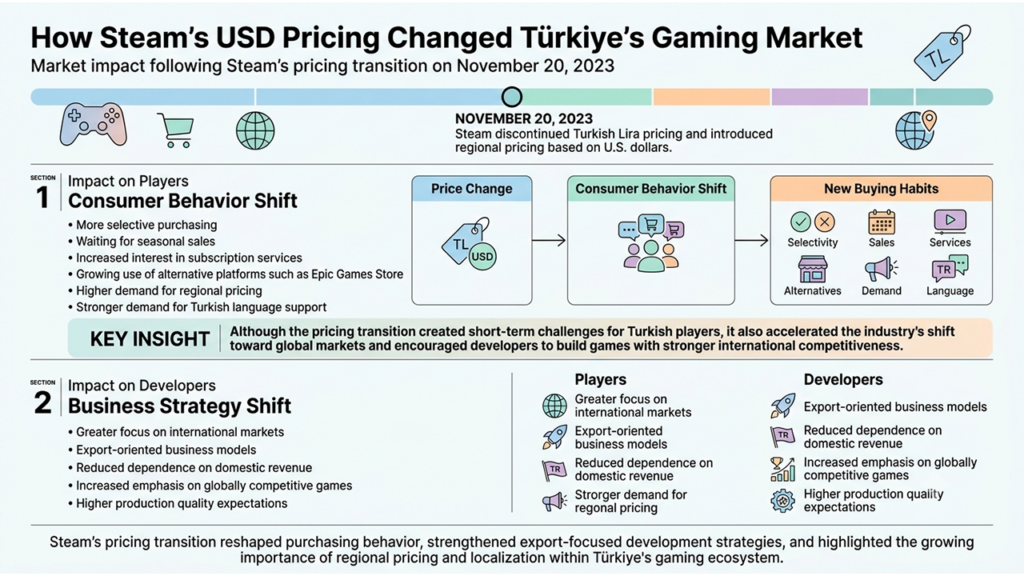
One of the most significant turning points for Türkiye’s gaming market came on November 20, 2023, when Steam discontinued support for the Turkish Lira and introduced regional pricing based on U.S. dollars. While this change aligned Türkiye with Steam’s new pricing model, it also created a noticeable financial challenge for many local players.
As game prices increased in local currency, consumers became far more selective about their purchases. Many players began waiting for major seasonal sales, prioritizing only the titles they truly wanted, or exploring alternative platforms such as Epic Games Store and subscription-based services. Spending habits shifted from frequent purchases to more carefully planned buying decisions.
For Turkish developers, the impact was equally significant. Rather than relying on domestic sales, many studios increasingly adopted a global-first strategy, treating international markets as their primary source of revenue. At the same time, higher price sensitivity within Türkiye strengthened player demand for regional pricing, localized content, and Turkish language support. Although the transition presented short-term challenges, it also encouraged local studios to focus on producing games capable of competing on a global scale.
Investment Confidence Has Returned to the Market
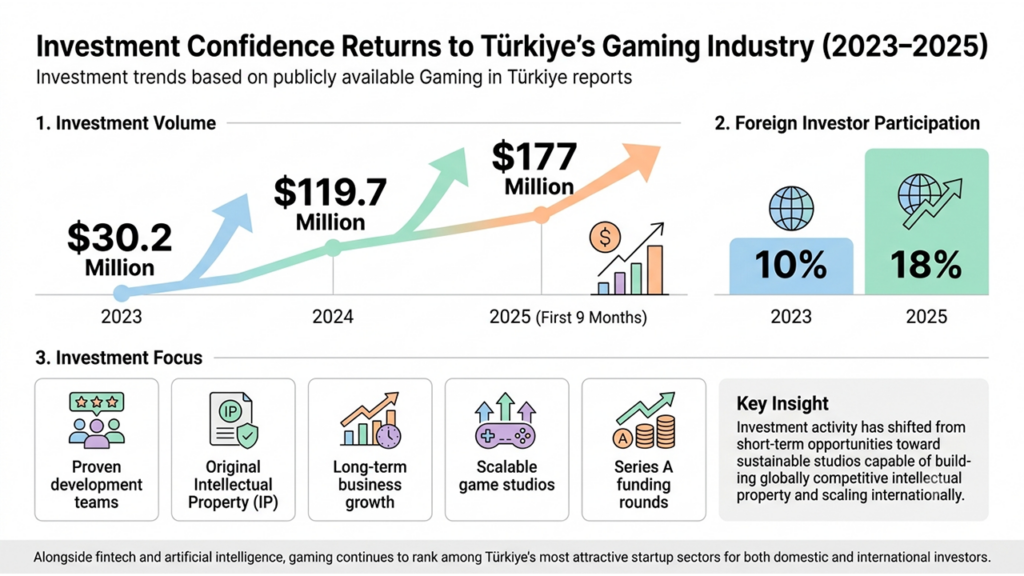
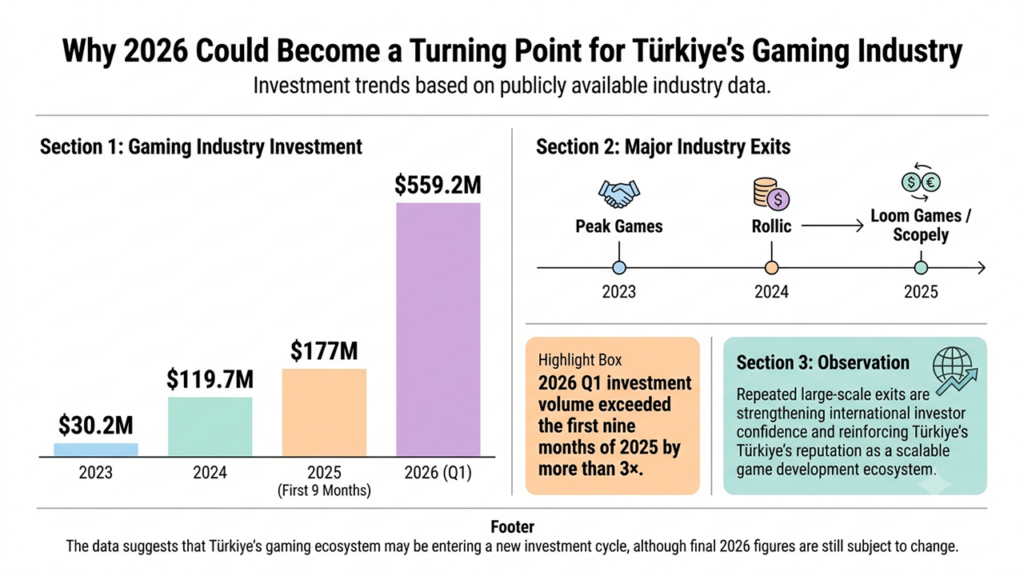
After reaching record investment levels in earlier years, Türkiye’s gaming investment ecosystem experienced a slowdown during 2023. Total investment volume declined to approximately $30.2 million, reflecting broader global caution across the technology sector.
However, the recovery that followed was both rapid and substantial. Investment volume increased to approximately $119.7 million in 2024, while the first nine months of 2025 alone reached $177 million, surpassing the previous year’s total. Rather than chasing short-term opportunities, investors increasingly focused on experienced teams capable of building sustainable intellectual property and long-term businesses.
Another encouraging indicator was the growing participation of international investors. Foreign investment increased from approximately 10% in 2023 to around 18% by 2025, suggesting stronger international confidence in Türkiye’s gaming ecosystem. The growing number of Series A investments also indicates that local studios are progressing beyond the early startup stage and demonstrating greater potential to scale internationally.
Today, alongside fintech and artificial intelligence, gaming remains one of the most attractive sectors within Türkiye’s startup ecosystem, continuing to attract both domestic and international capital.
AI and Emerging Technologies Are Accelerating Industry Transformation
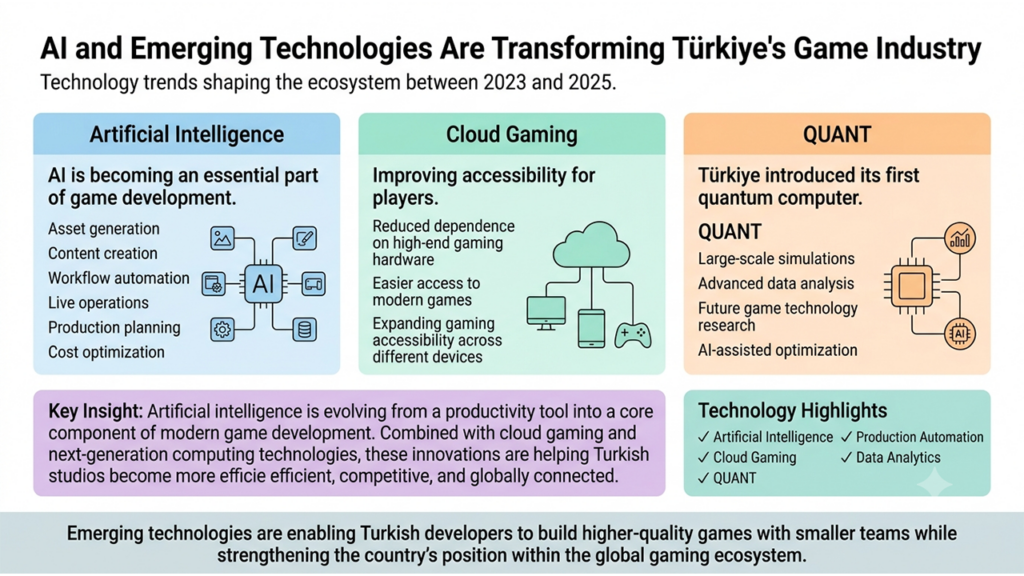
Between 2023 and 2025, artificial intelligence evolved from a supporting tool into one of the most influential technologies shaping game development. What initially assisted with content creation gradually became integrated into multiple stages of production, including concept development, asset generation, live operations, workflow automation, and production planning.
For many Turkish studios, AI has helped reduce development costs while enabling smaller teams to deliver projects with significantly higher production quality. This shift has become especially valuable for independent developers competing in increasingly global markets.
Beyond AI, Türkiye also continued investing in emerging technologies. The introduction of the country’s first quantum computer, QUANT, opened new possibilities for advanced simulation, optimization, and large-scale data analysis. Meanwhile, cloud gaming services have made high-quality gaming more accessible to players who may not own high-end hardware. Together, these technological developments are helping position Türkiye not only as a game producer but also as an increasingly important technology partner within the global gaming ecosystem.
A More Professional Ecosystem Is Taking Shape
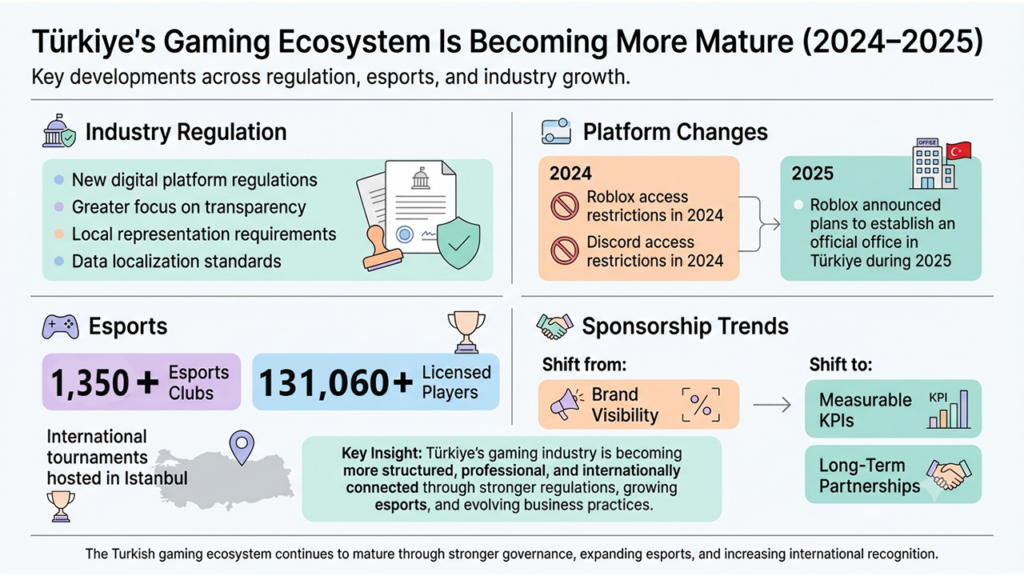
The years 2024 and 2025 were defined not only by growth but also by structural changes across regulation, platform policies, and esports.
Government restrictions affecting platforms such as Roblox and Discord significantly impacted younger gaming communities and forced developers to rethink how they engage with and manage their player communities. At the same time, Roblox’s decision to establish an official presence in Türkiye during 2025 demonstrated continued confidence in the country’s long-term market potential.
New requirements introduced under Law No. 5651, including local representation and data localization obligations for digital platforms, have also encouraged publishers and platform operators to adopt more transparent and professional operational practices. As these standards continue to be implemented throughout 2026, the industry’s legal and corporate framework is expected to become increasingly mature.
Esports has followed a similar path toward professionalization. According to TESFED, Türkiye is now home to more than 1,350 esports clubs and over 131,060 licensed players, making it one of the region’s most established competitive gaming ecosystems. International tournaments, including the PUBG Mobile Global Championship hosted in Istanbul, have further strengthened the country’s global visibility.
Perhaps the most notable shift has occurred in sponsorship strategies. Rather than focusing solely on brand exposure, companies are increasingly measuring partnerships through clear performance indicators and sustainable business outcomes. This reflects the broader evolution of esports from a marketing experiment into a structured industry with measurable commercial value.
Looking Back at 2023–2025
Taken together, the data paints a clear picture. Between 2023 and 2025, Türkiye’s gaming industry entered a new phase of maturity. The ecosystem expanded beyond its traditional mobile-first identity, strengthened its presence in PC and console development, attracted renewed investor confidence, embraced emerging technologies, and continued building a more professional business environment.
Crossing the $1 billion market milestone represents more than a symbolic achievement. It reflects an ecosystem that is becoming increasingly resilient, internationally competitive, and capable of producing globally recognized intellectual property. While challenges remain, the foundations established during this three-year period suggest that Türkiye is no longer simply a fast-growing gaming market; it is steadily emerging as one of the industry’s most important development hubs in the region.
2026 May Mark the Beginning of a New Investment Cycle
When comparing the market data from 2023 to 2025, Türkiye’s gaming industry was already following a healthy growth trajectory. Market revenue increased from $580 million in 2023 to $810 million in 2024, with projections reaching approximately $1.01 billion in 2025, representing annual U.S. dollar growth of roughly 20–25%. However, the most significant development now appears to be taking place on the investment side.
Investment activity tells a much stronger story than market revenue alone. After falling to $30.2 million in 2023, investment volume recovered to $119.7 million in 2024, while the first nine months of 2025 reached $177 million. The biggest surprise came in the first quarter of 2026, when announced transactions, including acquisitions, reached approximately $559.2 million. In other words, a single quarter exceeded the investment volume recorded during the first nine months of 2025 by more than three times.
In my view, this is more than an exceptional one-off transaction. Instead, it may represent an inflection point for Türkiye’s gaming ecosystem. Large-scale exits have now occurred repeatedly over multiple years, beginning with Peak Games, followed by Rollic, and more recently the Loom Games / Scopely transaction. When an ecosystem consistently produces successful exits, investors often begin viewing the market as a repeatable system rather than an isolated success story. That perception alone can significantly improve access to larger international investment funds and increase confidence in future financing rounds.
It is also worth noting that these major exits have largely emerged from the same segment: mobile studios focused on hybrid-casual and mid-core games. Based on currently available data, this remains the area attracting the greatest concentration of capital while also delivering the most proven exit opportunities. This observation is intended purely as an analysis of historical market patterns and should not be interpreted as investment advice.
Multiple Indicators Suggest Sustainable Long-Term Growth
From our perspective, the long-term outlook appears encouraging because the industry’s momentum is supported by several independent indicators rather than a single growth metric.
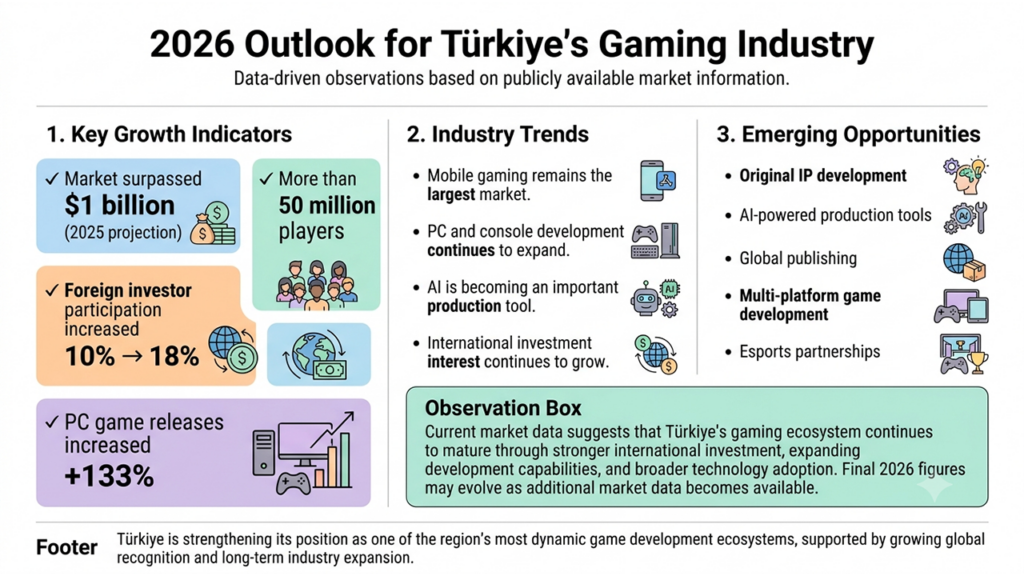
First, the share of foreign investors increased from approximately 10% to 18% between 2023 and 2025. This suggests that international capital is increasingly entering Türkiye with long-term strategic intentions rather than short-term experimentation.
Second, the country’s gaming audience continues to expand. With more than 50 million players and women representing approximately 46% of the player base, growth is becoming broader and more inclusive instead of depending on a narrow demographic.
Third, content production is becoming increasingly diversified. While mobile gaming remains the largest revenue generator, the 133% increase in PC game releases demonstrates that Turkish studios are rapidly expanding beyond a single platform. Interestingly, available data also shows that although PC development is growing significantly faster in production volume, its commercial scale remains considerably smaller than mobile gaming (approximately $195 million versus $649 million by 2025). This may indicate an area where creative output is accelerating faster than investment, potentially creating new opportunities as the ecosystem matures.
Another noteworthy development is İstanbul’s growing role within Europe’s game development landscape. The city is increasingly recognized as Europe’s second-largest game studio hub after London, strengthening a self-reinforcing cycle where experienced talent helps create successful studios, successful studios generate major exits, those exits attract additional investment, and new studios continue to emerge.
Artificial intelligence also deserves close attention. Although AI companies accounted for a significant share of startup investment activity across Türkiye during 2026, its intersection with game development remains in an earlier stage. As more studios integrate AI into production pipelines to reduce development costs and improve efficiency, tools focused on automation, content generation, and production workflows could become one of the next growth areas within the broader GameDev ecosystem.
Finally, esports continues to mature as a commercial industry. Sponsorship strategies are increasingly built around measurable KPIs and long-term business objectives rather than simple brand visibility. This evolution provides organizations, publishers, and sponsors with a more structured and sustainable environment for future collaboration.
Taken together, these indicators suggest that Türkiye’s gaming industry is entering a new phase characterized by stronger international confidence, increasing technological adoption, and a broader range of development opportunities. While final 2026 figures have yet to be confirmed, the current data points toward an ecosystem that continues to strengthen across multiple dimensions rather than relying on a single source of growth.
Final Thoughts
Türkiye’s gaming industry has evolved far beyond being simply a fast-growing market. Between 2023 and 2026, the ecosystem demonstrated stronger investment activity, a more diversified development landscape, accelerating technological adoption, and increasing international recognition. The data suggests that Türkiye is steadily positioning itself as an important contributor to the global gaming industry, supported by talented developers, expanding studios, and growing investor confidence.
At the same time, sustainable success will depend on continued innovation, the creation of globally competitive intellectual property, investment in talent, and the industry’s ability to adapt to rapidly changing technologies and market conditions. The coming years will reveal how these foundations translate into long-term global leadership, but the direction of travel is increasingly clear.
Thank you for reading! We regularly publish data-driven coverage of the global gaming industry, including market trends, investment activity, studio developments, emerging technologies, and GameDev business insights. Follow us to stay informed with the latest industry news, in-depth analysis, and research from around the world. 🎮