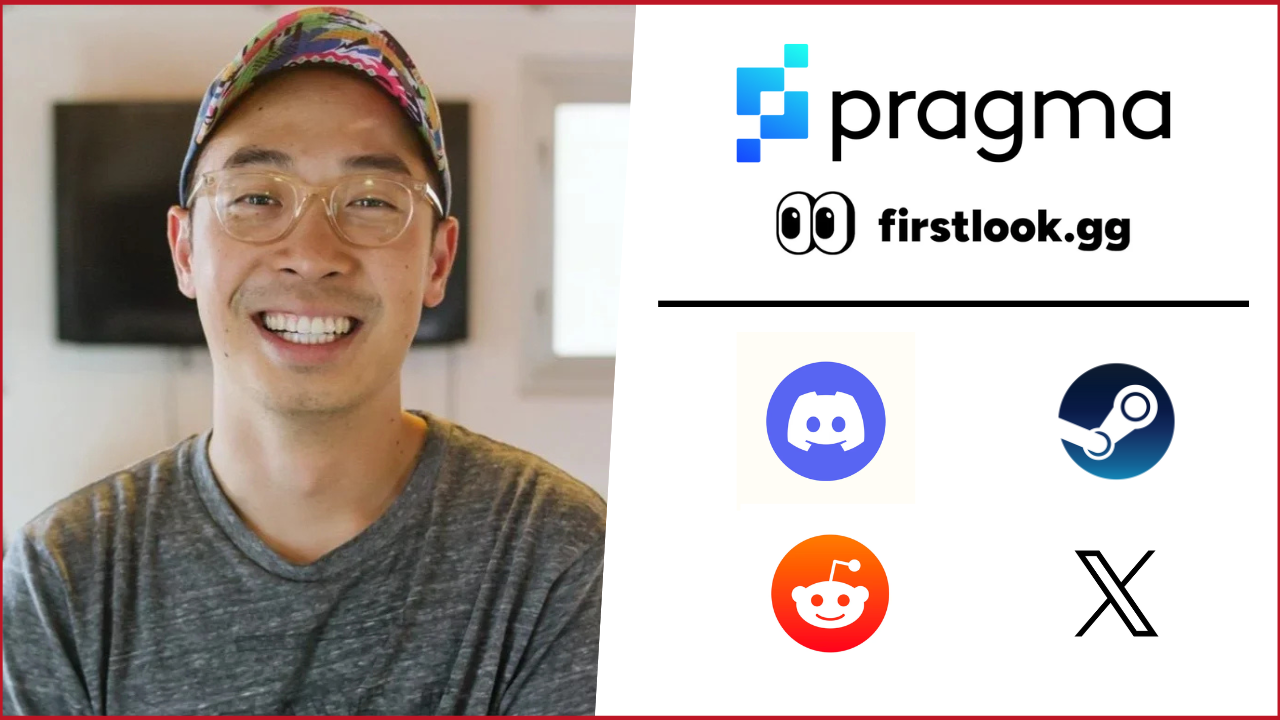

Pragma, a technology company focused on backend infrastructure for online, multiplayer, and live-service games, has been expanding its product suite to support studios worldwide. In 2025, the company acquired firstlook.gg, a platform focused on playtesting and player engagement.
In an exclusive guest piece for Mobidictum, Pragma CEO and founder Eden Chen explains why studios can’t assume they know where players are talking—and how to track community conversation across channels.
One of the biggest mistakes studios make today is assuming they know where their players are talking.
Players haven’t stopped giving feedback. If anything, as constant online chatter will tell you, they’re giving more of it than ever. The problem is that all these conversations are spread across so many places, it’s easy to miss what actually matters.
All these channels are multiplying quickly than studios can keep track of. Discord, Reddit, X, YouTube comments, internal surveys, app store reviews, and forums – they all tell different stories all at the same time, and none of them really work as a single source of truth.
This is one of those problems that sounds simple until you’re actually trying to ship a game. Teams are already stretched thin. Making sense of community conversation often ends up being reactive, anecdotal, or dominated by whichever platform is loudest that week. Sometimes a game can fail not because of the gameplay itself, but because of a misjudged title, caption, or trailer, a sign that studios haven’t fully understood their audience.
That’s not a great way to make decisions. Studios need to understand who their audience is and what kind of messaging will reach them – otherwise, it’s nearly impossible to know what adjustments to make to a game or how to market it successfully.
Players are everywhere for different reasons
Each platform exists for a reason, and players behave differently across them. Most social listening tools either focus on general, non-gaming platforms like Sprout or Sprinklr, or are narrowly focused on a single gaming platform such as Discord.
- Discord is where your most invested players spend time. It feels like a community, it’s immediate and emotional, and people chat quite candidly about many different issues. You can find discussions about bugs, balance issues, and different frustrations really quickly after players notice them. But Discord is also chaotic by nature. People can be quite passionate and opinionated, and if you’re not careful, it can make every issue feel like an emergency.
- Reddit tends to surface slower, more considered feedback. You see thought-out arguments or longer threads about progression, onboarding, and whether the game is delivering on its promise. If the same complaint keeps coming up on Reddit over weeks or months, it’s worth taking seriously.
- X is for bite-sized impressions that can be seen quickly, and are very visible. A small number of posts can shape perception very quickly, especially around launches or updates. That doesn’t mean those opinions represent most players, but it does mean they can influence the narrative.
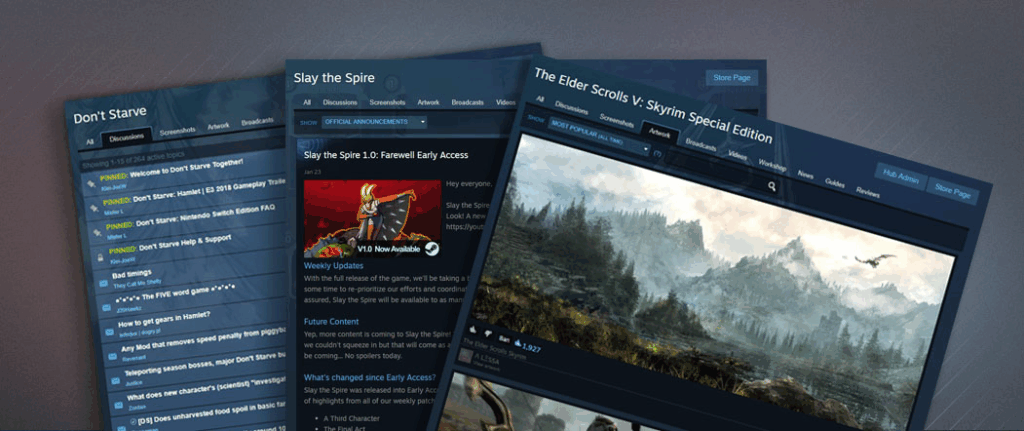
- Steam discussions and forums often provide a smaller but stronger signal than studios expect. Players there dig into systems, cases, and long-term concerns, and studios that playtest on one platform may find the audience on another platform behaves very differently. Steam players, for example, are a particularly engaged and vocal segment.
The mistake is treating any one of these channels as “where our community lives.” It’s like picking a favorite child. They all matter, and they’re all special in different ways.
Why studios get this wrong
When teams think of social listening, too many still equate it with counting posts or tracking spikes. While understandable, it doesn’t really help.
High volume isn’t always a good thing. A quiet channel doesn’t automatically mean players are happy or that there are no issues. A studio might focus on the one angry thread that overwhelms them, while a slow, consistent issue gets ignored because it’s less dramatic.
Another problem is that different platforms are usually monitored by different people, whose interpretations can differ significantly. What you end up with is a lot of opinions, but very little clarity.
Studios aren’t bad at listening. In fact, they’re really trying to. It can just be difficult for them to separate signals from noise.
Sentiment isn’t binary
Labelling feedback as positive or negative misses the point. What matters is repetition and momentum over time. When the same themes show up across Discord, Reddit, and in-game feedback week over week, it’s a clear signal. Tracking patterns and comparing trends across time periods is far more valuable than reacting to isolated incidents.
This becomes especially important pre-launch and during live events, when teams are under pressure to move fast. Taking dedicated time to understand whether feedback represents a vocal minority or a broader trend can save so many months of wasted effort.
The key is to connect your channels. Studios need to stop asking “What are players saying on Discord?” or “What’s blowing up on X?” and start looking at what themes are showing up repeatedly, across spaces.
That fundamentally changes how community conversation is used:
- Group feedback by what players are saying more than where they’re saying it
- Pay attention to issues that keep coming back over time
- Don’t treat community feedback as the full story. Use it as context, then check it against what players are actually doing in-game.
When feedback appears in multiple places, from different types of players, and persists beyond a single patch or update, it’s an issue.
This also changes ownership. Community teams shouldn’t be expected to “handle” sentiment alone. Product, design, and live ops teams need shared visibility into what players are experiencing, not just what they’re posting.
The product problem
Much to their annoyance, community or marketing teams are often tasked with social listening, but it’s really a product input. Teams may collect feedback, but without a clear understanding of who the audience is, that insight rarely influences the product roadmap.
The studios that do it well don’t tear their hair out over every opinion. They’re using community conversation to validate their assumptions or catch blind spots early. They want to understand how players actually experience their game.
The payoff is confidence that decisions are based on proven patterns. Confidence that teams are responding to real player experience, not just panicking because of the loudest negative voices.
Players are already telling you what they think. The hard part is knowing what to do with what you hear.

CEO and Founder, Pragma