
Direct-to-consumer (DTC) monetization in mobile gaming is already a $17Bn market – around 15% of the $113.3Bn mobile gaming in-app purchase market – and is expected to grow substantially through 2026, according to new research published today by GDC Festival of Gaming and Appcharge, the leading DTC payments infrastructure platform for mobile games.
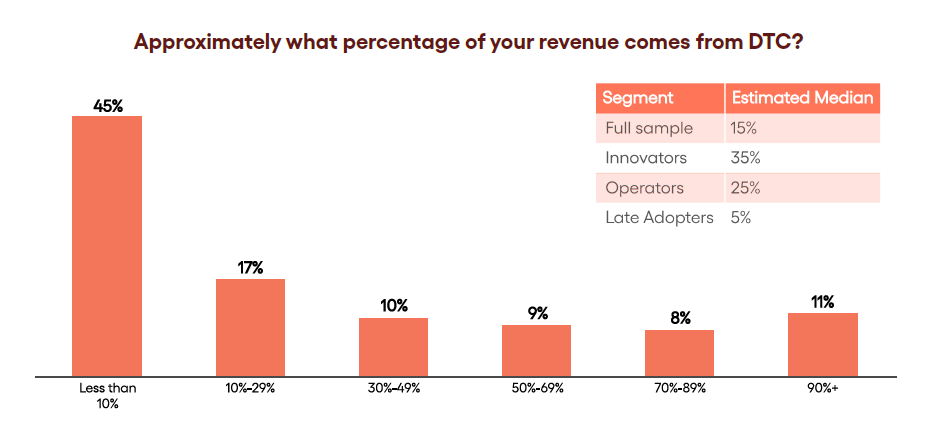
Based on a survey of more than 1,200 professional game developers conducted between January and February 2026, the report captures how publishers are responding less than 12 months on from the April 2025 Epic vs. Apple ruling and the subsequent policy changes from Apple and Google. It provides the first detailed picture of how the DTC channel is reshaping the economics of mobile gaming – 92% of publishers surveyed expect their DTC revenues to grow this year, with 41% expecting double-digit growth and 18% expecting growth of 30% or more.
Higher margins are just the beginning
While the original opportunity was driven by avoiding 30% app store fees, the research shows the value publishers are capturing has expanded well beyond margin improvement. Median DTC revenue uplift is 15% across the full sample, rising to 35% for leading adopters. More than three-quarters (77%) of publishers say DTC monetization now performs at least as well as their app store channels, and 63% of leading adopters say it is doing better.
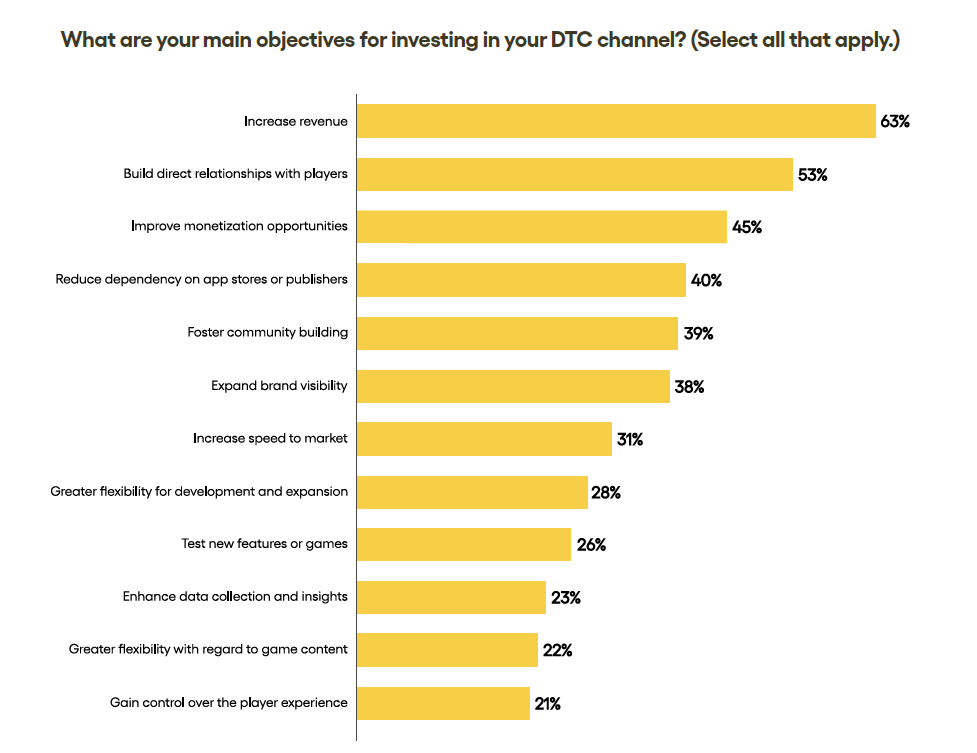
The deeper story is structural. Publishers report that DTC is enabling direct ownership of player relationships, richer first-party data, faster experimentation, and the ability to design offers and experiences that were not possible inside app store billing. Top objectives for investing in DTC include increasing revenue (63%), building direct relationships with players (53%), improving monetization (45%), and reducing dependency on app stores (40%).
A clear gap is opening between DTC leaders and the rest of the industry. 62% of publishers describe themselves as behind their peers on DTC, while only 14% consider themselves innovators and 25% say their DTC programs are scaling or mature. The window to catch up is narrowing as leaders compound their advantage.
“The real story isn’t the fee. It’s what happens when publishers finally own the relationship with their players – direct access to data, control over pricing and offers, and the ability to pass real value back to players,” said Maor Sason, CEO and co-founder of Appcharge. “The publishers who committed to this early aren’t just ahead on revenue. They know their players better, they retain them longer, and they have more control over where the business goes next. In a few years, we won’t think of DTC as an alternative – it will simply be how the most successful games operate.”
Gaming as the proving ground for the wider app economy
The implications extend well beyond gaming. The report argues that mobile games – with their high-frequency transactions, complex virtual economies, and global player bases – represent the most demanding stress test for DTC infrastructure, and that the playbook now emerging is directly applicable to other consumer app categories.
“The shift toward direct-to-consumer payments will not remain limited to mobile games,” said Eric Liaw, General Partner at IVP, contributing to the report. “Many other consumer apps operate under similar platform fee structures and face similar constraints when attempting to build direct relationships with users. Gaming has historically been one of, if not the, first large-scale proving ground for direct-to-consumer apps. Developers in categories such as AI creation, fitness, education, lifestyle, entertainment, and other subscription services will see the same economic benefits, and the shift could extend across the broader app economy.”
The mobile gaming in-app purchase market is projected to approach $121.1Bn by the end of 2026 (according to Newzoo), while the global IAP market across all consumer apps is estimated at $190Bn in 2025 and projected to reach $290Bn by 2030. This points to a DTC opportunity that could ultimately run into the tens of billions across the app economy.
Scale is the next frontier
The report identifies player awareness (50%) and player acquisition (41%) as the biggest challenges to scaling DTC. Leading adopters are addressing these through greater use of content creators and influencers, in-game messaging, and partnerships with specialist DTC infrastructure providers. 83% of companies now assign DTC accountability to director-level or above, and 43% to a C-level leader – evidence that DTC is being treated as a strategic priority rather than a side project.
The full report, Direct-to-Consumer is a $17 Billion Market for Mobile Gaming, is available here.