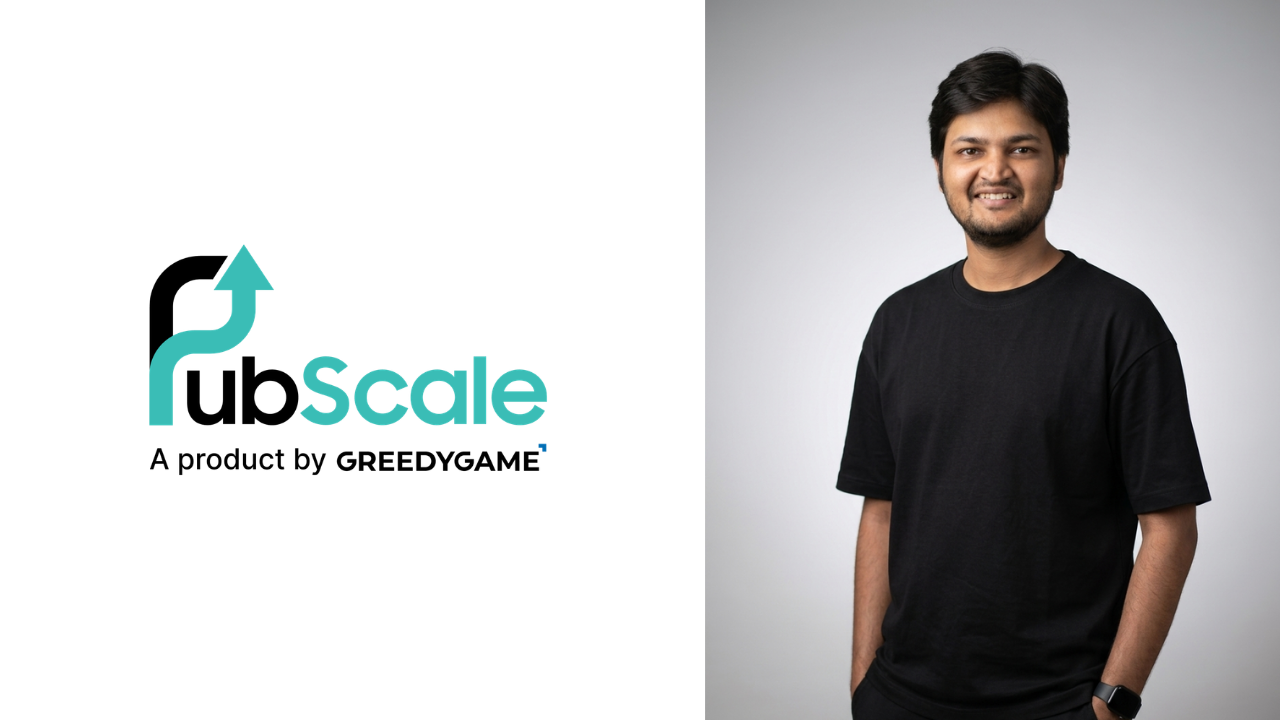

With PubScale recently featured in Singular’s ROI Index 2026, Founder Arpit Jain reflects on GreedyGame’s journey, the evolution of game monetization, and why the future of ad tech depends on respecting the user experience.
The mobile gaming business has changed dramatically over the last decade. What once looked like a simpler equation of installs, impressions, and ad revenue has turned into a much more demanding balancing act. Publishers now have to think about retention, player satisfaction, monetization quality, user acquisition efficiency, privacy-led measurement changes, and long-term sustainability all at once.
Few founders in India’s ad tech ecosystem have had a front-row seat to that transformation quite like Arpit Jain. An IIT Ropar alumnus who previously worked at PayPal, Jain founded GreedyGame with a clear belief: advertising on mobile did not have to be disruptive to be effective. Over time, that idea grew from native ad innovation into a broader publisher-focused platform through PubScale, spanning monetization, growth, and performance infrastructure. More recently, PubScale was featured in Singular’s ROI Index 2026, which Singular describes as an annual performance benchmark built on trillions of impressions, clicks, and installs across millions of campaigns and thousands of ad networks worldwide.
In this conversation, Jain shares how GreedyGame evolved, what game publishers still get wrong about monetization, and why the next phase of growth belongs to businesses that stop treating monetization and user acquisition as separate disciplines.
Can you take us back to the beginning? What led you to start GreedyGame?
GreedyGame started from a simple but important observation: mobile advertising was too often treated as something users had to tolerate rather than something that could fit naturally into the product experience.
At the time, ads were frequently intrusive, and that created friction for everyone involved. Users were interrupted, publishers risked hurting retention, and advertisers often got attention without meaningful engagement. I felt there had to be a better way to make monetization work without damaging the experience that made people come back in the first place.
My background in engineering and product thinking naturally pushed me in that direction. My time at PayPal gave me exposure to scale, systems, and strong product discipline, but entrepreneurship had always been on my mind. GreedyGame was the result of combining that ambition with a very real market gap I could see in mobile apps and games.
GreedyGame first became known for native and in-game advertising. How has that vision evolved over time?
The philosophy is actually the same. What has evolved is the size of the problem we are solving.
In the beginning, we were focused very sharply on making ads feel more native, more contextual, and less disruptive, especially in gaming and mobile-first environments. That was a real need in the market, and it still matters today.
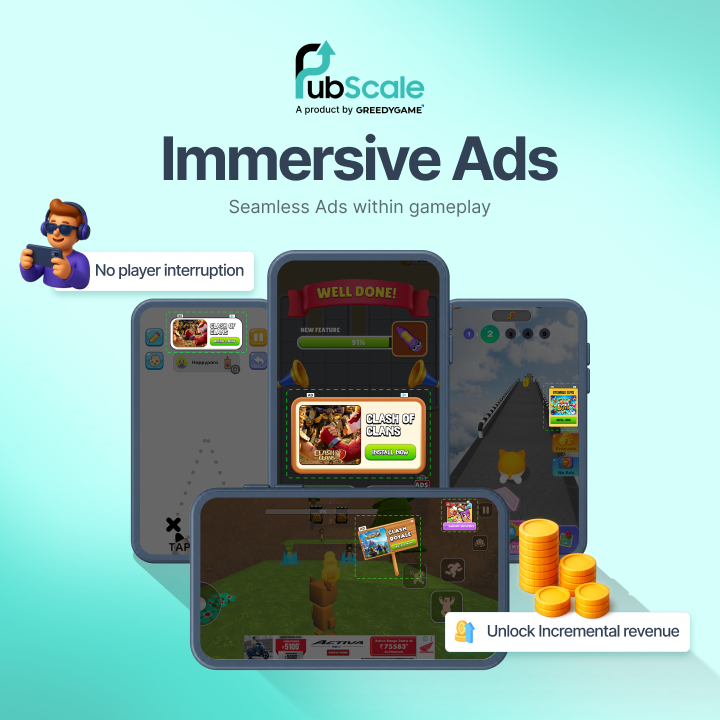
But over time we saw that publishers were not just struggling with ad experience. They were also struggling with fragmented monetization setups, inconsistent growth systems, limited visibility into performance, and the challenge of connecting acquisition with long-term value. That is where the broader PubScale vision came from.
Today, publishers do not want isolated point solutions. They want systems that help them earn better, grow smarter, and make decisions faster. That is why our thinking expanded from ad formats to a more connected growth and monetization framework.
You’ve often spoken about user experience as a core principle. Why is that still such a defining issue today?
Because user experience is still the first thing a publisher can lose when monetization is handled carelessly.
A lot of teams still think about monetization in terms of what it adds, but they do not always think hard enough about what it can quietly take away. Poorly timed or overly aggressive monetization can reduce session quality, create fatigue, and weaken trust. Those losses may not always show up immediately, but they absolutely affect retention and long-term LTV.
I have said before that protecting user experience should be one of the highest priorities for any app developer, and I still strongly believe that. In gaming especially, the player is extremely sensitive to interruption. If monetization feels disconnected from the core loop, it can damage the rhythm of the game very quickly.
What are the biggest changes you’ve seen in game monetization over the last few years?
The biggest shift is that the industry has become more mature in how it thinks about monetization.
Earlier, the discussion was often very format-led. Which ad type pays more? Which network fills better? Which implementation is easiest? Those are still valid questions, but they are no longer enough.
Now the better publishers are asking deeper questions. Does this monetization setup hurt retention? Does it support different user cohorts in different ways? Does it create sustainable revenue, or is it just extracting short-term value? Can it coexist with a better player experience instead of competing with it?
Another major shift is that monetization and user acquisition are moving closer together. The best teams increasingly understand that monetization quality shapes LTV, and LTV shapes how effectively they can scale acquisition. That loop is becoming central to the way successful publishers operate.
What do many game studios still get wrong when it comes to monetization?
One of the most common mistakes is optimizing too aggressively for short-term revenue.
It is easy to look at a revenue spike and assume the strategy is working, but if that spike comes at the cost of player experience, then the business may be losing value elsewhere. Studios have to look beyond immediate yield and ask what happens to session length, retention, engagement, and long-term monetization quality.
Another mistake is treating monetization as something separate from game design. In reality, strong monetization is deeply tied to timing, player motivation, progression, reward logic, and context. It has to feel like part of the overall experience, not an external layer dropped on top of it.
I also think many studios still underuse segmentation. Not every player behaves the same way. A non-spending but highly engaged user should not be monetized the same way as a payer, a churn-risk user, or a highly competitive player. The more thoughtfully you design around those differences, the stronger the outcome becomes.
Offerwall and value-exchange models are getting more attention again. Why now?
Because the economics of publishing have changed, and publishers are becoming more pragmatic.
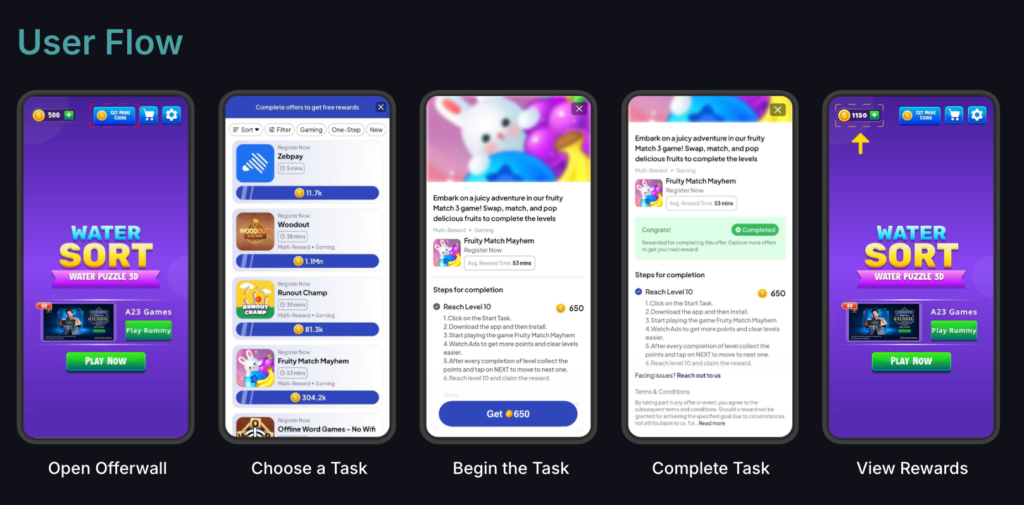
Most apps and games have a large base of users who may never convert through direct purchases, but that does not mean they have no monetization value. Offerwall and reward-based engagement models work because they create a clearer value exchange. Instead of interrupting the user, they invite participation.
That is especially relevant today because acquisition is more expensive, privacy changes have made performance measurement more complex, and many publishers are looking for ways to increase revenue without putting more pressure on the core experience.
What is encouraging is that the market now sees these models more strategically. They are no longer treated only as side monetization tools. More teams are recognizing that, if implemented thoughtfully, they can contribute to both revenue and engagement.
PubScale was recently featured in Singular’s ROI Index 2026. What does that kind of recognition mean to you?
It matters because recognition is most meaningful when it reflects performance, not just visibility.
What makes the ROI Index interesting is that it is framed as a data-driven benchmark rather than a branding exercise. When platforms appear in those kinds of ecosystem-level evaluations, it signals that they are part of serious performance conversations happening across the mobile space.
For us, it is encouraging because it aligns with how we have always wanted to build. We are not trying to be loud for the sake of being loud. We want to create systems that deliver practical value for publishers and advertisers over time. So recognition like that is a validation point, but also a reminder to keep improving.

How do you see AI changing the ad tech and monetization ecosystem?
AI is becoming foundational, but the important question is where it creates real value.
It is useful when it helps reduce complexity, improve decision-making, optimize performance, and increase relevance at scale. That can mean better bidding, smarter matching, more efficient campaign management, stronger prediction under limited signals, or improved optimization across multiple variables.
But I also think the industry has to be careful. AI should not become an excuse for opacity. Publishers still need transparency. They need to understand what is driving outcomes and where performance is actually coming from. The most valuable use of AI is not replacing judgment. It is helping teams make better decisions, faster.
That broader direction also aligns with what Singular highlights in its 2026 ROI Index, where AI is described as no longer an edge, but a baseline across top-performing platforms.
How should game publishers think about monetization and UA together?
As one connected growth system.
For a long time, the industry treated monetization and user acquisition as separate functions, often with different teams, different dashboards, and different KPIs. But in practice, they are deeply interdependent.
Your monetization quality affects LTV. Your LTV affects how aggressively you can acquire users. Your acquisition quality affects downstream retention and monetization. Once you understand that loop clearly, you stop making isolated decisions and start thinking more strategically.
That is one of the biggest mindset shifts publishers need today. Growth is no longer just about buying installs, and monetization is no longer just about filling impressions. The strongest businesses are building systems where both functions strengthen each other.
What has helped GreedyGame remain relevant in such a competitive and fast-changing space?
I think it comes down to two things.
First, we started from a real pain point. The issue of disruptive monetization and poor user experience was very real when we began, and it is still relevant today, even though the market has evolved.
Second, we kept adapting instead of getting attached to one narrow identity. GreedyGame began with a strong focus on native advertising and better monetization experiences. But as publisher needs became more complex, we expanded our thinking and product direction. That ability to evolve with the market has been important.
What excites you most about the next few years in gaming and monetization?
What excites me is that the market is becoming more thoughtful.
The old conversations were often too binary: ads versus no ads, growth versus quality, monetization versus retention. Those lines are starting to blur in a healthy way. Better publishers now understand that the real goal is to build systems where these things support each other.
I also think there is a huge opportunity for infrastructure that helps teams operate more intelligently. Many game studios are under pressure to do more with leaner teams. If we can make monetization, growth, and optimization simpler and more connected for them, that creates real leverage.
Ultimately, the future is not about showing more ads. It is about helping publishers build stronger businesses without breaking the experience that makes their products worth using in the first place.