
A Gamescom wrap-up for mobile marketers, by Adam Smart, Director of Product Gaming at AppsFlyer
None of Turkey’s major mobile publishers, Dream Games, Peak Games, Rollic, had a visible presence at Gamescom this year.
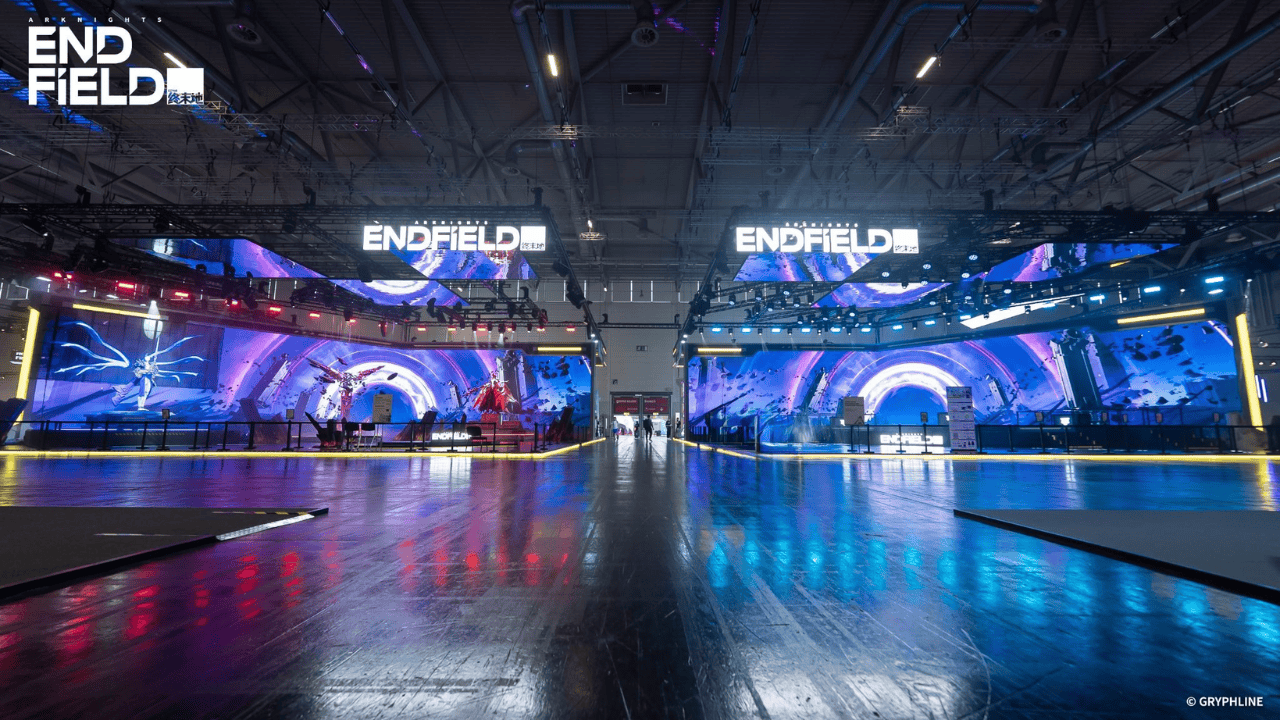
That’s easy to miss if you only look at the handful of massive mobile stands that did stand out: HoYoverse ran a 660-square-metre standalone area with dedicated zones for Genshin Impact, Honkai: Star Rail and Zenless Zone Zero, Tencent’s booth topped 1,000 square metres, Infold Games gave Infinity Nikki a splashy dedicated stand, and Hypergryph’s Arknights: Endfield won the show’s community-voted Best Booth award outright.
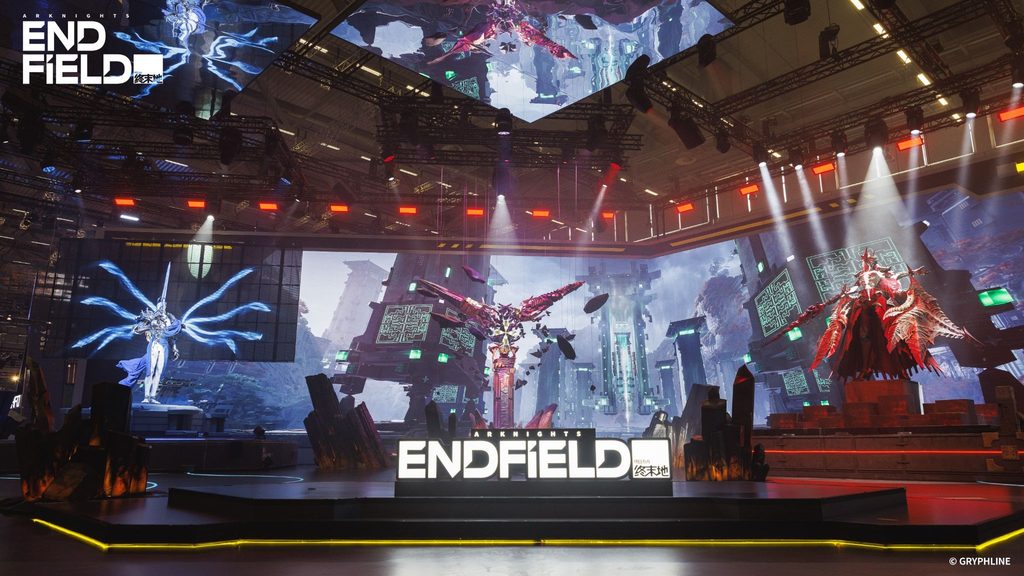
Five of the six nominees for Best Mobile Game were Chinese titles. But these were exceptions on a floor that PC and console still comprehensively owned, in booth count, in square metres, and in the trailers everyone was talking about.
So mobile wasn’t absent from Gamescom, but it was a rounding error next to PC and console, and even within that rounding error, it was one very specific version of mobile: premium, live-service, gacha-driven mobile gaming, largely out of China. What was missing entirely was a completely different mobile business that’s just as large, if not larger, and generates its revenue in an entirely different way.
According to AppMagic data, a country of roughly 85 million people, working almost entirely in one genre, has quietly built a mobile games business worth close to $2.8 billion a year, growing 450% since 2020 while most of the rest of the market barely moved. Two studios, Dream Games and Peak Games, account for more than 80% of that revenue between them. One game, Royal Match, along with its sequel Royal Kingdom, has generated over $5 billion in lifetime in-app purchases. None of that showed up on the exhibitor list in Cologne.
Türkiye’s biggest publishers didn’t need a Gamescom presence to become one of mobile gaming’s most important markets. That contrast, a few gacha giants getting the spotlight while PC and console dominate the rest of the floor, and an entire hyper-casual and puzzle economy nowhere on the exhibitor list, is the story of this year’s show worth paying attention to.
Two very different mobile industries, one show floor dominated by neither
Gamescom itself leaned hard into PC and console as always, and this year was no exception. But the few mobile stands that did make an impression skewed almost entirely toward one business model: high-production-value, IP-driven live-service games with deep character systems, gacha monetisation and multi-year content roadmaps.
HoYoverse, Tencent’s various labels and Infold’s Infinity Nikki all fit that mould, and they clearly have the marketing budgets and studio scale to make a Gamescom presence worth the investment, even on a floor that isn’t built around mobile.
That’s a very different business from the one dominating actual mobile revenue charts through puzzle, match-3 and hybrid-casual games, and Türkiye is the clearest example of just how large that other business has become. According to AppMagic data, Turkish developers captured roughly 5% of global mobile games revenue in 2025, almost entirely through puzzle games. Dream Games alone raised $2.5 billion from Blackstone and CVC last year, the largest funding round in Turkish corporate history. Strip that one deal out, and, per the same AppMagic figures, the rest of the Turkish gaming ecosystem still raised 32 times more capital in 2025 than the entire market did back in 2020.
Neither of these mobile industries needs the other’s playbook, but it’s worth noticing that only one of them made it onto the exhibitor list in Cologne. The lesson for mobile marketers isn’t “go build puzzle games” or “skip the trade show.” It’s that a booth is a marketing choice tied to a specific business model, not a proxy for where the money actually is.

Even PC and console are taking notes, just from the wrong half of mobile
That’s a lesson the rest of the industry is only now catching up on, and interestingly, it’s catching up mostly by watching the visible half of mobile. One of the clearest shifts I saw at Gamescom this year is PC and console studios adopting the performance mindset mobile has run on for a decade, acquisition, retention, LTV, ROAS, and the ongoing relationship between marketing spend and player value.
Historically, PC/console marketing has been brand-led: build awareness, drive wishlists and pre-orders, engineer one big launch moment, then let activity taper off. That model breaks down when games stay commercially relevant for years. If a game has longevity, you have to capture it, and increasingly that means less about the one-off box sale and more about in-game purchases, season passes and live-ops content that keeps players around for months.
Loyalty is becoming the real KPI for console and PC teams too, not how many players you win on launch weekend, but how much a single player is worth over their entire lifetime in the game. Mobile has been optimising for exactly that metric for ten years, and Royal Match is arguably a cleaner case study than any gacha title: its Lava Quest event mechanic, introduced in 2024, spread so widely that the format is now standard across more than half of the world’s popular casual and hybrid-casual games. A market that size didn’t get there through installs alone. It got there through retention mechanics good enough to become an industry template.
The mobile problems nobody solved at Gamescom either
None of this means mobile has it figured out. Around the corner from the show floor, the State of Gaming Summit hosted by Sensor Tower and AppsFlyer brought together CMOs, VCs, studio leads and performance marketers from mobile, PC and console, and three themes came up constantly. They’re the ones that should be keeping mobile marketers busy long after Gamescom wraps.
Rising CPIs are the obvious one. Mobile user acquisition keeps getting more expensive, and that’s pushing marketers past traditional paid channels and into something closer to community-building around creators and games — a hybrid between paid and organic where the payoff isn’t a single piece of content’s performance, but the ongoing discovery and advocacy a real community generates.
Acquisition itself is also moving outside the app store. The old funnel — ad, app store, install — is being questioned by marketers who are increasingly acquiring users on the web first, building intent there, and only later converting them into mobile players. Part of the appeal is simply cheaper routes into the funnel. But it also reflects something bigger: the web doesn’t need to be the product, just another layer before the player reaches the mobile ecosystem.
And then there’s the measurement problem that Türkiye’s own numbers hint at. As more games push players toward direct-to-consumer payments to avoid platform fees, a growing share of real revenue disappears from the datasets the industry uses to size the market. If third-party estimates keep leaning primarily on App Store and Google Play data, the picture gets less accurate every year, right as investors and analysts lean on those same numbers to make decisions. The industry’s own success at moving players off platform payments is quietly making itself harder to measure.
Where this leaves mobile marketers
Put it all together and the picture from this Gamescom is more layered than “mobile was there” or “mobile wasn’t there.” PC and console owned the floor, full stop. Within that, there was room for a handful of mobile stands, the kind with the production budgets and IP muscle to build a 660-square-metre area, and it clearly paid off in visibility and awards nominations. There was no room, or no interest, for the kind of mobile business that Türkiye represents: leaner, puzzle-first, live-ops-obsessed, and generating billions with no visible presence at Gamescom at all.
That’s not a knock on Gamescom, and it’s not a knock on HoYoverse or Tencent either. It’s a reminder that a trade show floor reflects marketing budgets and business models as much as it reflects market size. The industry is converging on what the Turkish side of mobile already knows: rising acquisition costs, funnels that don’t start and end in one app store, and revenue that’s getting harder to see in the numbers everyone still relies on. Whether the next lesson mobile marketers take from Gamescom comes from a 1,000-square-metre gacha booth or from a country whose biggest publishers never showed up and built a $2.8 billion business anyway probably depends on which of the two mobile industries you’re actually.
Note:
Turkish mobile games market data via AppMagic (“Türkiye Mobile Gaming Landscape 2026”), as reported by GamerBraves. Gamescom booth details via HoYoverse, GRYPHLINE/Games Press and MyApp Analyze.

Adam Smart
Global Director of Product – Gaming at AppsFlyer