
East Side Games has reached up to 45% direct-to-consumer revenue on iOS across its casual game portfolio after implementing Neon Direct Checkout.
The rollout involved eight casual mobile games across six independently operated studios and was completed within five months. According to the case study, the results challenge the assumption that direct-to-consumer payments are less effective in casual games than in genres such as strategy, RPG and social casino.
DTC adoption across a casual portfolio
East Side Games is a Vancouver-based free-to-play mobile games company that develops and publishes original and licensed titles across multiple studios and its GameKit partner network.
Its portfolio includes games such as RuPaul’s Drag Race Superstar, The Office: Somehow We Manage, Doctor Who: Lost in Time, Squishmallows Match, Bud Farm Idle Tycoon and Milk Farm Tycoon.
Across ESG’s casual portfolio, Neon Direct Checkout reached up to 45% of US iOS revenue, with multiple titles exceeding a 30% DTC revenue mix.
The case study notes that casual games typically record lower DTC adoption than genres such as strategy and RPG, where direct purchasing has traditionally been more common. ESG’s results indicate that casual titles can also generate meaningful revenue through direct checkout when the payment experience is integrated into the player journey.
Addressing two key challenges
Before beginning the rollout, East Side Games faced two main questions.
The first was whether direct-to-consumer payments would perform effectively across casual titles, including match-3 and narrative idle games.
The second involved the structure of ESG’s studio network. Its co-development partner studios operate independently, with their own technology stacks, release schedules and backend systems.
This meant that any DTC solution needed to work across different infrastructures without requiring a shared identity layer, common backend or platform-wide migration.
Checkout placed alongside in-app purchases
East Side Games and Neon designed the rollout around the point at which players were already considering a purchase.
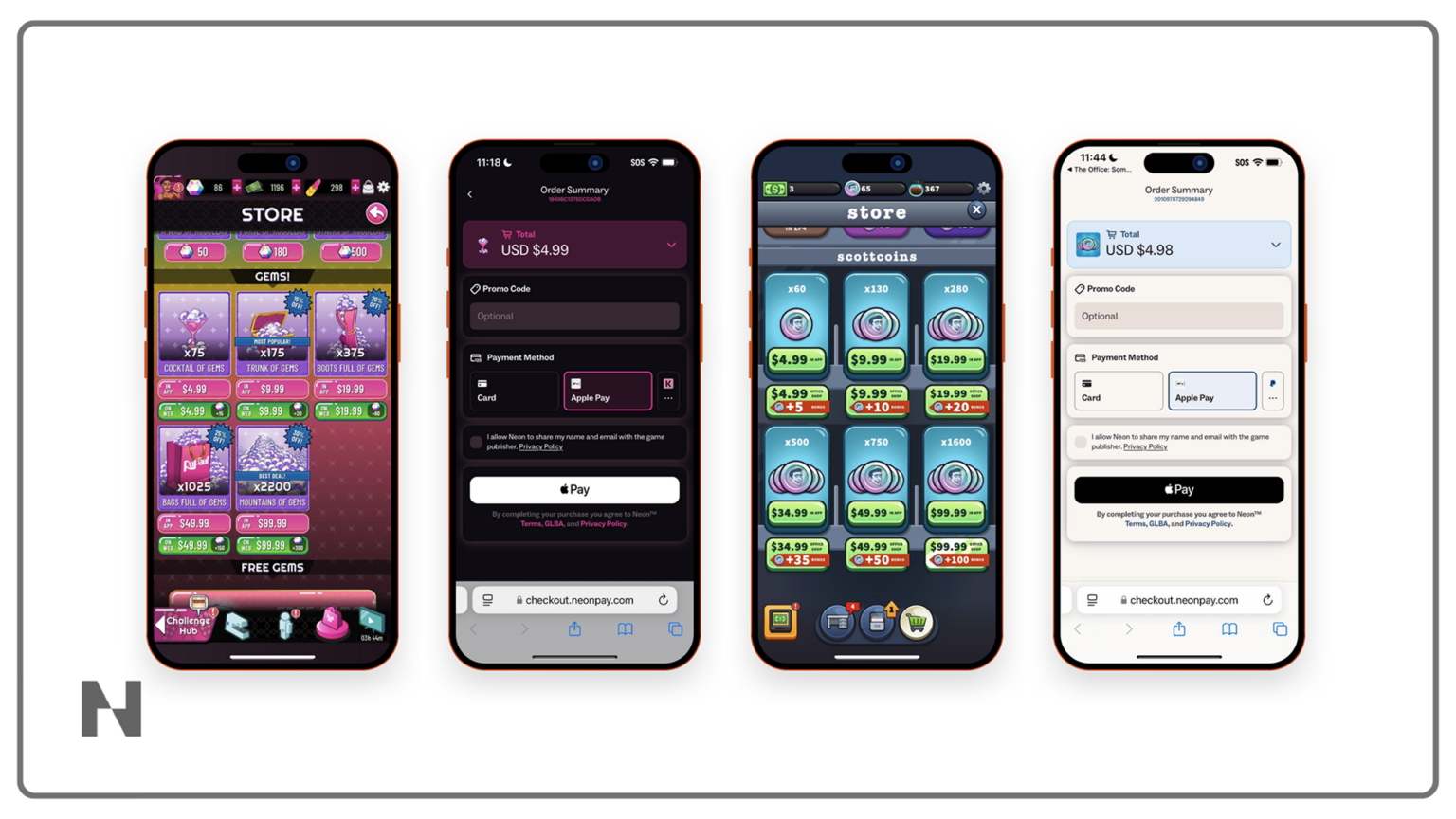
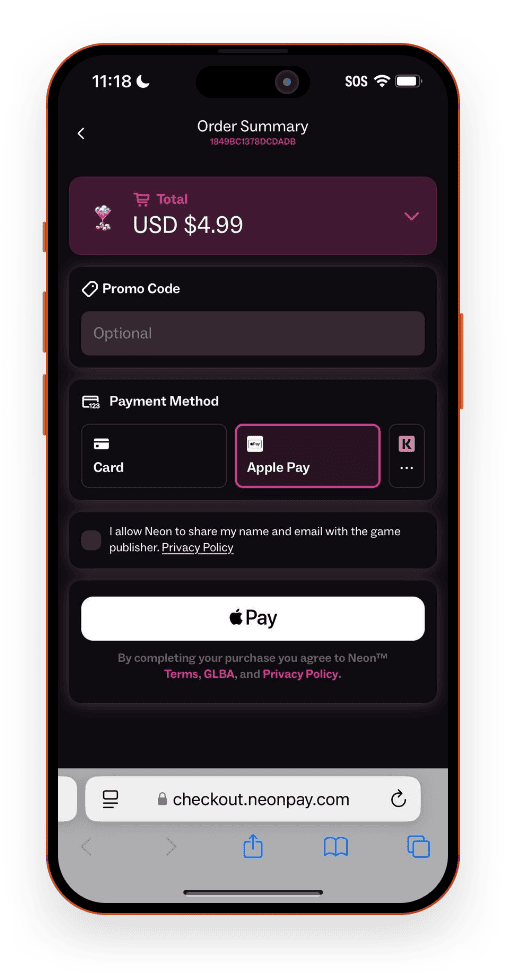
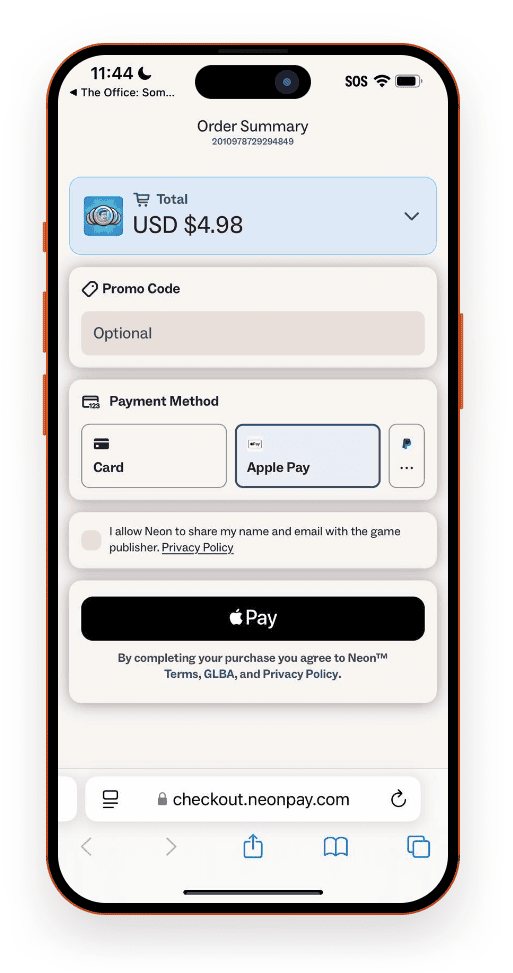
Neon Direct Checkout was placed next to the existing in-app purchase option within in-game offers. Players could access the direct checkout flow from the same offer surface and complete purchases using payment methods such as Apple Pay and Google Pay.
This placement was particularly relevant for casual games, where sessions are often short and purchase intent can be highly time-sensitive. Reducing the number of additional steps can help limit drop-off during the payment process.
The solution was also integrated with each studio’s existing backend, authentication and fulfilment systems. At the same time, the player-facing checkout remained consistent across the different titles.
As Jim Wagner, Chief Product Officer at East Side Games, explained:

“Neon built around our complexity rather than asking us to change how we work. That flexibility, combined with strong execution across teams, is what made it possible to scale Direct Checkout across our portfolio.”
D7 conversion increased by up to 124%
The case study reports that Direct Checkout contributed to a measurable increase in early conversion across several titles.
Milk Farm Tycoon recorded a 124% increase in D7 conversion after introducing Neon. Other games in the portfolio also showed positive movement in D7 conversion.
According to the results, the growth in DTC revenue was not simply the result of moving existing in-app purchasers to another payment channel. The increase in conversion suggests that Direct Checkout also helped more players complete a purchase earlier in their engagement with the games.
Returning payers drove repeat activity
The case study also highlights repeat purchasing behaviour among DTC users.
Between 47% and 80% of DTC transactions across the portfolio came from returning payers. DTC payers also typically made multiple purchases per month.
This indicates that players who adopted the direct checkout option continued to use it over time. Combined with the reported D7 conversion lift, the data points to two outcomes: Direct Checkout helped more players convert and encouraged repeat purchasing among those users.
Elin Jonsson, Chief Business Officer at East Side Games, said:

“What’s surprised us is the stickiness. Players who engage with Direct Checkout keep coming back, and not at the expense of IAP. That’s given us the confidence to push DTC further.”
A webshop will complement Direct Checkout
East Side Games is now preparing to add a webshop as another direct-to-consumer channel.
The company plans to use the two surfaces for different purchasing moments. Direct Checkout will support immediate, in-session purchases, such as buying additional energy during gameplay.
The webshop, meanwhile, will focus on more considered purchases, including exclusive bundles, free claims and progression-linked offers. It is being positioned as an official extension of the games beyond the in-game purchase flow.
What the case study shows
East Side Games’ rollout suggests that casual games can achieve substantial DTC adoption when the payment experience is placed close to purchase intent and adapted to existing studio infrastructure.
With up to 45% of US iOS revenue coming through Direct Checkout across the portfolio, alongside reported improvements in D7 conversion and repeat purchasing, the results show that DTC can serve as more than an alternative payment route for casual mobile games.
For East Side Games, the next phase will involve combining in-game Direct Checkout with a dedicated webshop to support different player purchasing behaviours.
For more details on East Side Games’ rollout, conversion results and the role of Neon Direct Checkout across its casual game portfolio, read the full case study on Neon’s website: How East Side Games Hit 45% iOS DTC on Casual Games with Neon