
Beyond mobile: how Hazmob FPS expanded to HTML5 platforms and a standalone website
Many established mobile developers have long been porting their games to instant-play platforms and web game portals, using them as an additional revenue stream or a zero-UA-budget discovery channel.
Monetization and the tooling for scaling HTML5 games are now developing at a remarkable pace: players buy in-game packages worth hundreds of dollars, and none of that revenue carries the 30% commission the mobile app stores take. On top of that, new ways to launch games on a developer’s own website — and earn from them — are emerging.
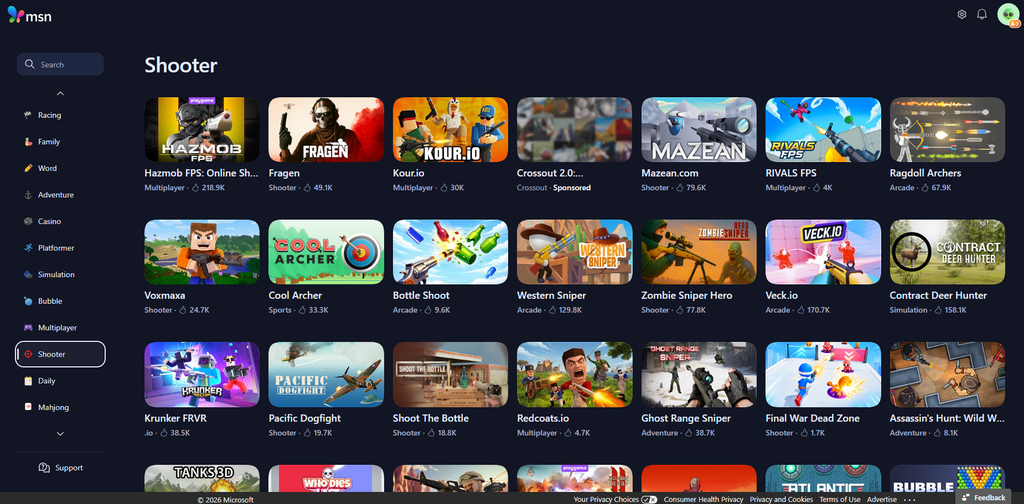
Türkiye’s mobile-first FPS studio Hazmob decided to test these waters — and it paid off. Its flagship game, Hazmob FPS, climbed to the top of MSN Games, peaking at 1.2 million monthly gameplays, then grew into a website that now draws 120,000 visitors a month — a channel where the studio controls monetization and player acquisition end to end. Along the way, the team found something it hadn’t been looking for: the web turned out to be the cheapest testing ground it had ever had.
Here’s what the team learned, what it gained, and what it cost.
A studio that’s been building mobile FPS games for almost a decade
Hazmob was founded in Türkiye in 2018 and runs long-term development operations in Ukraine. Its portfolio consists primarily of Unity-based FPS games for mobile — old-school multiplayer shooters and block-style shooters, many of which are now making their way to the browser.
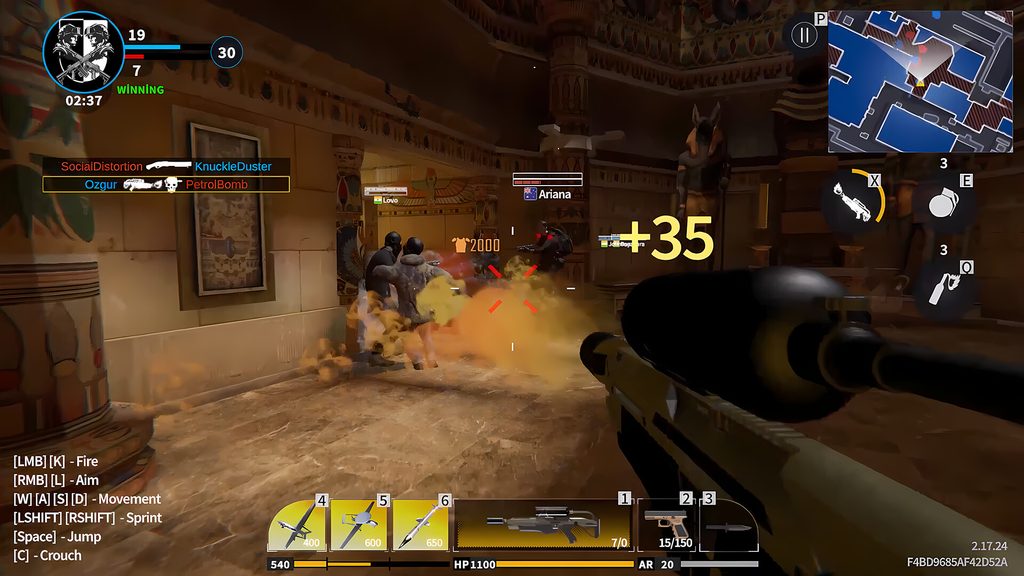
The studio’s mobile titles have accumulated more than 100 million downloads in total, but Hazmob FPS became its main and most important product. It is a fast-paced 3D first-person shooter with global online matchmaking and several game modes — and, internally, it has effectively become an FPS framework the studio reuses across its titles.
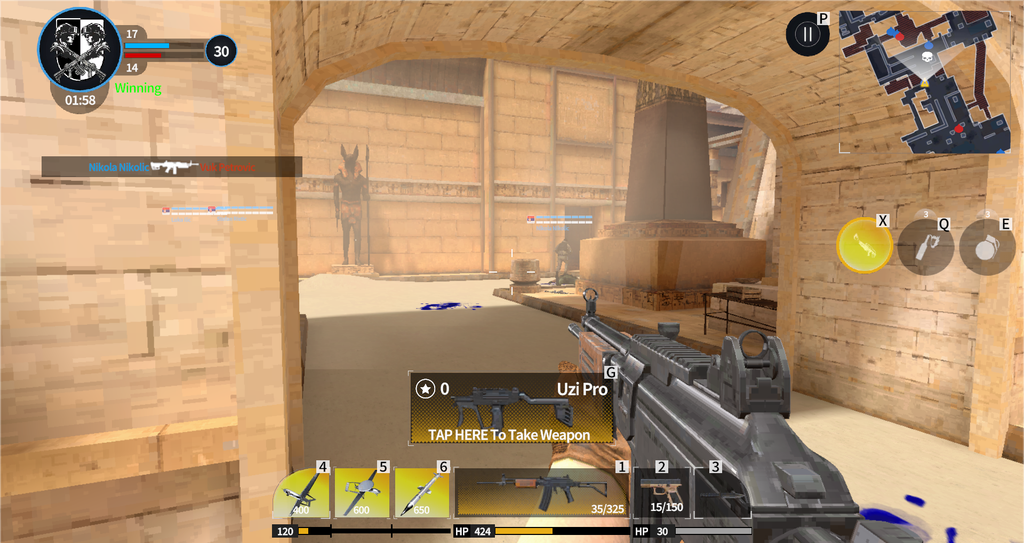
Hazmob develops FPS games across mobile and web, with plans to expand further into PC. Initially, the team started looking toward HTML5 distribution as a way to expand the brand and reach new audiences. That was particularly appealing given the strong demand for FPS games in the HTML5 space that the developers had identified.
As a small studio without a heavy corporate structure, Hazmob could move quickly and adapt its flagship game for the web as an experiment. The first port took roughly a month. It turned out to be a success, helping the studio reach millions of desktop and browser players. But it also proved to be a demanding undertaking.
Bringing a mobile multiplayer FPS to MSN and web game portals
The decision to port Hazmob FPS to the web came from a clear market observation: high-quality multiplayer FPS games are hard to find on instant-play platforms — especially ones that feel close to a mobile or PC shooter but can still load instantly and run on a website.
The web version had to fit a long list of platform-specific limitations, above all a small build size, while keeping the core FPS experience intact: multiplayer matches, weapons, progression, bots, multiple game modes, and fast action. Adapting the game for WebGL was far from a simple Unity export, but the team pulled it off.
At first, the developers launched Hazmob FPS across several web game portals on their own. That brought meaningful traffic but demanded a lot of work: each channel had different technical requirements and SDKs. Every new portal meant another integration and another set of rules to learn — time the team would rather have spent on the game itself.
So Hazmob turned to Playgama’s self-service distribution platform, which let the studio ship the game to 15+ platforms and ecosystems through a single integration of the open-source Bridge SDK. The game caught the attention of the Playgama team, which saw enough potential to bring Hazmob FPS into its publishing program and to put it forward for the most selective platforms, among them MSN Games and the Microsoft Store.
MSN Games is Microsoft’s gaming destination, reaching a large, mainstream audience that arrives through Microsoft’s own surfaces rather than through gaming sites. It is also very selective, adding only a handful of new games each week and preferring to work with established publishers rather than onboard many individual developers one by one. On your own, the wait can stretch to several months or more. Playgama’s existing partnership with MSN let Hazmob skip most of that queue.
At its peak, Hazmob FPS reached 1.2 million gameplays in a single month on MSN, and the platform accounted for roughly a quarter of the game’s web revenue.
MSN marked a significant milestone for the game, but instant-play platforms could only take a title as large and complex as Hazmob FPS so far. On someone else’s playground, you always depend on recommendation algorithms and featuring decisions, absorb every policy change the platform makes, and have little control over how players reach you. All of this ultimately pushed Hazmob to create its own channel.
The launch of Hazmob FPS on a standalone website
A standalone domain is the only HTML5 game setup where a developer fully owns the brand, monetization stack, analytics — and, most importantly, the relationship with the player.
In this case, the entire acquisition funnel belongs to the developer, who can drive traffic to the site from any source, see the full picture of where players come from and how they engage with the game, and decide which ads appear and how. Success becomes something to engineer rather than something to hope for every time a platform algorithm decides which games get surfaced.
And none of this comes at the cost of other distribution channels: Hazmob FPS stays live on app stores, MSN, and various web game portals alongside its own website.
“Raising investment for a studio whose HTML5 games live only on instant-play platforms is a hard story to tell. Games on standalone domains are a different pitch entirely: the studio owns the channel outright, and an owned channel is something you can scale.”
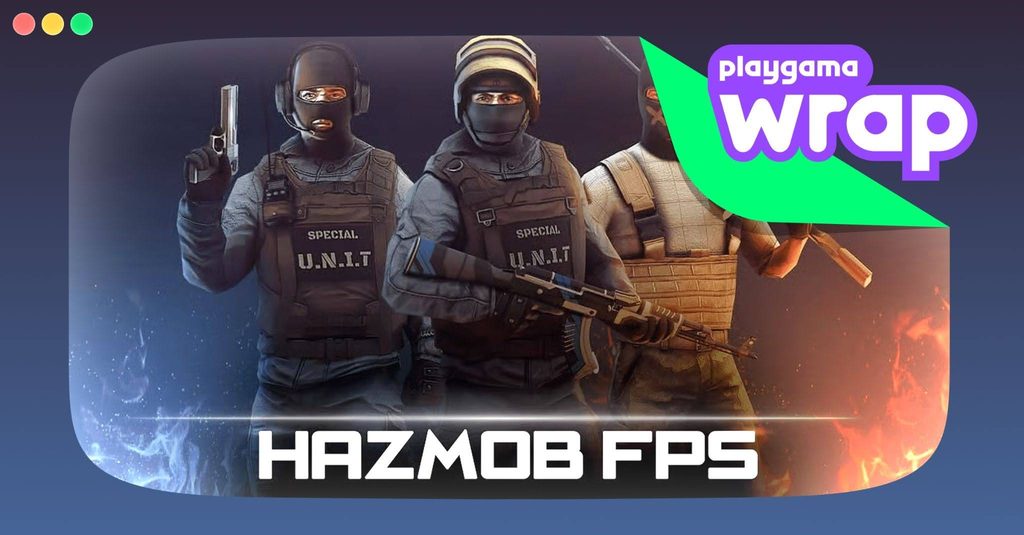
Standing up a site around a game used to be a project in itself — hosting, storefront, analytics, and the ad stack. Hazmob FPS was among the first HTML5 games to use Playgama Wrap, a free service that deploys a game on a standalone website within minutes. The developer integrates the Bridge SDK, uploads the build, and buys a domain — the site goes live immediately with a monetization ad stack, in-game purchases, and built-in analytics.
Three months in, the domain draws about 120,000 visits a month, and Playgama expects that to grow severalfold over the next 6–12 months. Revenue from it is already comparable to what the game earns across multiple individual web game portals. It also ranks first for branded searches in several countries, including the USA, and takes in a steady stream of organic search traffic.
Ad monetization on the site runs through Playgama Ad, a solution built specifically for games on the web and connected to Wrap from day one. It lifts CPMs through premium demand, bringing web inventory closer to mobile ad rates. HTML5 games have historically earned far less per impression than mobile titles, but Playgama Ad significantly improves the economics of games on websites as a business by narrowing that gap.
The ad mix on the site is deliberately thin: rewarded and interstitials, no banners — with rewarded, by far the strongest format for Hazmob FPS, doing most of the earning. For a multiplayer session-based game, retention matters more than maximizing revenue: if monetization damages the first-session experience, it undermines long-term growth.
On the acquisition side, the studio runs its own campaigns across Playgama’s network, reaching players already playing other web games. The service is currently in beta, with Hazmob among the first studios using it; other developers can request access.
For Hazmob, a personal domain has become the channel that matters most — ahead of any individual portal. Full control, room to cross-promote its other shooters, an unobstructed path from web to mobile, and a far more legible story for raising investment to grow the studio.
Ozgur Hazar, Founder of Hazmob, said:
“What we were missing was a channel we could actually scale. The platforms bring you an enormous audience, but the flow isn’t yours to control. On your own domain it works the other way round — you can put money in and get it back several times over.”
Growth and monetization strategy for Hazmob FPS across mobile and HTML5
The short version of Hazmob’s growth strategy is that the studio diversifies its revenue streams across the web and mobile, and each channel amplifies the other rather than competing with it.
Mobile comes first in this strategy: Hazmob runs paid campaigns and acquires new players for its mobile games the way any developer does, sharpening the process through store optimization and constant testing. On top of that, the studio distributes the HTML5 version of Hazmob FPS on instant-play platforms (and grows its own domain), which puts the game in front of millions of players who would never have heard of it otherwise.
The second feeds the first. According to Newzoo and Google’s research, 96% of H5 players also play mobile games. And Hazmob FPS’s example proves it. The brand becomes more widely known through the HTML5 version: branded search grows, organic installs on mobile improve, and paid UA can get cheaper.
Even though the player groups overlap, monetization depends heavily on the channel. Across HTML5 distribution as a whole, advertising still brings in the large majority of Hazmob FPS revenue — roughly 80–90% of it, with in-game purchases making up the rest. Mobile looks different: there the split is closer to 50/50. However, each instant-play platform is its own case: on one of the large web game portals, for example, in-app purchases now generate three to four times more than ads.
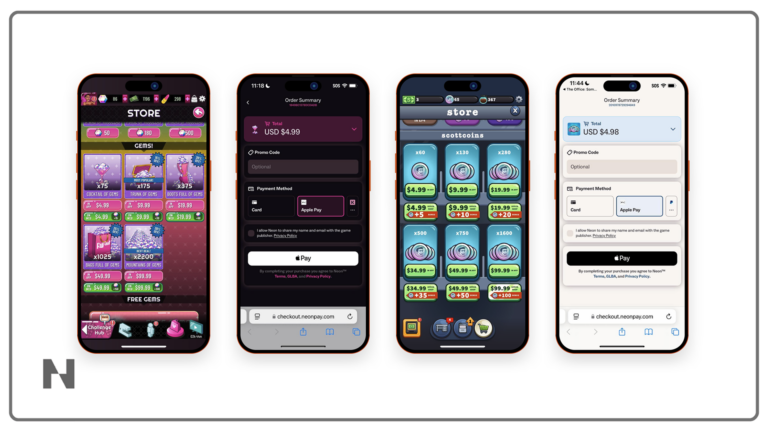
“In-game purchases can work better than expected on the web. Where the platform allows a proper store, players do buy premium items if the price-value ratio is right — we added a VIP pack for $100, and it soon became very popular, with some players buying it more than once.”
The unexpected payoff: HTML5 as a testing ground for mobile games
FPS games’ growth heavily depends on the first session. If the player enters quickly, finds a match, understands the controls, and has fun in the first minutes, the game has a much better chance of retaining them — and retention is what everything else compounds on. But it takes a lot of testing and iterating to get it right. Which is why the most valuable reason for a mobile developer to build an HTML5 version, in Hazmob’s view, is not revenue. It is data.
On mobile, testing is expensive. On the web, roughly two million players a month arrive at no acquisition cost — which turns the web version into an enormous, permanently running test bench. Experiments that would take a year to run on mobile can be finished in a week on the web: new placements, pricing, onboarding flows, level pacing, and monetization logic.
Those findings then travel back to mobile, where the revenue per player is dramatically higher. In the team’s own estimate, insights validated on the web can be worth several times more once applied on mobile than the web earns directly.
Ozgur Hazar, Founder of Hazmob, said:
“Without tests and without data, you are shooting blind. I would port to the web again even if it earned nothing — for the data alone.”
Porting a mobile game to the web: is it worth the effort?
The honest answer is: it depends on what you are after — and on where you land.
If you measure the web purely against mobile revenue, the comparison is sobering. For Hazmob, mobile still brings in several times more total revenue than the web, even though the web has more players, and the gap per individual player is far larger still. A studio with tens of millions of installs will often earn more from one new placement or bundle in its mobile game than from a year on a web portal.
But that is only one way to read it. The web brought Hazmob millions of players who would never have encountered the game otherwise, an audience that built brand recognition the mobile stores never could have. And it brought a testing ground that costs nothing and answers questions in a week that mobile answers in a year.
Ozgur Hazar, Founder of Hazmob, said:
“Web is not necessarily a replacement platform. It is an additional channel that can increase reach, revenue, and brand visibility. With Playgama it became exactly that for us — an investment that keeps paying back, in the game and in the studio as a whole.”

What’s next for Hazmob
The team will keep improving and expanding Hazmob FPS across web and mobile — iterating on the game, improving retention, adding content, and growing distribution further, with its own site as the primary growth channel.
More broadly, Hazmob is now evolving into an AI-native FPS studio, combining its proprietary shooter technology and years of FPS development experience with AI-assisted production workflows. The goal is to build, test, and launch FPS titles significantly faster across web, mobile, and, eventually, PC, while keeping FPS as the studio’s defining specialization.
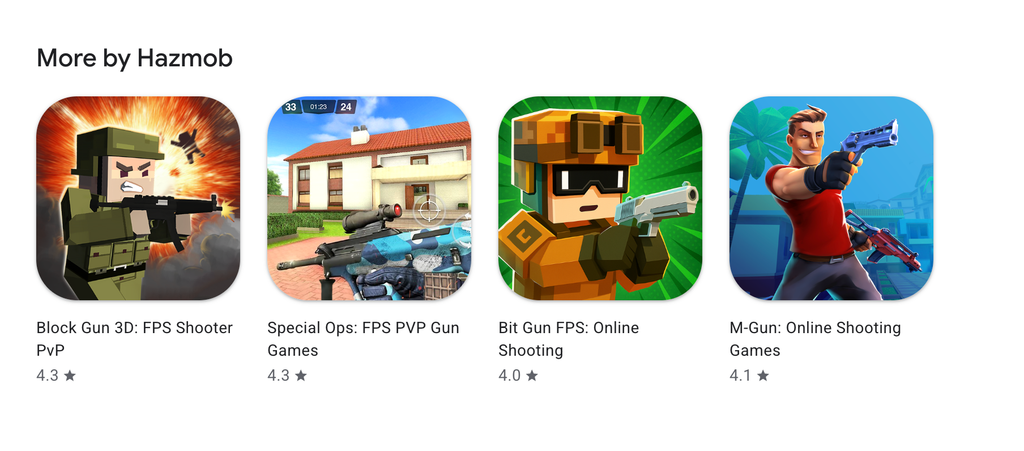
Meanwhile, other titles are going the same way Hazmob FPS did. M-Gun and Bit Gun are both making their way to HTML5 platforms, and they both are a natural fit: each takes a lighter, more cartoon-styled approach, which means smaller builds and a faster path into the first match. A third title is further along still — an unannounced World War II shooter, finished and waiting in the wings while the team gathers the data to decide how best to launch it.