
Direct-to-consumer (DTC) has become one of the defining strategic questions in mobile games. Much of the market still approaches DTC primarily through transaction economics: moving purchases outside the app stores and retaining more revenue from each transaction.
The more valuable question is not only how to move revenue outside the app stores, but how to expand revenue potential that might not otherwise exist.
This article examines three factors that shape that opportunity: addressable audience, gross revenue impact, and non-cannibalization.
Together, they show how a game hub can extend DTC beyond the transaction itself by creating additional purchase opportunities, strengthening publishers’ direct distribution channels, and building recurring player engagement through the game’s official web presence.
Why Purchase Intent Limits the Addressable DTC Audience
Transaction-focused DTC is designed primarily for players who already intend to make a purchase. That focus makes it effective for a specific audience, but also limits how much of the broader community it can reach.
In a typical mobile game, high-value players may represent 1-5% of the player base; for illustration, consider 3%. Even when a transaction-focused DTC channel performs well within this segment, its reach remains concentrated among players who already have strong purchase intent. As a result, much of the broader opportunity sits with players who do not yet have strong purchase intent.
This leaves much of the audience outside the DTC channel, including progression-focused buyers, occasional purchasers, ad-monetized players, and those who have not yet considered spending. The issue is not necessarily an unwillingness to pay. A transaction-only destination simply gives them little reason to visit before they are ready to commit to regular purchasing.
How Game Hubs Expand the Addressable Audience
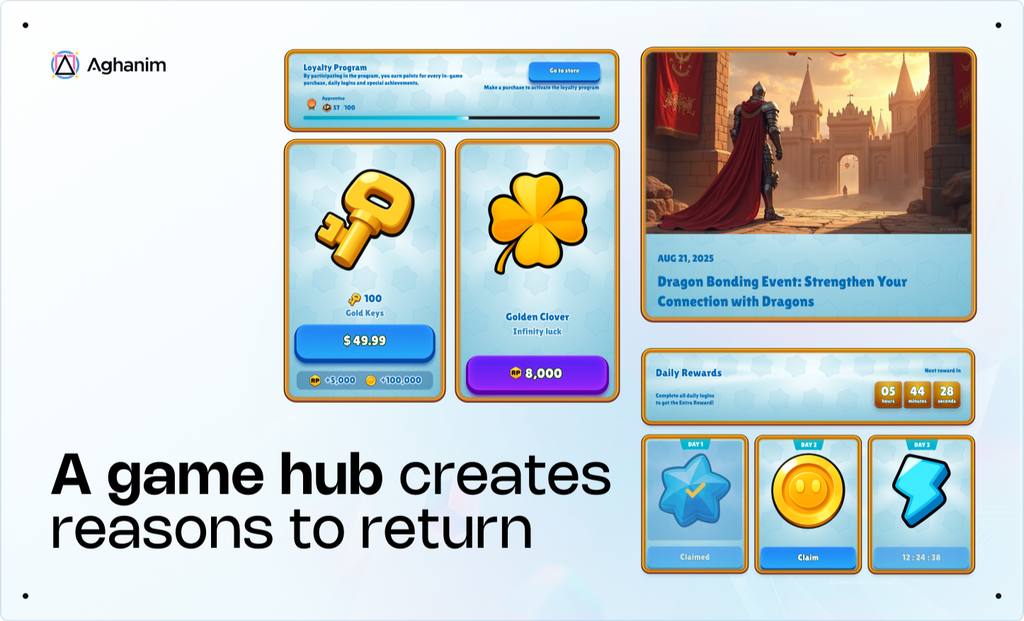
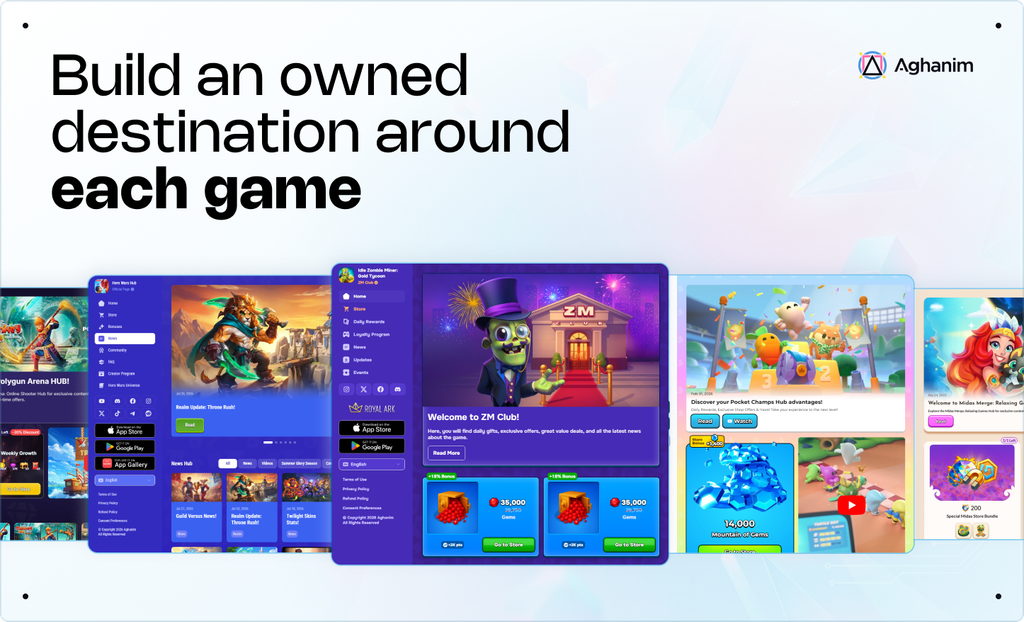
A broader DTC model starts by giving players reasons to engage beyond the transaction itself. A game hub creates a destination built around the game, with commerce integrated into the experience. That distinction changes who has a reason to arrive.
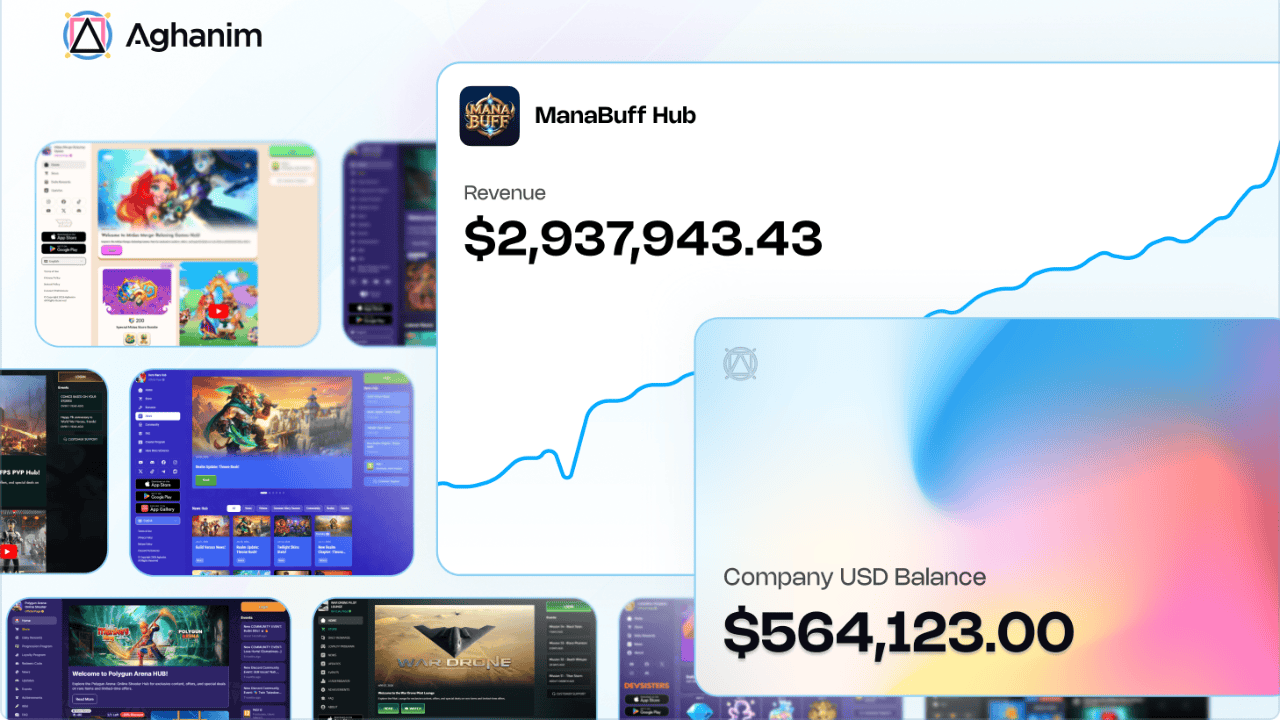
~60% of the game’s DAU visited the game hub within the first month in one deployment. During the same period, 30% of revenue moved off-app.
The model is designed to engage more than the highest-spending segment. Daily rewards and loyalty programs can bring broader player cohorts into the game hub, while achievements, leaderboards, code redemption, creator programs, news, events, guides, and wikis give different cohorts distinct reasons to return.
By creating recurring engagement across the wider community, a game hub can expand the addressable audience beyond the transaction itself. This gives publishers more opportunities to introduce relevant offers to each cohort and build a direct relationship with players through the game’s official web presence, strengthening a distribution channel they control themselves.
Beyond Transaction Efficiency: Expanding Revenue Potential
A transaction-focused DTC channel primarily improves net revenue by redirecting a high-intent purchase from the app to a lower-cost external channel. App store fees can reach roughly 30%, while the cost of a direct channel may be closer to 5-10%. The publisher retains more of the transaction, but the purchase may already have been likely to occur: net revenue rises, while gross revenue remains largely unchanged.
A successful DTC strategy reaches beyond players with existing purchase intent. Engagement creates more opportunities to introduce relevant offers and generate first-time or incremental purchases. By attracting players beyond those already prepared to buy, it gives publishers more chances to convert engagement into first-time and incremental purchases.
Liveops Turns Engagement Into Commerce
Game hubs combine commerce with liveops mechanics, allowing engagement and monetization to work within the same direct channel. In these environments, player identity, purchase history, and spending behavior can inform publishers’ responses to events such as logins, daily reward claims, abandoned carts, or insufficient-funds moments.
Publishers can use these signals to present relevant offers to different cohorts. A high-value player, a progression-focused buyer, and an ad-monetized player may each receive a different SKU, price, bonus, or loyalty incentive at the moment it is most relevant.
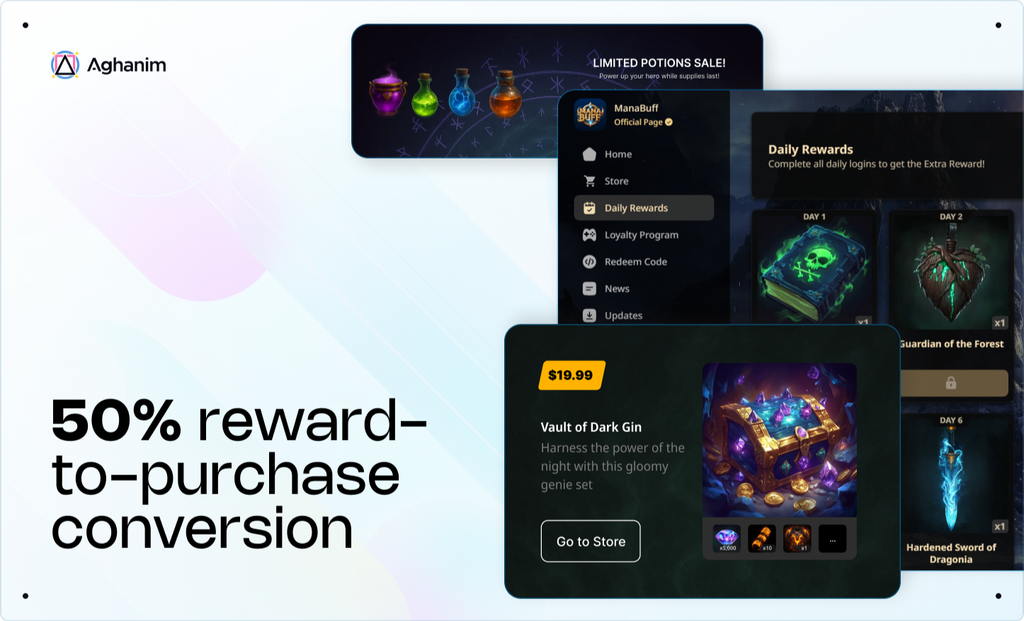
One example came from hybrid-casual and casual publishers. Players often visited the game hub, claimed a free daily reward, and returned to the game without making a purchase. Instead of treating those visits as unsuccessful, campaigns were triggered by the “daily reward claimed” event and adapted for three cohorts: progression-focused buyers, ad-monetized players, and high-value players.
50% of daily-reward claimers became paying players within one week of the campaign launch.
This illustrates how engagement can become an opportunity for further optimization. Rather than serving only as a transaction destination, the game hub allows publishers to test, personalize, and refine monetization across different player journeys.
Across publishers migrating from transaction-focused DTC setups, this approach was associated with 2x increases in ARPPU, illustrating the revenue potential of engaging players beyond the point of transaction.
Transaction Economics Are One Part of DTC Performance
Direct-to-checkout can make it possible to route a player from an in-game item to an external purchase flow. Its potential advantage is a shorter path to a lower-cost transaction. At the same time, introducing an unfamiliar external step may create additional friction and reduce conversion among players who were already prepared to buy.
Publishers therefore need to evaluate a trade-off: whether the improvement in transaction economics outweighs any potential loss in completed purchases. The outcome depends not only on the checkout itself, but also on the quality of the broader setup, including customer support, conversion optimization, and merchant-of-record coverage across relevant markets.
Creating New Monetization Opportunities
A game hub approaches DTC differently. Players visit not only to make a purchase, but also to claim rewards, read game news, follow events, or check their position on a leaderboard. These recurring reasons to engage create opportunities to reach players who may not have arrived with immediate purchase intent.
~80% of MAU visited the game hub during an average month in one mature deployment, creating a recurring audience for personalized offers.
Because these offers are presented within an engagement-driven environment, publishers have more opportunities to generate purchases beyond those originating from existing purchase intent. This can reduce the risk of cannibalization while allowing publishers to monetize short-window opportunities and previously non-paying player journeys.
Conclusion
Transaction-focused DTC channels can improve the economics of individual purchases. A game hub creates a broader opportunity: it gives more of the player community a reason to engage on the web, allows publishers to respond to that engagement with relevant experiences and offers, creating more monetization opportunities across the player base.
For publishers exploring how to turn their web presence into a direct engagement, monetization, and distribution channel, Aghanim provides the infrastructure and tools to build a game hub around their own game and community.
Treating DTC primarily as a lower-cost transaction channel misses the broader opportunity. Cost savings can improve unit economics, but a game hub achieves much more: expand the addressable audience, build recurring engagement with the game’s official web presence, and help publishers establish a direct distribution channel that is more resilient to changes in platform rules. Expanding revenue potential is part of that value. Greater control over the player relationship is the long-term strategic advantage.