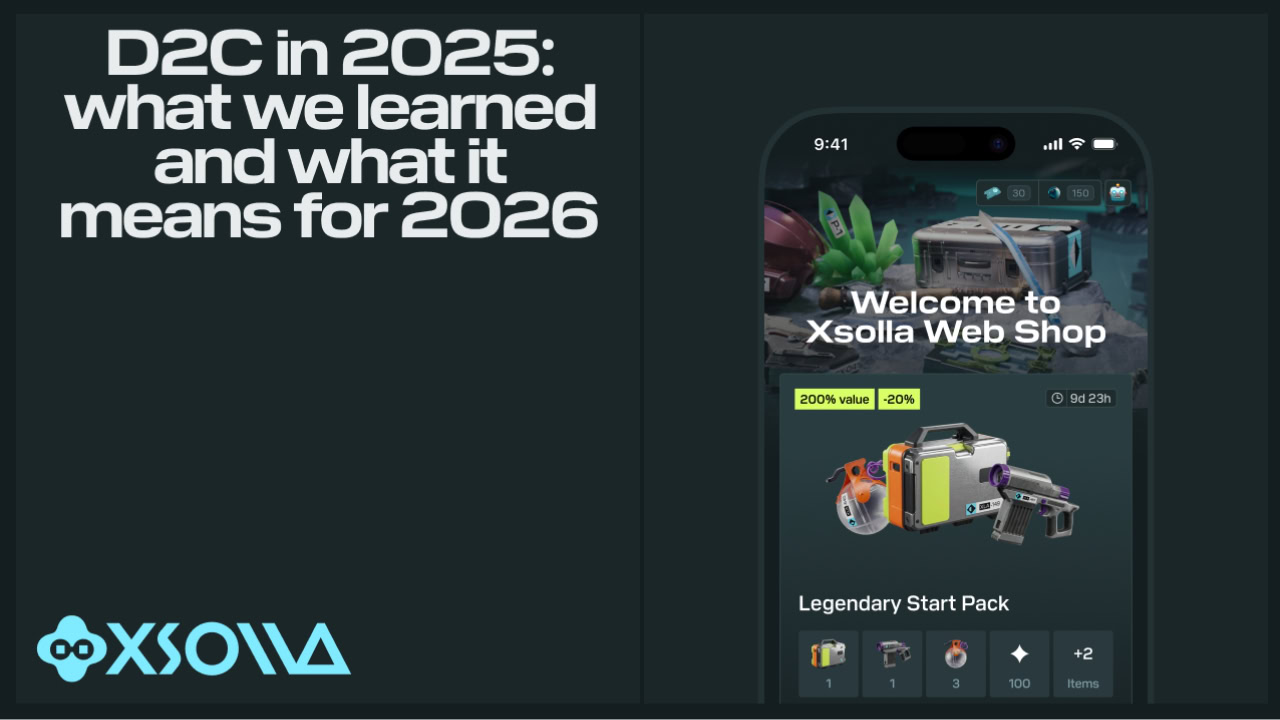

For game developers and publishers, 2025 marked a turning point for direct-to-consumer (D2C). What was once a margin optimization experiment has become operational infrastructure.
After working with 50+ partners in Türkiye across PC and mobile over the past three years, Xsolla has seen the transformation firsthand. Studios worldwide are not just experimenting, they’re building robust D2C ecosystems that drive measurable impact.
Global mobile regulatory shifts: Operational complexity on the rise
The rise of D2C is taking place alongside fragmented global platform regulations, which are reshaping how studios can monetize:
- Japan (MSCA): External links allowed, but 10-20% platform fees apply
- Google (US): Settlement proposes 9-20% service fees (pending court approval)
- EU (DMA): 20-35% total fees on external transactions
Studios pursuing D2C globally will have to navigate what’s allowed on iOS and Android by region, and platform policy updates such as Apple Alternative Terms, Google External Offers, or Japan Fair Trade Commission guidelines, establishing the new rules and playbook for creating and executing external purchase links.
This regulatory complexity reinforces why Web Shops and full D2C ecosystems – combining storefronts, LiveOps, loyalty, and analytics – have become the most sustainable path to global growth. The answer, increasingly, sits outside the app.
PC: Payment infrastructure as a growth lever
On PC, D2C is evolving differently than mobile.
Rather than replacing platforms, studios are building hybrid strategies: platforms like Steam for discovery, dedicated payment infrastructure for margin optimization, and player relationship ownership.
Over the past year, Xsolla has seen a sharp increase in global adoption of Xsolla Publishing Suite and Xsolla Publisher Network (XPN). Studios are creating alternative publishing and sales ecosystems, expanding regional payment coverage, and launching off-platform promotions with greater flexibility.
The impact is measurable:
- Higher net revenue retention compared to platform-only sales
- Improved checkout conversion rates
- Expanded access to localized payment methods
- Faster promotional deployment outside storefront constraints
In Türkiye specifically, D2C adoption on PC has nearly doubled YoY. The growth is not driven by theory; it’s driven by operational results.
Mobile: Web Shop becomes live-service infrastructure
Mobile tells a different story.
Globally, mobile D2C revenue grew +46% YoY (AppMagic). 62% of the top 100 grossing mobile games now operate Web Shops, and Xsolla launched more than 700 Web Shops.
In Türkiye, genre diversification – from hybrid-casual to casual RPG, FPS, action, and strategy – has increased the relevance of advanced monetization systems. Web Shops are no longer static discount portals; they’re live-service extensions.
Web Shops actively running LiveOps show strong performance. Across long-term partnerships, we’re seeing:
- 80% repeat purchase rate among first-time Web Shop buyers
- 4 days median time to second purchase
- 11 average repeat purchases within the web shop’s lifecycle
- Up to 60% of total sales flowing through Web Shop
Web Shop provides a wide range of features that mirror and extend in-game LiveOps mechanics. For example, familiar systems like Offer Chains and Daily Rewards.
Advanced engagement mechanics drive further lift,
Daily Rewards drive exceptional retention:
- 70-90% logged users claim free rewards
- D30 retention grows by 10 times (from 3 to 38%)
- 20% players who claim a reward completed their payment on the same day as the claim
- 67% players paid after making a claim, on average 22 days later
Offer Chain motivates first purchases and boosts spending:
- Share of first-time buyers’ grow on 40%(on average)
- # of purchases per users grow on 5%
- ARPPU grows on 10%
- D7 retention grows on 54%
The takeaway is clear: retention systems outperform discounting.
In Türkiye, we’re seeing close to 100% growth in mobile D2C adoption among growth-stage and mid-sized publishers. Rising UA costs and platform fee pressure are accelerating the shift.
From storefronts to ecosystems
As Web Shops grow in mechanic complexity, mirroring the sophistication of in-game systems, studios need infrastructure to manage, analyse, and optimize cross-platform performance.
The winning approach is no longer a standalone storefront. It’s a complete D2C ecosystem that integrates:
- Storefront + LiveOps
- Loyalty and progression systems
- Personalization
- Cross-platform analytics
- Continuous A/B testing
- Social Quests
- Expanded monetization opportunities
Studios embracing this ecosystem approach see compounding growth across retention, ARPPU, and LTV, while those treating Web Shop as a simple alternative checkout continue to underperform.
The verdict
The global D2C conversation has moved beyond regulatory headlines. It’s now about execution and 2026 is just the beginning in Türkiye, Europe and globally..
On PC, payment infrastructure is becoming competitive leverage. On mobile, Web Shops are evolving into retention engines.
Studios ready to invest in infrastructure, not just storefronts, will define the next era of mobile monetization.