
A strategic analysis of category growth, gameplay mechanisms, creative/user acquisition (UA) frameworks, and the localization potential of the Vietnamese market.
Part one of the article is available here.
Why are micro-horror creatives naturally a “cheat code” for performance advertising? How do Vietnamese players’ reactions to local imagery—like shared dormitories, aging apartments, and urban legends—compare and contrast with those of Chinese players?
From Thần Trùng (The Shaman) to Tai Ương (The Scourge), what replicable content formulas have these local Vietnamese case studies already validated? And how should Funtap Games, as one of Vietnam’s leading publishers, systematically integrate micro-horror into its product matrix and growth strategy?
In Part 2, we shift our focus from “why it matters” to “how to execute“—breaking down the golden structure of UA creatives, analyzing the cultural landscape and genuine vacuums in the Vietnamese market, and delivering an actionable strategic framework.
Creativity & UA: Light Horror’s Natural Advantage in Performance Advertising
As CPA/CPI costs continue to climb, creative assets are no longer just tools supporting user acquisition (UA); they are evolving into the new targeting layer itself. Ad platforms increasingly read content signals, scrolling/swiping behavior, watch time retention, and account-to-asset consistency to determine delivery and distribution logic.
Against this backdrop, micro-horror holds a natural advantage because the hooks of this category deploy exceptionally fast.
The 3-Second Hook
While standard game ads typically require time to introduce characters, settings, or features, micro-horror cuts straight to a suspenseful opening: a strange noise inside a room, an elevator stopping at a non-existent floor, a security camera capturing a shadowy figure, or an eerie object suddenly appearing in an everyday space. The core advantage of this format lies in its ability to instantly trigger a question in the viewer’s mind: What just happened?

Suspense-Driven Narrative Structure
High-performing micro-horror creatives typically function like a mini-movie: a character is placed in an unsettling situation, the editing pace and sound design steadily ratchet up the suspense, and then the video cuts off abruptly just before the climax. Viewers do not need to understand the full gameplay mechanics to be driven forward by pure curiosity. For mobile games, this serves as one of the most powerful conversion drivers available.

Environmental Storytelling
The closer a setting is to everyday life, the more effortlessly unease builds. Rental rooms, aging apartment buildings, dormitories, elevators, abandoned hospitals, or public restrooms are all universal spaces—easy to localize and quick to trigger personal associations. For the Vietnamese market, this represents a major advantage, as everyday real-world assets can be directly converted into powerful content hooks.

AI-Generated Assets and the Uncanny Valley Effect
AI empowers creative teams to produce a high volume of asset variations at a much lower cost. For horror content, certain characteristics in AI-generated output that are typically viewed as “defects”—slightly distorted faces, unnatural movements, or subtly off-proportion body parts—can sometimes perfectly generate the uncanny valley effect suited to the genre’s atmosphere.
However, the boundaries of these assets must be strictly managed: “deliberate eeriness” is an entirely different concept from “low-quality assets.”
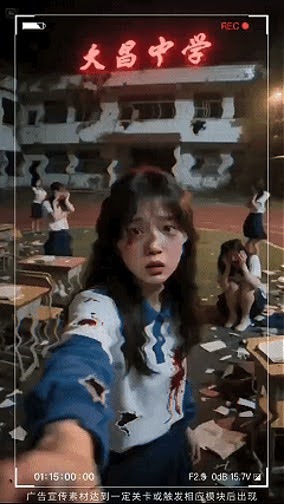
Replacing Trend-Chasing Intuition with Creative Intelligence
By leveraging SocialPeta or similar creative intelligence tools, UA teams can rapidly deconstruct the high-performing asset motifs, environmental settings, CTA formats, editing pacing, and video structures currently scaling in the market.
The proper approach is not literal copying, but structural deconstruction: identifying exactly which element stops the user from scrolling, which motif delivers the lowest CPI, which settings can be effectively Vietnamized, and which content layers should be repeatedly deployed to maintain consistent account signaling.
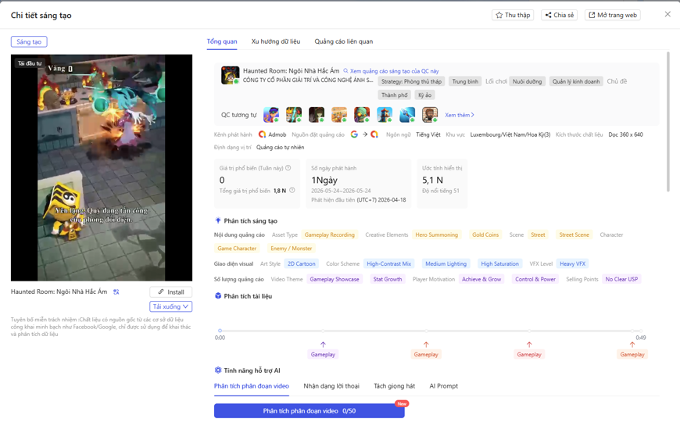
From China to Vietnam: A Rapidly Clearing Window of Opportunity
Vietnam possesses an incredibly fertile cultural landscape for light horror content: supernatural elements, folklore ghost stories, urban legends, shared dorms/apartments, and a deeply ingrained habit of consuming short-form digital entertainment. Previously, these elements existed in fragments but had not yet catalyzed into a distinct wave within the games industry. The rise of micro-horror in China has provided a perfect reference signal; as multiple titles of a similar style emerge and ripple into Vietnam, the silhouette of player demand is becoming visibly clearer.
Critically, this opportunity extends far beyond the mobile space. PC indie games, live streaming, short-form video, theatrical releases, and entertainment IPs are converging to construct a holistic local horror ecosystem. For publishers, this represents a strategic open window to treat micro-horror as a multi-platform content direction rather than a single, niche product line.
Thần Trùng (The Shaman): A Case Study in Local Culture’s Hold on PC
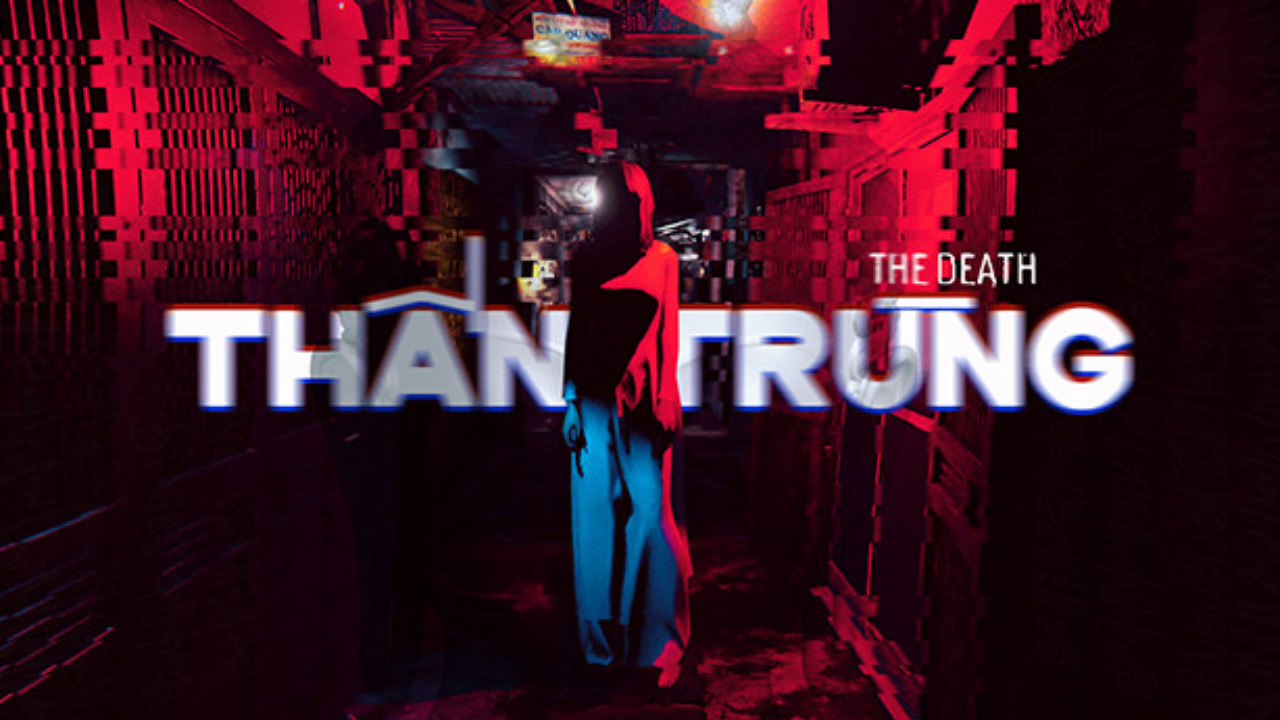
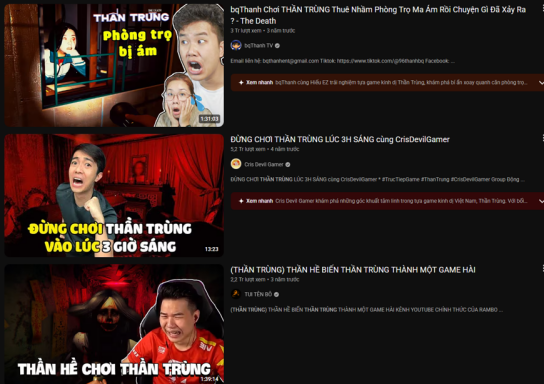
Vietnam has already witnessed a landmark case study: Thần Trùng (The Shaman / The Death), a pure Vietnamese indie game developed by DUT Studio and deeply tied to the community of popular streamer Dũng CT. The game plunges players into an old Hanoi-style collective housing complex (khu tập thể), leveraging highly relatable, everyday details: patterned tile floors, weathered corridors, the blare of public loudspeakers, and a raw, familiar urban atmosphere.
The draw of Thần Trùng went far beyond simple jump scares. Its core product strength lay in its profound sense of place—players recognized the space, recognized the sounds, and recognized a distinct anxiety unique to Vietnam. When major streamer communities surrounding figures like Độ Mixi, PewPew, and Xemesis jumped in, the game achieved massive organic virality without relying purely on paid UA.
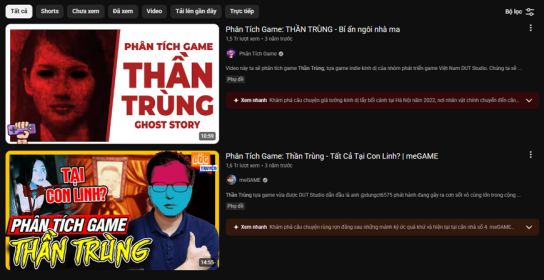
The conclusion is clear: localized horror content possessing a sharp concept, highly recognizable environments, and abundant “reactable moments” possesses unmatched community-activation power. Vietnamese players do not merely treat horror as an experience of fear; they view it through the lens of atmosphere, curiosity, and pure entertainment value.
Multi-Platform IP Expansion: The Case of Tai Ương (The Scourge)
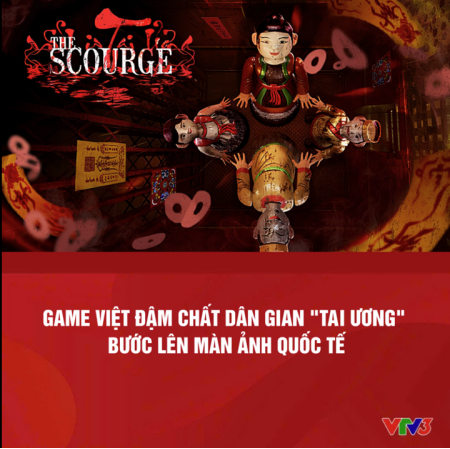
The Vietnamese horror trend is rapidly expanding across multiple layers of media, branching from PC games into theatrical films and broader entertainment IPs. Tai Ương (The Scourge) stands as a prominent example. Set in 1990s Saigon, it blends urban legends with distinct Vietnamese lifestyle aesthetics. The intense community attention it has received demonstrates that localized horror possesses massive IP potential that transcends any single game platform.
“This pure Vietnamese horror game, titled The Scourge (Tai Ương), has sparked a global sensation and recently made history by becoming one of the first homegrown Vietnamese video game IPs to be adapted into a feature film for international audiences.
The project put distributor Skyline Media under the spotlight at the 2026 Cannes Film Festival in France. Prior to hitting the big screen, The Scourge had already conquered the global gaming community with over 100,000 international downloads, topping Steam charts in China and maintaining a 94% positive rating. This seamless fusion of Vietnamese folklore and modern entertainment concepts is poised to bring a wave of mystique and explosive energy to the international film market.”
A growing number of light-horror titles are emerging in the casual mobile gaming sector.
Funtap Games‘ experience in publishing Haunted Room: Ngôi Nhà Hắc Ám serves as a practical baseline for a deeper evaluation of this specific track.
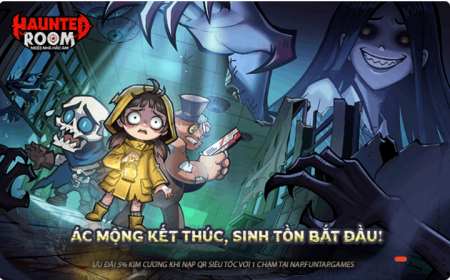
Beyond tracking downloads and revenue, it is crucial to deconstruct player reactions layer by layer: which hooks stop them in their tracks, which core loops bring them back, what scenarios drive them to share, and whether they would embrace a Vietnam-localized setting if the product undergoes deeper localization.
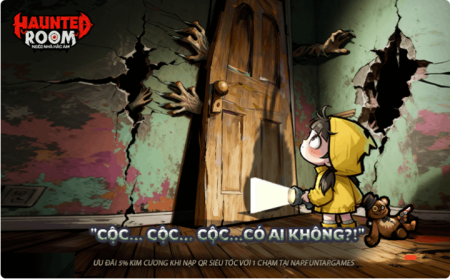
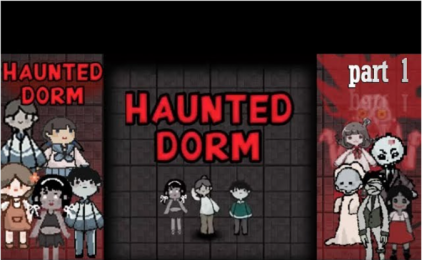
While Haunted Dorm previously demonstrated mobile players’ strong appetite for room defense horror mechanics, the Vietnamese market still lacks a counterpart with distinct local DNA. Elements like student rental housing, apartment corridors, late-night street vendors’ cries, water ghouls, shadows lurking at the end of alleys, and other folklore motifs remain untapped. This represents a highly valuable market vacancy for studios or publishers looking to test products on a moderate budget while chasing high social buzz potential.
Frontline Insights from Funtap Games
Micro-horror should not be dismissed as a short-term fad that merely serves a few ad-creative cycles. If leveraged properly, it can become a strategic product direction that helps publishers establish differentiation across three distinct layers: product selection, content localization, and growth operations.
- For Funtap Games, micro-horror is far more than just a fleeting viral trend; it represents a validated growth vector that can be systematically tested, localized, and scaled through product sourcing, market testing, localized ad creatives, and community operations.
- Establish a Dedicated Micro-Horror Product Tracker: Continuously monitor dynamics across Chinese products, WeChat Mini-Games, Douyin, TikTok, Google Play, and various Southeast Asian markets to identify which gameplay formats are flashing genuine growth signals.
- Prioritize Core Gameplay with Proven Casual Reach: Mechanics like room defense, idle, merge, match-3, or casual roguelikes should take precedence over pure-horror gameplay. These genres lower the barrier to entry and are inherently more scalable for user acquisition (UA).
- Invest in Localization Infrastructure from the Conceptual Stage: This goes beyond simple text translation or asset replacement. From day one, Vietnamese ad creatives must integrate local settings, cultural motifs, sound design, plot scenarios, and creative hooks.
- Build a Creative Framework Rather Than Managing Disjointed Videos: For micro-horror, a standardized set of motifs and video structures must be established: Anomalous Signal → Character Reaction → Decision Making → Consequences → Cliffhanger. This framework can then be iterated into variations tailored to different audience segments.
- Leverage Community Dynamics and Streamer Reaction Effects: Horror is inherently a spectator genre. KOLs, streamers, short-video creators, and meme communities should be integrated as critical components of the organic UA funnel.
- Measure Success via Content Metrics Rather Than Rigid Media Metrics: Beyond standard CPI, CTR, and CVR, publishers must track save/share/comment rates, video completion rates, high-reaction motifs, player retention driven by short videos, and the viral velocity within communities.
Micro-Horror is a Content Proposition, Not Just a Genre Choice
From growth signals in China to early success stories emerging in Vietnam, micro-horror demonstrates a compelling growth logic: this genre does not sell pure terror, but rather a shareable emotional experience. For mobile games, the formula for scalability is not “the scarier, the better,” but rather “moderately eerie, highly intuitive, easy to play, and effortless to retell.”
Horror can serve as an emotional overlay for a wide variety of core mechanics: merge, co-op, roguelikes, idle, match-3, room defense, or extraction modes. Compared to building entirely new gameplay systems, this approach offers significantly higher R&D efficiency while providing a clear edge in ad creatives and UA, especially as ad platforms increasingly reward content-driven signals.
Vietnam presents a clear window of opportunity between 2026 and the end of 2027. If supernatural folklore, urban legends, and everyday Vietnamese scenes can be translated into short-session gameplay loops, sharp creative hooks, and highly shareable community content, they will yield a powerfully differentiated competitive advantage.
Backed by its robust market research capabilities, hands-on experience publishing Haunted Room: Ngôi Nhà Hắc Ám, and industry recognition at the Vietnam Game Awards 2026, Funtap Games is uniquely positioned to define itself not merely as a trend-follower, but as a publisher that actively discovers, validates, and commercializes emerging trends.
Micro-horror represents exactly this trajectory: starting as a highly scalable casual mobile genre, and progressively evolving into an IP with deep community roots and multi-platform potential.