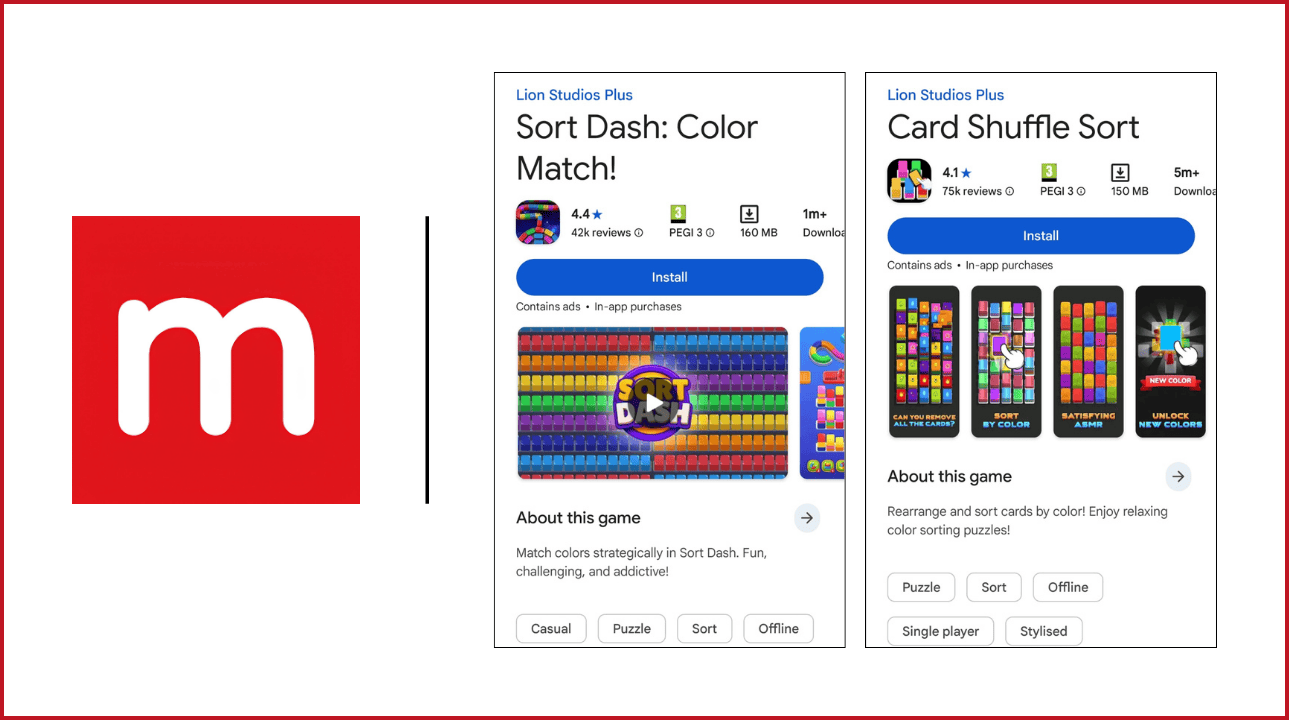

During the Publishing & Partnership event organized by Lion and Mobidictum, Machina Games Co-Founder Başar Oğuz discussed the studio’s journey from its founding to the success of Sort Dash and Card Shuffle Sort, as well as publisher partnerships, changes in the hybrid-casual market, and the team’s growth strategy.
From hyper-casual to puzzle games
Founded in 2019 by Başar Oğuz and Cem Özdemir, Machina Games initially focused on developing hyper-casual games. Oğuz explained that the studio preferred working exclusively with publishers in its early years, allowing the team to reduce operational overhead and focus on product development.
The team began working with Lion Studios in 2022 and pivoted toward the puzzle genre. According to Oğuz, the studio’s real growth phase began after this strategic shift.
Card Shuffle Sort was not an overnight success
Başar Oğuz emphasized that Card Shuffle Sort’s success story was far from effortless.
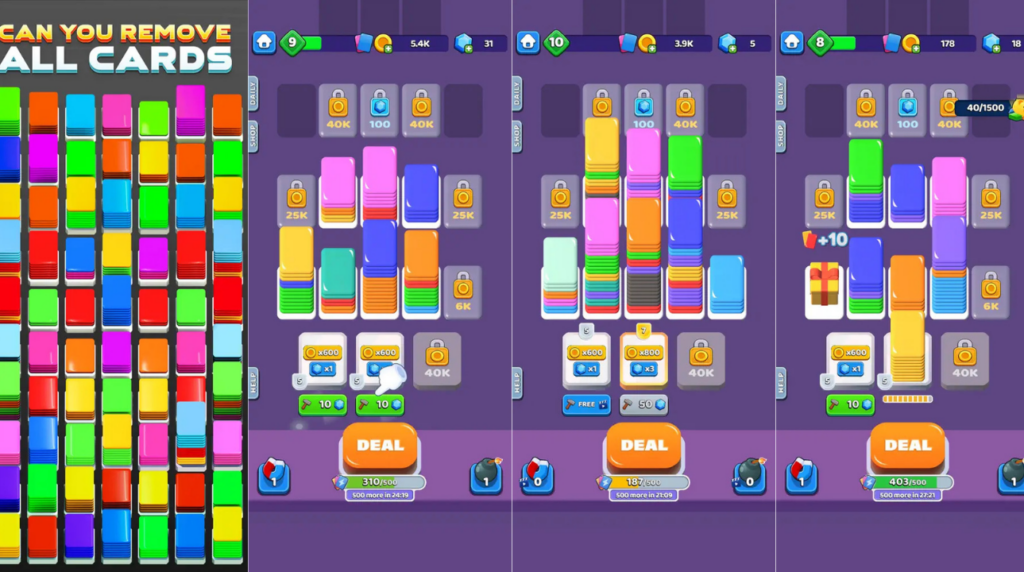
Before developing the game, the studio worked on approximately 10 different puzzle prototypes. Oğuz noted that Card Shuffle Sort was not a title that achieved perfect results from its earliest tests. Instead, it reached its current level through extensive iteration.
According to Oğuz, the game’s D1 retention started at around 35% and eventually increased to approximately 60% through continuous improvements and optimization.
“Learning live ops was important for us”
After launching Card Shuffle Sort, Machina Games chose not to hand the game over directly to the publisher and instead decided to manage its live operations internally.
Oğuz explained that the team viewed live ops as a critical capability for hybrid-casual puzzle games and wanted to build that expertise themselves.
The team continued developing the game for approximately a year and a half, building its own retention systems and gaining valuable experience throughout the process. According to Oğuz, those learnings later played an important role in the development of Sort Dash.
Monetization was at the core of Sort Dash’s design
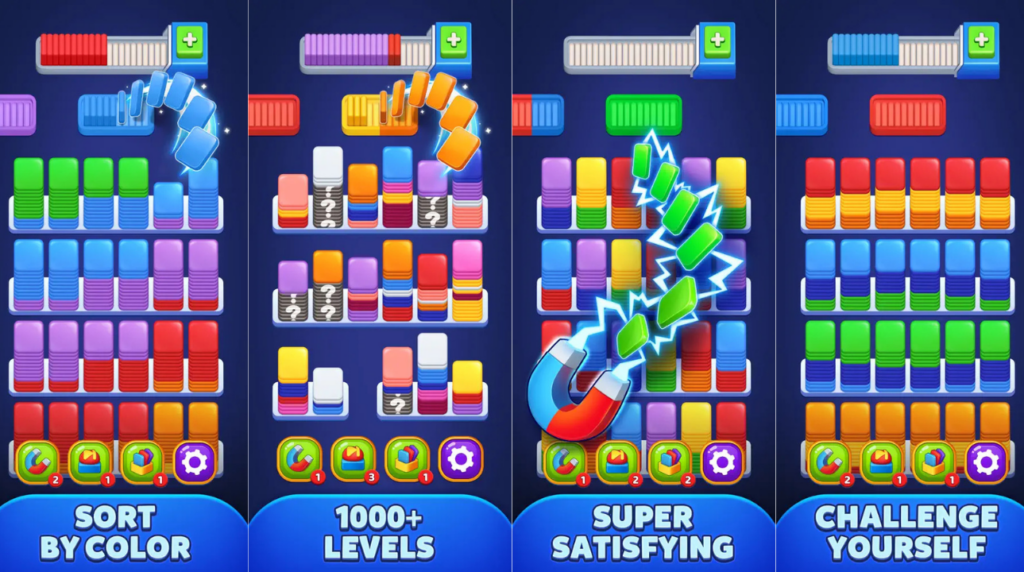
Başar Oğuz stated that the difference between Sort Dash and Card Shuffle Sort was not limited to visual quality alone.
While the first game relied heavily on advertising revenue, Sort Dash was designed with monetization in mind from the earliest ideation stages.
The team shaped the game’s core mechanics by exploring ways to create a fail condition within a card-sorting game. Oğuz said that this approach ultimately helped them achieve the commercial and product metrics they were targeting.
“Self-publishing is not a trend, it’s a business model”
Oğuz also shared his thoughts on self-publishing, a topic that has been widely discussed across the gaming industry in recent years.
According to him, self-publishing should not be viewed as a trend.
Instead, he described it as a business model choice that can lead to different outcomes for different studios. For that reason, studios should evaluate their own strengths and needs rather than simply following industry trends.
Oğuz also emphasized that publishers are ultimately business partners and that the right partnerships can play a major role in a studio’s growth.
The key to the Lion Studios partnership: freedom
One of the main reasons behind Machina Games’ long-term collaboration with Lion Studios was the balance between creative independence and strategic support.
Oğuz explained that maintaining ownership of the product vision and roadmap was important to the team, and Lion Studios provided the autonomy needed to make key product decisions. At the same time, the partnership gave Machina Games access to Lion’s expertise, including market intelligence, data-driven insights, game design support, and opportunities to scale the team as the studio grew.
According to him, this combination of trust, collaboration, and access to resources created an environment where the team could move quickly, make informed decisions, and maximize the potential of its games.
Teams are growing in hybrid-casual
Although Machina Games developed its first successful titles as a two-person team, the studio has since expanded.
Oğuz noted that the demand for art and level design resources has increased significantly in recent years. As a result, he believes that teams of eight to ten people have become more suitable for building scalable products in today’s hybrid-casual market.
He also pointed out that longer production cycles and increasing market competition have directly influenced team size requirements.
AI is changing ideation processes
Toward the end of the discussion, Oğuz touched on game ideation and how artificial intelligence is reshaping the process of developing new concepts.
He explained that ideas were previously explored mainly through sketches and paper-based workflows. Today, however, rapid prototyping tools and AI technologies allow teams to turn concepts into playable experiences much faster.
As a result, Oğuz believes that the concept of “playable ideation” is becoming increasingly valuable.
Defining success: scaling profitably
For Başar Oğuz, the key metric that defines success is straightforward:
“Being able to scale games profitably.”
The path Machina Games has followed so far reflects this philosophy. Rather than focusing on producing large numbers of prototypes, the studio has prioritized iteration, continuous learning, and long-term sustainability, leading to successful titles such as Card Shuffle Sort and Sort Dash.