
Local acquiring worth 8.4 points of approval; wallets underperform on order value and repeat purchase
Appcharge has published new analysis of a year of DTC transactions across its payments stack, representing more than $1 billion processed annually. It finds that three decisions most studios treat as plumbing are moving approval rates, order value, and how often players come back.
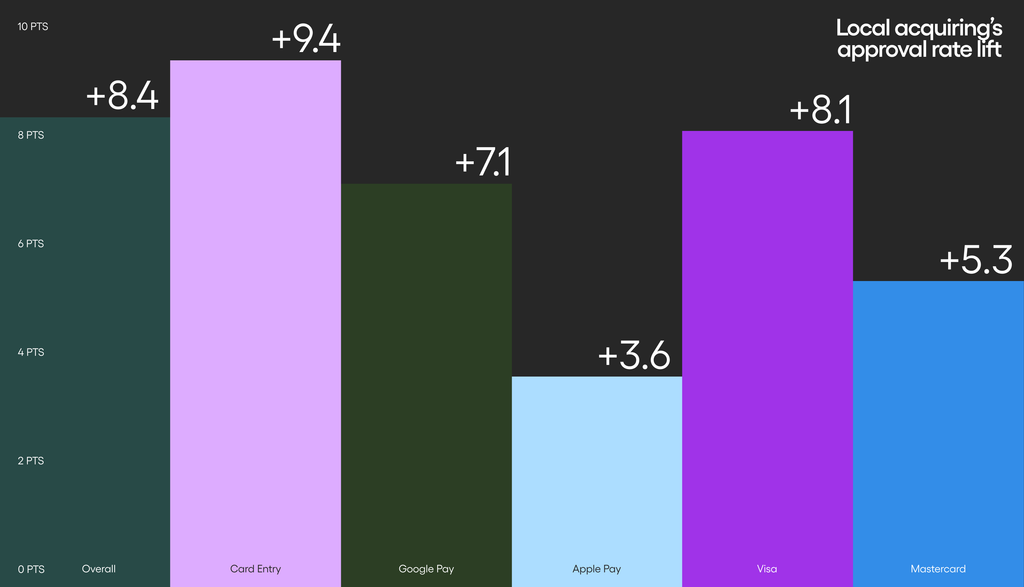
Two identical players buying the same item on the same web store with the same card do not get the same result. Routing the payment through a bank in the player’s own country rather than cross-border raises the approval rate by 8.4 percentage points. On $10m of annual volume in a single market, that is $840,000 that would otherwise be lost at authorisation.
The analysis identifies three separate layers where DTC payment performance is won or lost. In each one, the biggest gains come from somewhere publishers would not expect.
Where the transaction is acquired: Local acquiring wins in 17 of 20 combinations of processing entity and payment method with meaningful volume. The effect tracks network structure: Visa gains 8.1 points from local acquiring and Mastercard 5.3. Visa and Mastercard are four-party networks, so acquirer and issuer sit in different countries on a cross-border transaction, which is exactly the signal issuer risk models are built to catch.
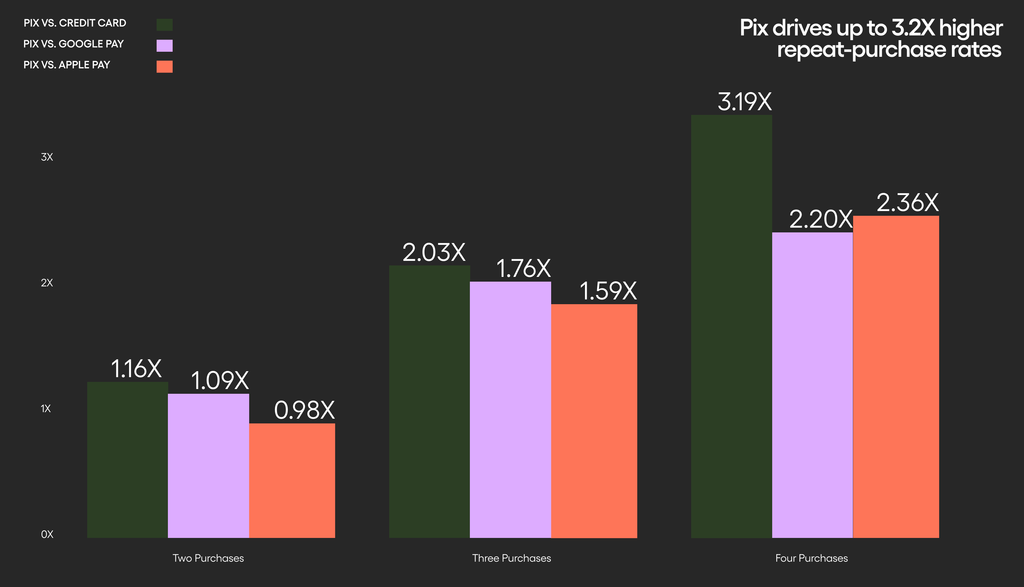
Which local method sits on the checkout page: The case for a local payment method usually rests on early conversion, which is the wrong place to look for it. Across a cohort of close to 44,000 Brazilian players, Pix, credit card, Apple Pay, and Google Pay finish within roughly three points of each other at a second purchase, with Apple Pay marginally ahead of Pix. Purchase three is where it flips. Pix pulls to a 1.5x lead over Apple Pay, 1.7x lead over Google Pay, and 2x lead over credit card. By purchase four, that lead grows to 2.3x, 2.2x, and 3.1x respectively. In other words, Brazilian players who pay with Pix complete third and fourth purchases at a higher rate than those using credit cards, Google Pay, and Apple Pay.
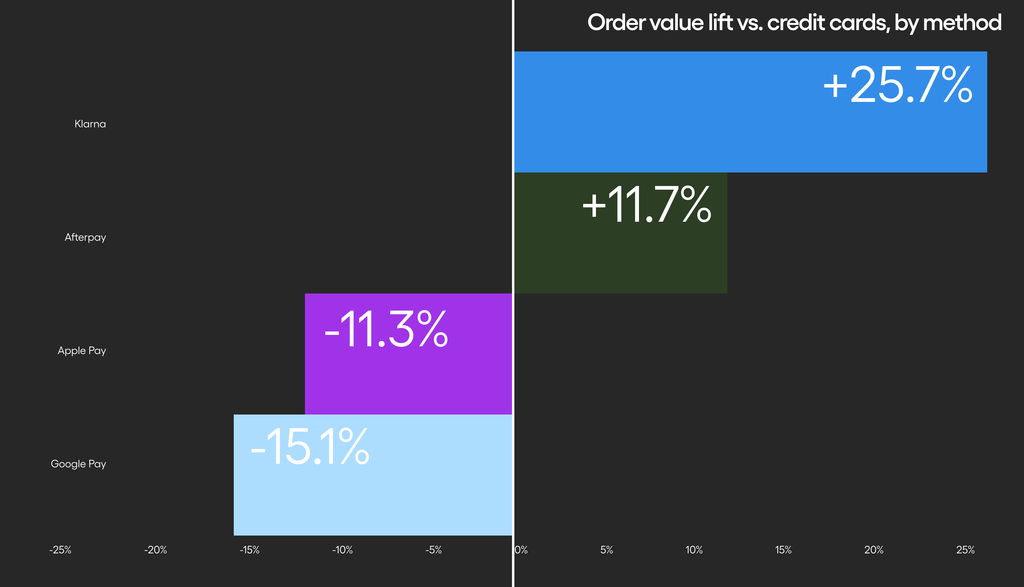
Whether buy now pay later is offered: Average Order Value is higher on BNPL, providing a strong retention and user LTV signal for publishers. On matched storefronts, compared to credit cards, Klarna orders run 25.7% higher and Afterpay 11.7% higher, while Apple Pay and Google Pay run 11.3% and 15.1% lower. The practical value here is timing. A player who checks out with BNPL has already told you something useful about themselves before any behavioural data exists to work with. Most retention signals arrive weeks or months in, once a spend pattern has formed. This one arrives immediately, costs nothing to collect, and is sitting in data every studio already has. Offering BNPL is not only about converting the first purchase. It is also about being able to recognise, from that purchase, which players are worth investing in keeping.
Chen Aspler, Director of Payments at Appcharge said:
“Acquiring geography, payment method mix, and payment flexibility each take real work to get right, and none of them look like priorities until you see what they cost you. The gains from each individually will be modest at first, but combined as a whole – that’s where we see publishers making major uplift to their transaction success rates and ultimately, revenue.”
The analysis follows Appcharge’s January 2026 industry report and the company passing $1 billion in annualised DTC transaction volume in March.