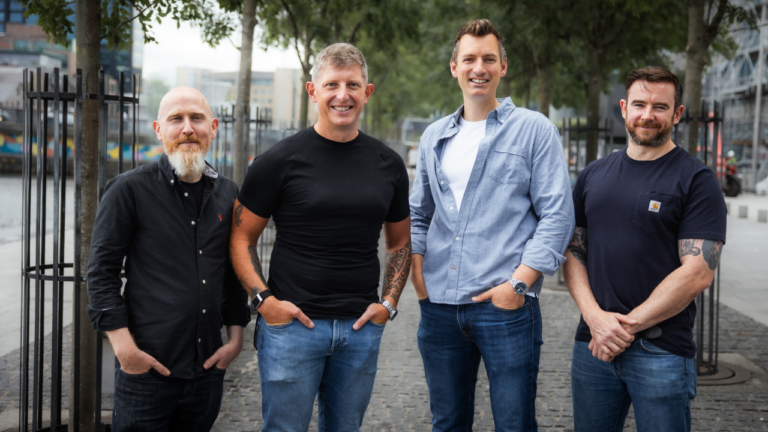

We met with Appcharge CMO Gil Tov-Ly during Gamescom 2026 to discuss the company’s plans for Türkiye and his outlook on the country’s mobile games market.
Speaking with Mobidictum Founder Batuhan Avucan, Tov-Ly discussed the growing adoption of direct-to-consumer strategies, Appcharge’s approach to the Turkish market, and where he sees the industry heading next.
You opened your Istanbul office in 2026. How has it been going so far?
Türkiye is a really important market for us. We think there is significant growth, especially in casual games.
DTC used to feel like something reserved for social casino, because those were the studios that were seeing success with it. This year, however, we started seeing casual come back into the picture, and casual is huge in Türkiye.
We now have strong playbooks and a better understanding of how to take DTC to market with casual studios. We have worked with studios such as Candivore and others, and we also have case studies with King. We now know much better how to guide studios through that process.
Türkiye is therefore really important for us. We have secured some of our first clients in the market, and there is also a strong element of trust in Istanbul. People want to work with what they know.
It is important for us to enter the market in the right way and allow people to get to know us, because social proof and word of mouth are very important here.
For Turkish studios, is the web store still something relatively new, or are they already familiar with the concept and looking for new solutions?
I think Türkiye was a little late to DTC as a market, but that makes sense because the games made here are not predominantly social casino games.
Casual struggled to really crack DTC for a while. That mainly started changing in 2025 because of changes around payments.
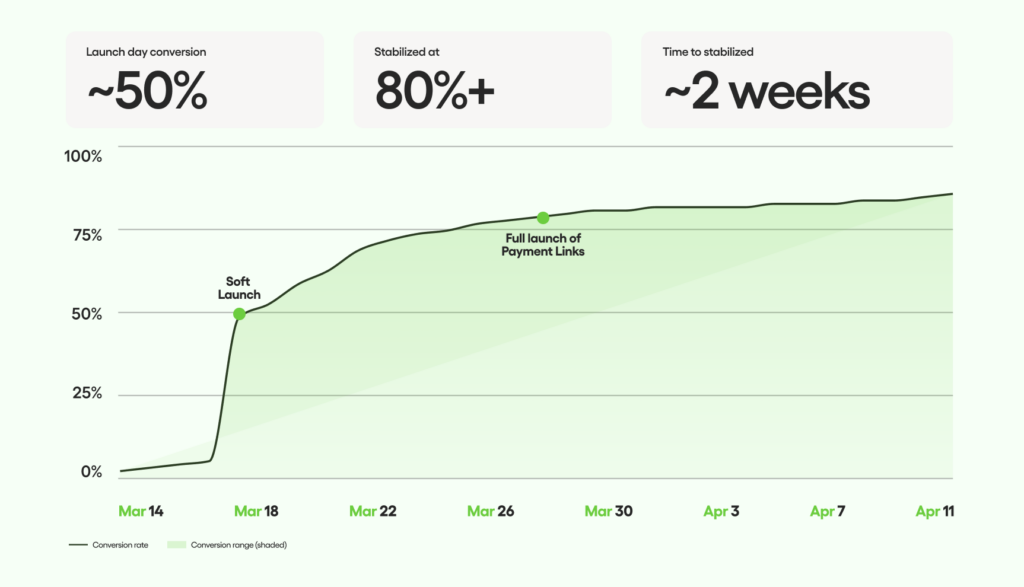
Now you can start educating a large number of players through notifications inside apps. You can start with payment links and then build the web store around the first cohorts of players who are becoming familiar with purchasing through the web.
This year, we have started seeing casual studios coming to DTC in large numbers.
We are also seeing DTC become something that studios in Türkiye take much more seriously and understand the importance of. From Dream Games to Grand Games and Matchingham Games, we see companies taking steps towards DTC, and we think the rest of the market will follow.
Do you see resistance from studios because they are worried that using DTC could create problems with Apple or Google, or affect their relationship with those platforms?
We hear that concern as well.
At the end of the day, the way we guide publishers is to operate in a balanced way. We always advise studios to do things according to the rules and to use compliant approaches.
There are certain ways to implement payment links that comply with what Apple asks for, and there are also approaches that are not compliant.
Some other vendors might pitch things that are more aggressive. For example, an iframe inside the app can feel very native, but that does not mean it complies with what Apple wants.
Whatever you do, you still need to maintain your platform relationships. You need to choose a vendor that understands this space and understands the implications. Sometimes the issue is legal, and sometimes it is something as specific as the UI.
You need to know which interfaces are compliant because you have seen other studios get them approved.
DTC is not the be-all and end-all. You are never trying to divert 100% of your traffic to a web store. You still need to maintain your platform relationships.
You have to look at the overall picture.
If another major platform appeared tomorrow alongside Apple and Google, launching your game there might technically mean you are generating slightly less revenue for Apple. Maybe that affects certain things.
But if the overall result for your business is positive, that is what matters.
That is how we think studios should approach DTC. Overall, it should be a net positive, but it needs to be balanced correctly.
Users should still have options to pay through different platforms if they want to. We generally do not advise clients to show only a “buy on web” button, particularly when players are encountering that flow for the first time.
You need to keep things balanced.
Turkish studios often prefer building their own solutions instead of paying an external provider. Are you still seeing that, especially now that AI can make development faster?
It is not something specific to Turkish studios. A lot of large studios build parts of the technology stack themselves.
Many studios build their own web store and then come to a vendor such as Appcharge only for payments, and that is fine.
We still believe the web store is one of the most important places for your community. It is not only somewhere to make a purchase. It is also somewhere where you can build a direct relationship with players.
We continue pushing our stores to be the best they can be in terms of conversion, loading speed, features and overall performance.
Some studios will still want to build that internally, and that will always be the case. Ultimately, I think it comes down to focus.
Building a storefront on the web does not necessarily need to become one of the core areas of expertise of a game studio. There are companies entirely focused on doing that.
Even if a Turkish studio decides to build its own store, however, we really do not think it should build its own payment infrastructure.
We believe our store can probably be better than what most studios could realistically build internally with the resources they are able to dedicate to it.
You are not going to dedicate a team of 100 people to building a web store.
We repeatedly see that features, playbooks, performance and speed translate into conversion rates.
But even for studios that choose to build their own storefront, payments are a different side of the business.
In the earlier days of DTC, you saw studios doing everything internally, including payments. We do not think there is a reason to do that anymore.
Appcharge operates legal entities across different parts of the world.
For example, when a player in Australia makes a payment, we can process that through an Australian company and bank account. That can result in higher payment success rates and fewer failures.
If you instead process a payment from somewhere such as Japan through a US Stripe account, you can potentially have lower acceptance and performance.
With the payment infrastructure we have built, we believe we can generate better performance than a studio could achieve internally.
So it is not only about the cost benefits of using a payments vendor. It can also mean better performance and more revenue from each player.
Years ago, Turkish studios were much smaller and often looked at which providers the biggest international companies were using. You work with major companies today. Do Turkish studios still look at those references, or is Appcharge’s offering itself the main reason they choose you?
Let me start with the offering.
Appcharge is a payments platform built by mobile game experts.
We came from some of the biggest studios in the world, and we built the platform that we wanted to have when we were working at those studios but did not have.
That makes us very different from vendors that come primarily from banking or financial technology backgrounds.
Because we work with some of the biggest companies, we are also very tailored in the way we work. These companies trust us and we see ourselves as an extension of their teams.
Large studios make a lot of requests and expect vendors to operate very quickly. We know how to work at that level.
Our value proposition is that because we come from gaming and understand how these companies operate, we believe we have built a better platform and therefore generate stronger performance.
Our web stores convert very well, our payment acceptance and conversion rates are among the highest in the industry, and our stores load quickly. We are also developing features that allow the web store to resemble the experience of an in-app store much more closely, including animations, look and feel, and other elements.
The goal is to create an experience where players still feel like they are inside the world of the game because the web store looks and behaves like the in-app store.
There is also the experience we have gained from working with these companies.
Appcharge now processes more than $1 billion per year in DTC revenue and has around 150 live games.
Through that scale, we have seen a lot of different playbooks. We have helped clients launch stores, but launching the store itself is only one part of it. You then need to take it to market and scale adoption.
We have seen those success stories and helped guide clients through them.
That means when we speak with Turkish studios, particularly casual studios, we can help guide them through how to launch a store and get tens of thousands of players to adopt it. That is not easy.
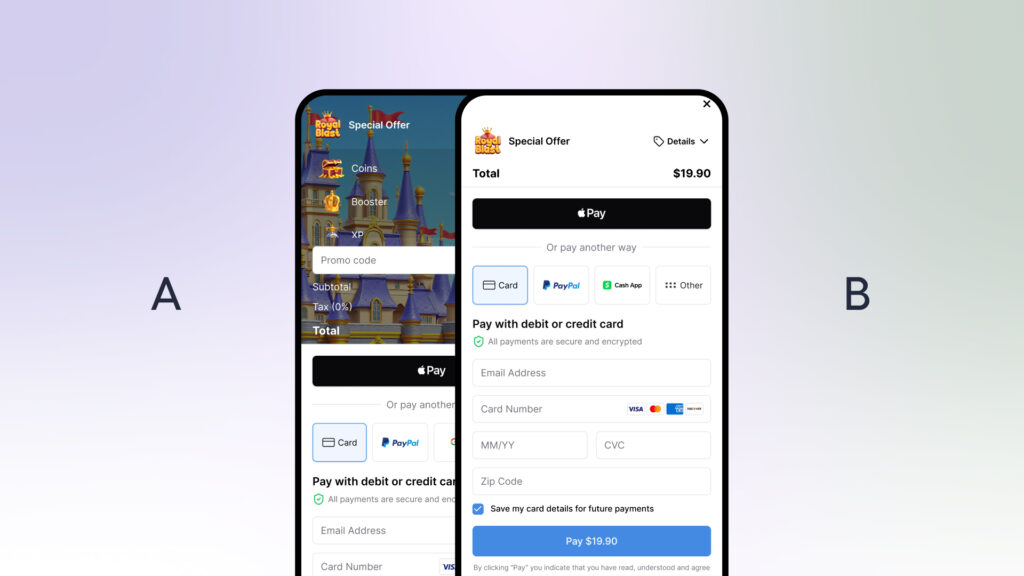
We also have experience with moving an existing store from one vendor to another, migrating players, and helping publishers structure A/B tests.
That includes choosing the right groups and cohorts, deciding how long to run a test, and understanding which numbers to look at to determine whether net revenue is actually improving.
We are very fortunate to be trusted by the clients we work with, and there is now a lot of momentum.
Studios see the successes other publishers have had, and people talk. It is a small industry and word of mouth is important.
For any Turkish studio considering us, I would say: ask other people about us.
Do not only let us talk about ourselves. Ask studios what it is like to work with us, and hopefully what they say is enough to make you pick up the phone.
You already work with Turkish clients, and investment into the country’s mobile games sector continues. How do you see Türkiye’s mobile games market changing from here? Could we see more growth in different genres?
It is an interesting question.
I have seen a lot of discussion and analysis around companies such as Loom Games, innovation in game mechanics, what that could lead to, and then other studios trying to replicate some of those ideas.
Mobile gaming has many different categories and genres, and Türkiye is huge in casual.
I think there is still significantly more room for growth in other genres.
When you have that level of innovation, drive and speed, there is a lot you can do with it.
Turkish founders work incredibly hard. They go after things, they are confident, and they do not easily accept someone telling them that something cannot be done. If you take all of that energy and apply it to other areas where there might be room for growth, imagine what could happen.
For Türkiye to continue growing and establish itself as a more mature, robust and holistic mobile gaming hub, I think it has to reach beyond casual.
It cannot be only one category.
Türkiye can continue being one of the leading markets in that category, but we also need to start seeing successes in other genres.
I am an optimist. I think there are still innovations to be made and new ideas to try in genres that may appear more mature, whether that is strategy, social casino, RPGs or other categories.
Whenever I meet Turkish founders, they are extremely eager to learn.
There is a lot to learn from the successes of studios elsewhere in the world, especially in APAC and other markets.
I think Türkiye is getting there. There is no stopping this force anymore.
People were sleeping on Türkiye for a while. I think no one is anymore.
People see it. Investors see it.
The success of companies that came before has also created confidence for other founders. You now see people leaving successful companies and going on to build their own businesses.
I am really excited to see what comes next.

CMO at Appcharge