
Collecting player feedback is rarely difficult. The much harder part is turning it into information that a product team can actually use.
That was the problem the Age of Magic team faced before launching its Insiders initiative. Community channels were active, but the quality of the signal varied significantly: new players asked basic questions, veterans evaluated the game from a completely different level of experience, and negative reactions were much louder than positive ones. Community reports could show what players disliked, but were much less effective at explaining what they valued, why they reacted the way they did, or what they wanted instead.
The answer was not another survey. The team created a small, structured community designed to provide deeper product context.
A focus group, not a replacement for the community
Age of Magic launched its Insiders group roughly a year ago, after about three months of preparation. The goal was not to create a statistically representative sample of the entire audience. It was to build a reliable layer of expert feedback from people who understood the game deeply enough to explain the consequences of product changes.
The selection criteria were defined together with game designers and other members of the team. Most participants came from the top 40 clans by raid performance, where players tend to have long account histories and high daily engagement. Some long-time players were also invited individually, including people who had been with Age of Magic for years but were less active in top competitive clans.
That creates an obvious risk: a group made up primarily of veterans can easily become a reflection of the hardcore audience alone. The team does not pretend that Insiders represent every player. Instead, it uses the group for what it is particularly good at: deep understanding of game mechanics. Many top clans also run feeder clans for less experienced players, giving their leaders visibility into the problems faced by players at earlier stages of progression.
The Insiders group is therefore not designed to answer, “What does every player think?” It is designed to answer a different question: What might break, confuse, or frustrate experienced players – and why?
Make “I don’t like it” an incomplete answer
The most important rule inside the private Discord server is simple: criticism has to be explained. As Alina, Community Manager for Age of Magic, puts it: “If you say ‘ugh,’ you have to explain why you don’t like it.” In open social channels, “this feature is terrible” is still useful as a sentiment signal. Inside Insiders, it is only the beginning of the conversation. Participants are expected to explain what they dislike, why it creates a problem, and what kind of change could improve the experience. Sometimes the community team receives feedback several pages long – detailed enough for developers to actually work with.
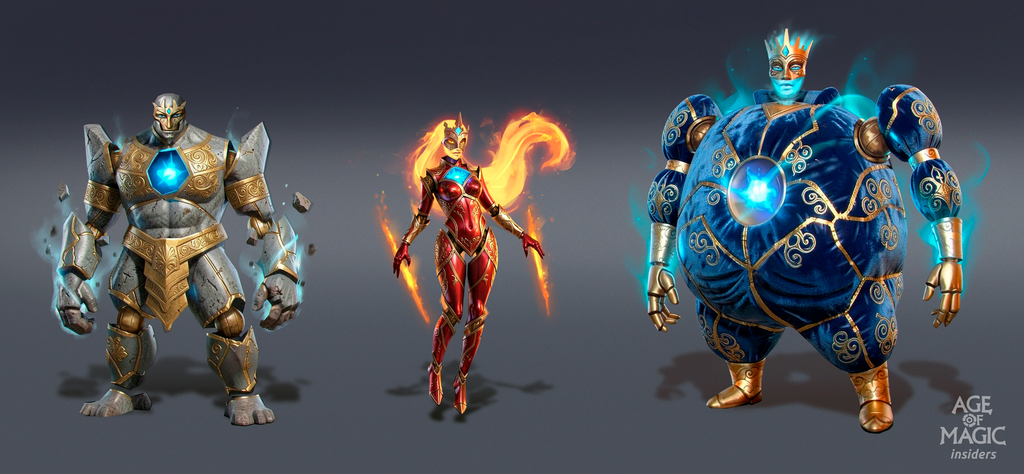
The same principle shapes playtests. When the team tested the Titans mode roughly six months before release, Insiders were asked about much more than whether the feature was fun. They evaluated visual readability, camera angle, targeting, effect brightness, character positioning, difficulty, and balance. Questions came from developers and the art team and included both closed and open-ended formats. When the answers still left uncertainty, the team followed up directly with individual players.
This is the difference between asking for approval and asking for a diagnosis.
Status comes from access, not cosmetics
Age of Magic gives Insiders visible signs of membership, including exclusive in-game avatars. But according to Alina, that is not what really creates status.
The strongest incentive is direct access to the people making the game. Insiders can speak with developers, participate in Q&As, discuss upcoming ideas, and sometimes communicate directly with senior leadership. That changes the tone of the conversation. A survey can feel anonymous and transactional, especially when a reward is attached. A live Discord conversation with the person who designed a feature creates a much stronger sense that the feedback has an audience – and therefore needs to be articulated clearly.
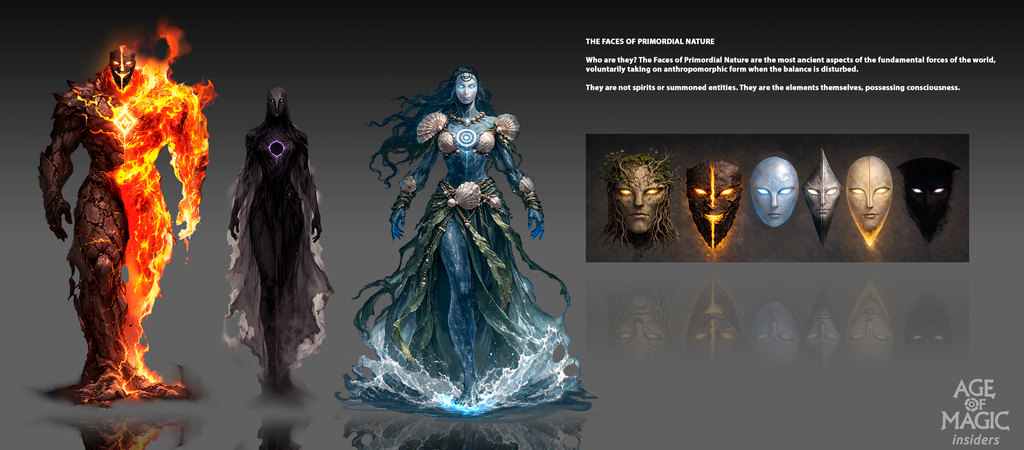
The group operates under confidentiality rules, although there are no formal NDAs. Some concepts shown to Insiders never reach production, so the team restricts what can be shared outside the group, particularly screenshots. When information is safe to discuss publicly, the community team marks it explicitly.
Membership is reviewed every three months. Alina looks at participation in Q&As, conversations with developers, feedback requests, and everyday discussions. If a clan representative has been inactive for a long time, the team speaks with the clan leader and may invite a replacement. The goal is to keep the group useful without allowing it to become passive or overcrowded.
From player emotion to product change
The clearest proof that the model works is not the amount of feedback collected, but what happens after that feedback reaches the product team.
That impact is not limited to game design. Player feedback can surface problems that require changes across very different parts of development – from UI and art to LiveOps, analytics, and monetization. A complaint that initially sounds like a gameplay issue may turn out to be a usability problem, an information gap, a balance question, or even a communication challenge.
The value of structured feedback is therefore not only in identifying what players dislike, but in helping the team understand where in the product the underlying problem actually needs to be solved. One example involved Artifacts. Insiders pointed out that choosing counter-teams in Arena had become more difficult because Artifacts could radically change how an opponent’s lineup played. Previously, checking the relevant information required finding the player by nickname and opening their profile.
The team added an information window that allows players to inspect an opponent before entering battle, including abilities, Artifacts, Medallions, and other details. The actionable problem was not simply that “players dislike Artifacts.” A new power layer had increased the amount of information required to make an Arena decision. The solution reduced the number of actions required and made counter-team selection easier. Insiders also contributed to increasing the number of saved squads and introducing the ability to save separate lineups for different modes, after the growing number of game modes made the existing list of 30 saved teams increasingly difficult to navigate.
The group has also influenced higher-level content decisions. When the team was exploring the next faction for Age of Magic, Insiders were given several concepts to discuss and vote on. They selected Vampires as the option they felt best matched the game’s world and lore.
Perhaps the strongest example of pre-release risk reduction came from a prototype for a new Clan Battles map.
The initial design had only one attack entry point. Insiders immediately identified a strategic problem: mixed clans, whose members vary both in power and time zone, could face a bottleneck where defenders stacked their strongest squads at that single point. Attackers would then either lose points on repeated attempts or have to wait for a stronger player to break through for everyone else.
The prototype was reworked, and the revised concept received a much more positive response. The broader pattern is consistent with Alina’s experience: because core players spend so much time inside the game, they are particularly good at spotting friction, unnecessary routine, and quality-of-life problems that may be harder for the development team to notice from the inside.
These are exactly the kinds of issues that are expensive to discover after release and relatively cheap to fix while a feature is still a prototype.
Loud feedback is not automatically good feedback
A private expert group does not remove the need for independent product judgment. Insiders can disagree with product strategy, and their opinions do not automatically become roadmap decisions. The team looks for convergence. If an issue generates unusually high participation inside Insiders and the same pattern appears in open community channels, it becomes a much stronger signal that the problem is systemic rather than individual.
This is also useful for monetization changes. Sometimes the product team will still ship a feature even when it expects Insiders to react negatively. Early feedback remains valuable: the team can prepare communication more carefully, explain the player-facing benefits more clearly, and adjust expectations around how the audience is likely to respond to the change.
That distinction matters. The purpose of a player group is not to transfer product ownership to the community. Players provide context that the team might otherwise miss; the product team remains responsible for deciding what to do with that information.
The business value, then, is not simply “higher satisfaction.” The Insiders initiative helps Age of Magic identify design weaknesses earlier, anticipate negative reactions, improve quality-of-life decisions, and understand its core audience in much greater depth.
The team is also explicit about what it cannot yet prove. There is currently no direct retention or revenue KPI attached to the program. Alina describes Insiders primarily as a social and community experiment – a way to study core-player reactions and expose weaknesses in game design before they become more expensive problems.
That may be the most useful lesson for other live-service teams.
Structured player feedback does not replace analytics, surveys, or open community listening. Its value is different.
Open channels tell you that players are angry. Analytics tells you what changed in their behavior. A well-designed insider community can help explain why – and sometimes show you what to fix before the rest of the audience ever sees the problem.