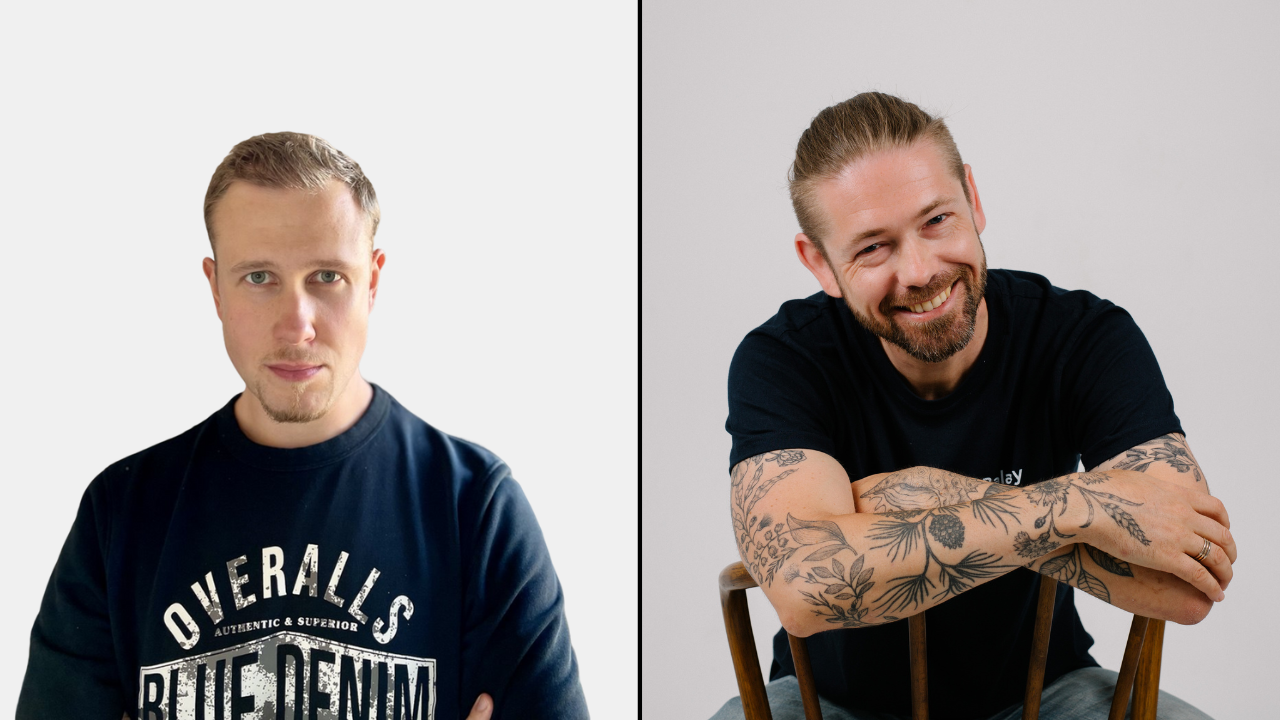

In the final weeks of 2025, Balancy hosted a year-end LiveOps webinar featuring Anton Slashev (PlayHero, ex-Playrix / Belka Games) and Mikhail “Michael” Khripin (Balancy, ex-Nexters / Wargaming), reflecting on how LiveOps evolved in 2025 — and what studios should realistically prepare for in 2026.
The discussion highlighted a year defined by:
- accelerating event cadence
- rising operational complexity
- cautious experimentation with personalization and AI
Here’s a structured look at the key takeaways — and the shifts most likely to shape the year ahead.
2025 was the year LiveOps became “systematized”
Asked to summarize LiveOps in one sentence, Michael described 2025 as “copy-pasting at scale.”
Studios leaned heavily into:
- proven event formats from top-grossing puzzle and hybrid titles
- predictable monetization structures
- repeatable, template-based LiveOps setups
This wasn’t just imitation — it was risk control.
Anton noted that hybrid-casual teams typically innovate in gameplay, not LiveOps. Once core mechanics perform well, they avoid unnecessary risk by adopting systems that have already demonstrated retention and monetization impact in other titles.
The upside: faster time-to-market and fewer failed experiments.
The trade-off: less differentiation, and a tendency to inherit both strengths and weaknesses of copied systems.
The biggest structural shift: shorter, denser, more frequent events
The most visible change in 2025 was event cadence.
Anton described a clear shift toward:
- shorter event cycles
- faster reward pacing
- overlapping activity layers
- minimal cognitive friction for players
Rather than a few large tentpole events, many games now deliver a continuous LiveOps flow — where completing one activity immediately rolls into the next.
A standout example was Gossip Harbor, which increased event volume from around 20 per month to nearly 100 — while also restructuring pacing, inter-event relationships, and reward timing.
In parallel, many titles now operate with two complementary layers:
1-) frequent short-loop events that drive immediate engagement
2-) longer-horizon systems like albums or passes that absorb those rewards
The result is a more dynamic experience — but also a heavier production burden for teams.
Personalization grows — but fairness remains a constraint
Personalization moved closer to mainstream in 2025, though most studios remain closer to segmentation with behavioral tuning than fully personalized pipelines.
Examples discussed included:
- layered event access for highly engaged players
- dynamic difficulty curves in puzzle titles
- behavior-based pacing adjustments
Michael emphasized that personalization is largely invisible to individual players — but becomes highly visible when players compare experiences.
That’s where fairness risk appears.
Anton warned that in competitive or PvP-leaning games, personalization must avoid affecting progression or advantage. In these genres, the safest applications remain:
- UX surfacing
- content routing
- gentle behavioral guidance
In casual puzzle ecosystems, personalization can be more flexible — but still requires careful tuning to avoid destabilizing difficulty curves or economies.
Heading into 2026, personalization is likely to expand — but as a design discipline with guardrails, not a blanket optimization lever.
AI made production faster — not decision-making smarter
AI featured heavily in 2025 conversations, but its practical value landed in specific areas:
- 2D art iteration and reskins
- icon and visual variant exploration
- localization drafting
- programmer copilots
- idea prompts and critique support
Where AI has not yet proven reliable:
- economy or pricing design
- LiveOps scheduling logic
- behavioral modeling
- automated analysis of A/B tests
Anton described AI as a strong accelerator — but not a substitute for judgment, especially in systems that depend on player feel, pacing, and context.
In 2026, AI will likely deepen its role in asset and workflow acceleration, while strategic and economic decisions remain firmly human-led.
The operational reality: more content, more coordination, more pressure
Behind the design trends sits a growing operational challenge.
High-frequency LiveOps now requires:
- constant asset production
- parallel QA across overlapping events
- economy-wide reward impact checks
- structured experimentation
- disciplined analysis
Two risks were highlighted:
- content pressure and burnout, especially when teams work without buffers
- misinterpreted A/B results, where small samples or noisy uplift lead to wrong conclusions
The speakers emphasized the value of small, autonomous LiveOps teams with clear ownership — reducing cross-team dependencies and improving delivery stability.
As event cadence increases, organizational design becomes just as important as feature design.
What will shape LiveOps in 2026
Based on the conversation, several trends are likely to define the coming year:
- shorter, more frequent event loops
- deeper integration between fast events and long-term progression systems
- broader experimentation with social and cooperative LiveOps formats
- continued reliance on proven monetization structures
- gradual expansion of personalization within fairness limits
- growing emphasis on statistical rigor in experimentation
- AI as a production tool rather than a strategy engine
LiveOps is becoming less about individual features — and more about operating discipline across teams, tools, and pipelines.
Practical guidance for LiveOps teams entering 2026
The discussion closed with several pragmatic recommendations:
- Run a hypothesis check before launching events or tests.
- Maintain a healthy production buffer wherever possible.
- Keep LiveOps teams small, focused, and empowered to decide.
- Treat personalization as UX design — not as hidden advantage.
- Spend time inside competitor games as real players, not just analysts.
- Use AI to accelerate — but keep judgment human.
2026 won’t be defined by who adds the most events or copies the most templates. It will be shaped by teams who understand why their systems work, how they scale — and how to sustain them without burning out the people behind them.