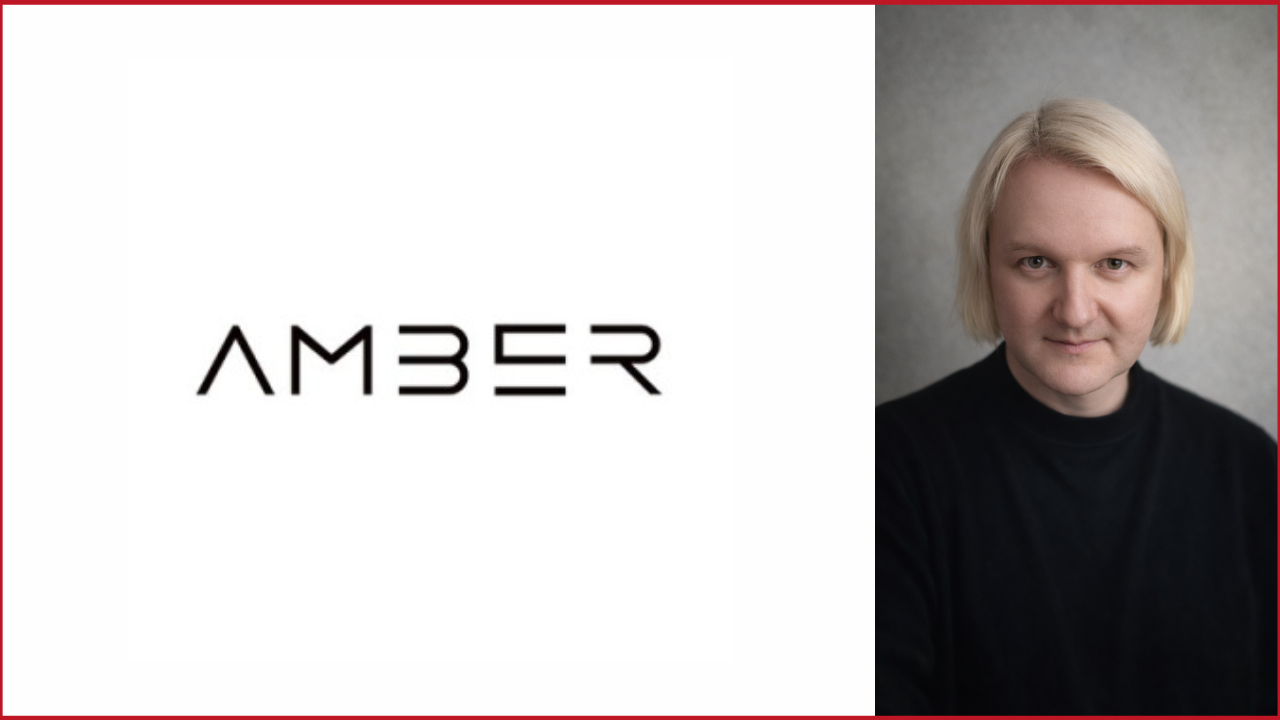

We spoke with Amber CEO Mihai Pohonțu about how game development has evolved over his more than two decades in the industry, the changing role of external development, Amber’s approach to AI, and what the next generation of game production could look like.
What are the most important lessons from your early years in QA that still influence how you approach leadership and game development today?
My years in QA shaped me more than people might expect. QA teaches you humility very quickly. You learn that a game isn’t what the team intended it to be; it’s what the player actually experiences. That distinction has stayed with me throughout my career.
QA also trains you to look for patterns. A bug is rarely just a bug. It’s often a symptom of a communication gap, a process weakness, an unclear design decision, or a production tradeoff that wasn’t fully understood. That way of thinking has influenced how I lead teams. I try to look beneath the surface and understand the system that produced the outcome.
The other lesson is respect for craft. In QA, you see every discipline collide: design, engineering, art, production, UX, localization, live operations. You learn that great games aren’t created by isolated brilliance. They’re created by many people solving thousands of small problems together, with care and discipline.
As a leader, I still carry that mindset. Listen closely. Test assumptions. Look at the player experience honestly. And never forget that quality is not a department. It’s a culture.
Amber operates across multiple regions and cultures. What are the biggest challenges of coordinating creative and technical talent across different countries and time zones?
The obvious challenge is time zones, but the deeper challenge is context. When teams are distributed across countries, you can’t rely on hallway conversations or informal alignment. You have to be much more intentional about how decisions are made, documented, and communicated.
Creative work adds another layer. Two teams may agree on the same words but imagine very different outcomes. “Polished,” “fun,” “premium,” or “stylized” can mean different things depending on culture, genre experience, and production background. So the work isn’t only coordination. It’s translation between creative languages.
At Amber, we’ve learned that distributed development works best when teams aren’t treated as remote execution units. They need ownership, trust, and a clear understanding of the player experience we are trying to build. If a team only receives tasks, they will deliver tasks. If they understand the creative intent, they can solve problems.
The biggest challenge is maintaining that shared intent across distance. The solution is a mix of strong production systems, cultural empathy, and leadership that makes people feel part of the same mission, not just the same schedule.
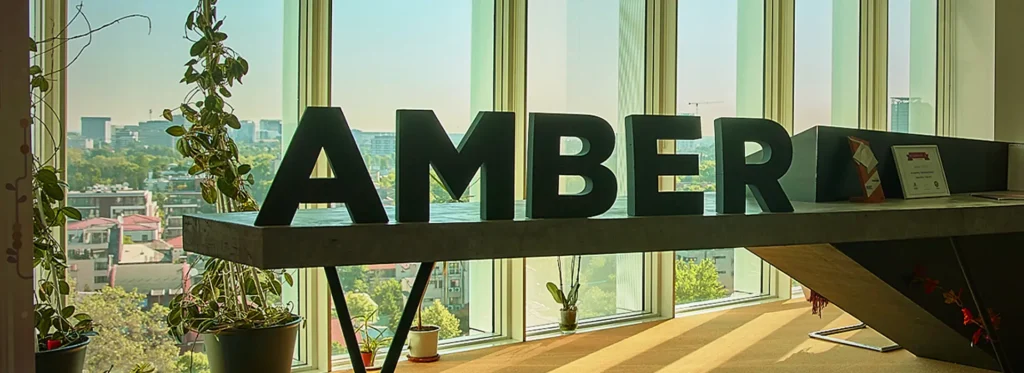
Source: Amber
Game development has become significantly more complex over the past two decades, with AAA production cycles often stretching beyond five years. What are the biggest factors behind this shift, and how has it changed the role of external development within the production process?
The scale of ambition has changed dramatically. Players expect larger worlds, deeper systems, better visuals, more content, more personalization, more frequent updates, and fewer compromises. At the same time, platforms have multiplied, tools have become more sophisticated, and live operations have extended the life of a game far beyond launch.
In the past, many games were built around a fairly contained production cycle. Today, a major title can involve years of development, constant technology change, multiple platforms, compliance requirements, accessibility considerations, community expectations, and post-launch content pipelines. The complexity isn’t only technical. It’s organizational.
That has changed the role of external development in a major way. External partners used to be brought in mainly for capacity. You needed more hands, often late in production. That still exists, but the best external development relationships have become much more strategic.
Studios now need partners who can integrate early, understand the creative vision, own meaningful parts of production, adapt to changing priorities, and bring specialized expertise. External development is no longer just about outsourcing work. At its best, it’s about extending the studio’s capabilities and helping the core team stay focused on the highest-value creative decisions.
For Amber, this is central to how we see our role. We want to be a trusted production partner, not a generic vendor. The difference matters.
AI has become one of the industry’s most discussed topics. How is Amber currently using AI to improve development workflows and production efficiency? Beyond that, where do you see AI enabling entirely new gameplay and player experiences?
We’re approaching AI in a practical way. The first priority is improving workflows where teams already lose time: prototyping, asset iteration, documentation, testing support, localization workflows, production planning, and certain types of content variation. Used properly, AI can reduce friction and allow developers to spend more time on judgment, taste, and creative problem-solving.
At Amber, we’re also looking at AI as part of a broader production operating layer. The question is not “Can AI replace this person?” That’s the wrong question. The better question is: “Where can AI remove repetitive work, increase visibility, accelerate iteration, or help a team make better decisions earlier?“
The more exciting frontier is gameplay. We’re still early, but AI can eventually support more reactive worlds, more believable NPC behavior, adaptive narrative systems, personalized challenges, and player experiences that respond to individual style in more nuanced ways. There’s a lot of promise there, and I’m happy that Amber is leading the way in full-cycle game development that leverages AI as a core design principle.
The best example is the Courtroom Chaos series we developed for Amazon, which has two installments: one featuring Snoop Dogg and the other Arnold Schwarzenegger.
Games are not spreadsheets. Efficiency matters, but magic matters more. The best use of AI will not be to flood games with generated content, but to help teams create experiences that feel more alive, more personal, and more responsive while still being guided by strong creative direction.
As AI becomes increasingly integrated into game development, what concerns you most about the industry’s current approach to adoption, and which areas of development do you expect it to transform the most over the next five years?
My biggest concern is that some companies will treat AI mainly as a cost-cutting instrument rather than a creative and production multiplier. If the goal is simply to remove people from the process, the industry will lose knowledge, taste, mentorship, and craft. Those are not easy to rebuild.
I’m also concerned about quality control. AI can generate a lot of material very quickly, but more output doesn’t automatically mean better games. Without strong direction, review, and accountability, teams may create more noise, not more value. There are also serious questions around IP, data provenance, ethics, and how we protect the work of artists and developers.
Over the next five years, I expect AI to transform pre-production, prototyping, QA support, localization, analytics, tools programming, and content pipeline management. These are areas where speed and iteration matter enormously.
I also think production leadership will change. Teams will need people who understand both game development and AI-enabled workflows. The winners will not be the companies that use the most AI. They will be the companies that know where human creativity must lead and where automation can genuinely help.
Amber has invested heavily in talent development across its global organization. Why do you believe investing in the next generation of game creators is becoming increasingly important for the industry’s future?
The industry needs more than talent. It needs prepared talent. Game development has become too complex for people to learn only by surviving difficult productions. We have to be more intentional about mentorship, craft education, leadership development, and exposure to real production challenges.
The next generation of game creators will inherit a very different industry. They’ll work with AI, distributed teams, live services, evolving business models, and players who have extremely high expectations. Technical skill will matter, of course, but adaptability, communication, creative judgment, and resilience will matter just as much.
For Amber, investing in people is also part of our identity. We operate across multiple regions, and we see extraordinary talent in places that were historically underestimated by the global industry. If we create the right environment, that talent can contribute at the highest level.
I believe the future of games depends on widening the circle of who gets to create them. More voices, more cultures, more disciplines, more paths into the industry. That’s good for business, but more importantly, it’s good for games.
There’s a social mission at the core of Amber, evidenced by our investments in supporting the Echo Training Center, a cross-disciplinary educational initiative which is also Mexico’s sole Epic authorized Unreal training center, and co-founding Echo School, a university program in Romania franchising the curricula of Abertay University, the oldest and highest rated game design program in Europe.
Looking ahead, what are Amber’s key priorities and goals in the short, medium, and long term?
In the short term, our priority is execution. We want to keep delivering excellent work for our partners, strengthen our operating discipline, and continue integrating AI into our workflows in ways that are practical and measurable.
In the medium term, we’re focused on deepening Amber’s role as a strategic development partner. That means expanding our capabilities, investing in talent, strengthening our global studio system, and taking on more complex mandates across production, co-development, and AI-enabled pipelines.
In the long term, our ambition is to help define the next generation of game production. The industry needs partners who can combine creativity, technology, scale, and trust. Amber has been building toward that for years.
We don’t want to be the biggest external development company by volume. We want to be one of the most trusted, adaptive, and forward-looking partners in the industry. If we do that well, growth will follow naturally.

CEO of Amber