
In this guest article, Dario Berruti, Head of Art from InnoGames shares how the company has integrated generative AI into its game art production workflows, from early experimentation to AI-supported automation and 3D development.
When Midjourney launched in 2022, it was immediately clear to us that generative AI would fundamentally reshape game art production. The technology arrived surrounded by legitimate debate, and we chose to approach it neutrally, without hype and without dismissal. What we could not ignore was its potential, so we decided to engage with it early.
At InnoGames, our art teams support long-running live games such as Forge of Empires and Elvenar, as well as newer titles like Heroes of History. Live operations depend on a constant flow of fresh content, which made the case for exploring new production methods particularly compelling. Below, I outline how our adoption unfolded in five stages, from first experiments to fully integrated, AI-supported workflows.
Step 1: Setting the Vision
From the outset, we chose a collaborative rather than a top-down approach. Our goal was for artists to adopt AI on their own terms and shape workflows around their individual practice, rather than having a process imposed on them.
We began with a survey to understand the team’s main concerns and to identify where artists already saw value in the technology. Unsurprisingly, job security was at the top of the list. We addressed this directly in a meeting with the entire art department and stated our position clearly: the purpose of AI is to amplify our artists’ skills, not to replace them. That remains our position today.
This transparency proved decisive. It created the trust needed for open experimentation, and most of the team embraced it.
It also reflected a conviction that still guides us: generative AI only reaches its full potential in the hands of experienced artists. Without that expertise, it is little more than an expensive game of picture roulette.
Step 2: Early Experiments
Early outputs were inconsistent and difficult to control. Even so, the ability to iterate rapidly on an idea, exploring styles and color palettes in minutes, gave our concept artists something new. In practice, it worked like an accelerated version of Pinterest or Google image search, with a far higher chance of surfacing useful references. AI also proved valuable for rough mock-ups that helped teams align on direction early in the process.
We soon began looking for a solution that could be integrated into our pipeline and go beyond simple image generation. That search led us to Scenario, a platform designed as a complete ecosystem for artists, combining generative models, editing tools and a production-oriented interface. Initial results were modest, but the hands-on support from the Scenario team and the strength of the platform’s vision convinced us to commit.
At this stage, the tasks we could hand over were simple and required substantial manual work to reach production quality. We accepted this as part of working with an emerging technology and gave both the platform and its models time to mature. Adoption and output quality grew steadily as a result.
In parallel, we evaluated ComfyUI. Its complex interface and ongoing maintenance requirements made it a poor fit for our team, and we decided not to pursue it.
Step 3: AI in Everyday Production
Over time, Scenario became our go-to tool for icons, portraits and small illustrations. The decisive factor was the ability to train custom models on our own assets, allowing us to preserve the distinct art style of each game, something essential for live titles with established visual identities.
There were still clear limits. Outputs required close human supervision, and remaining inconsistencies prevented us from applying generative AI more broadly or to more complex tasks. 3D, in particular, was not yet viable beyond generating minor props.
The benefits for day-to-day work were already tangible, but we were still some way from the real promise: automating repetitive work so that artists could focus on creative tasks.
Step 4: Consistency at Scale
The turning point came in 2025 with the arrival of more capable models, most notably, in our case, Gemini and Flux. The gains in quality and consistency enabled much broader adoption and, with it, a clear business case. Generative AI has significantly reduced our reliance on outsourcing: our outsourcing costs are now half of what they were in previous years. At the same time, we were able to scale our production capacity and apply AI to increasingly complex work.
In 2D and concept art, AI became an integral part of our pipeline across titles including Forge of Empires, Elvenar and Heroes of History. Character design became more efficient, with far more room for exploration, design changes and variations. Artists can now art-direct and iterate on several ideas in parallel, something that would previously have been too time-consuming. Complex illustrations, such as loading screens, became more cost-effective and more predictable to produce.
Just as importantly, our workflows became flexible enough for each artist to choose their own approach. Some rely heavily on prompting, others steer the models primarily through visual inputs, and many combine the two.
Step 5: Automation, Scripting and 3D
Today, our focus has shifted toward automation. Node-based workflows, MCP (Model Context Protocol) integrations and agents allow artists to build sophisticated setups that offer granular control and automate sequences of steps that previously had to be done by hand.
Claude has become a key part of this. Artists use it to handle repetitive tasks quickly, from copying and renaming files to compiling documentation and creating Jira tickets.
More significantly, it enables artists to write their own scripts and tools. Until recently, this was the domain of technical artists and software engineers. Now, any artist can build tools tailored to their needs and integrate them directly into our pipeline.
3D is also beginning to deliver solid results. Connecting Claude to Blender through its MCP server is opening new possibilities for automation and batch content production.
Key Learnings
Generative AI is transforming game production at every level. Looking back, four lessons stand out.
- Master your tools rather than chasing updates. The technology evolves rapidly, but not every new release delivers better results. Building deep expertise with the tools at hand is consistently more effective than jumping from one model to the next.
- Let artists find their own way. As with every previous technology shift, artists need to develop their own relationship with AI. Imposing a single workflow does not produce better results; it produces frustration.
- Keep investing in core skills. Traditional art skills remain the foundation of everything we do. Artists need dedicated time to practice and develop them, especially those in entry-level roles.
- Never compromise on quality. Whatever technology we use, our responsibility stays the same: to deliver our best work to our players.
AI has changed how we work. It has not changed who does the work: our artists remain at the center of everything we create.
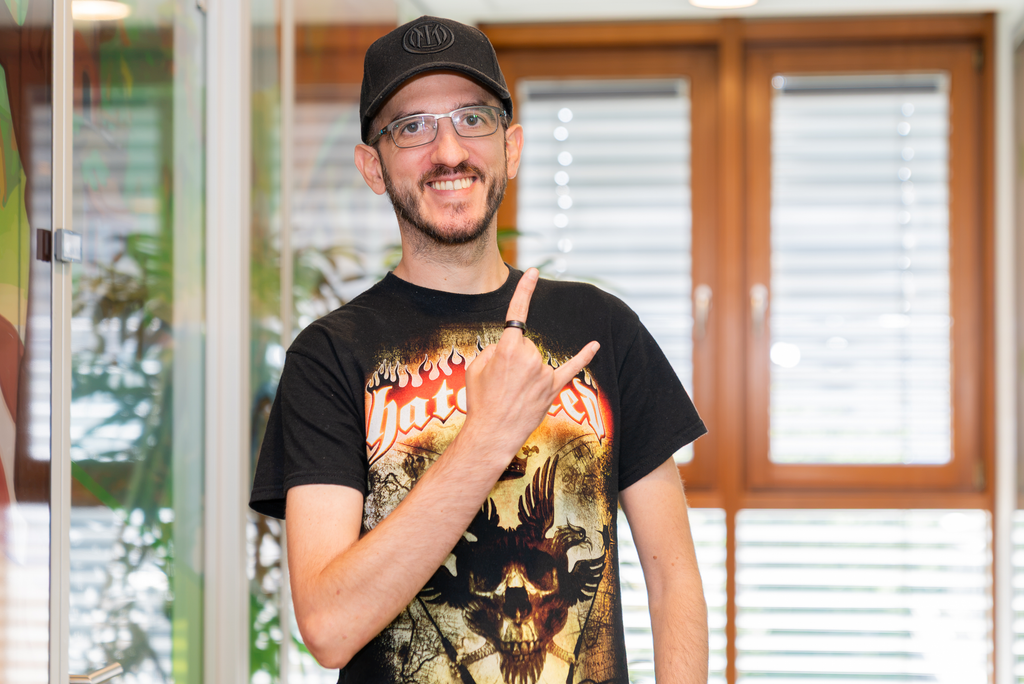
Head of Art at InnoGames