
Hello everyone.👋
I’ve been closely following developments in artificial intelligence across the gaming industry for some time. One of the pioneers of this transformation is Epic Games, the company behind Unreal Engine. If we want to understand how AI is changing the gaming industry and where it is taking us, Unreal Engine is one of the first places we should look.
That’s why I wanted to explore what the company behind one of the world’s most powerful technologies, used across a wide range of projects from AAA titles to mobile games, has been doing with AI throughout 2026 and what it is preparing for next. There isn’t much time left in the year, but a lot has already changed in Unreal Engine. Let’s take a closer look at how the story unfolded.
Talking NPCs in Fortnite
The story began not with the engine itself, but with Fortnite’s creative tools. On April 16, Epic introduced its new Conversations system in UEFN as an Experimental feature. Previously known as the Persona device, the system turns NPCs into AI-powered characters with their own personalities and voices, capable of engaging in unscripted conversations with players.
Developers can define a character’s identity, knowledge, and behavior through simple prompts, then select a suitable voice. These characters can remember what happens during a game session and adapt their behavior in real time, respond contextually to players’ voice inputs, and trigger in-game events. With the Scene Graph component and Verse API, developers can build reactive gameplay systems. For example, a player who persuades an NPC could automatically trigger the opening of a city’s gates.
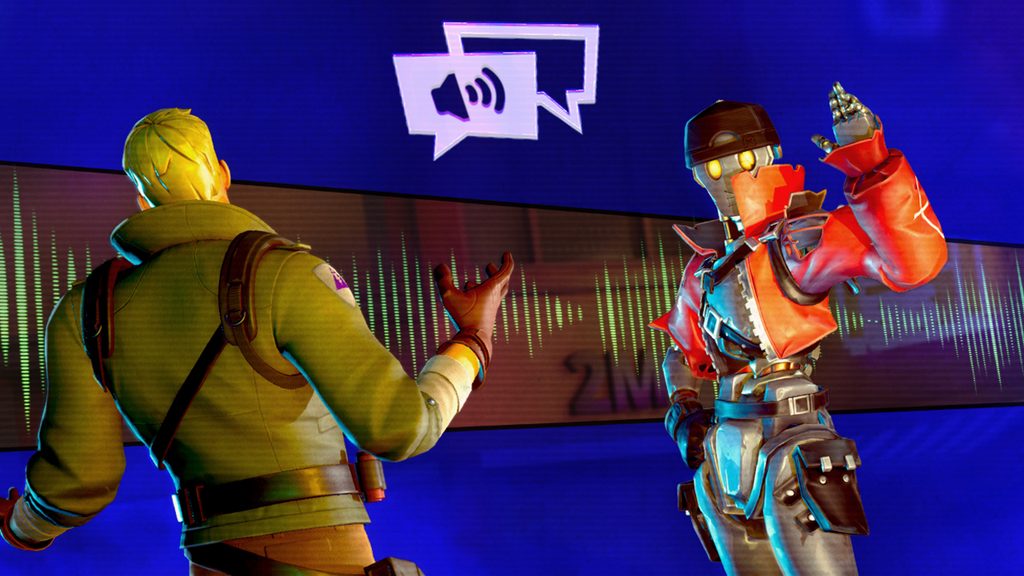
Epic also states that it uses Google’s Gemini 3.1 Flash-Lite models and ElevenLabs for voice responses, while player voice data is not stored. The feature is still in the Experimental stage. During this period, Epic plans to improve voice quality and reduce latency. Publishing islands with this feature will become possible after it reaches Beta.
The First Sign of UE6
On the engine side, the story began a few weeks before State of Unreal, with a teaser shown during the Rocket League Championship Series. Through this teaser, Epic Games gave us our first look at Unreal Engine 6, using Rocket League as the showcase. Details were limited at the time, and the AI aspect became clearer during the State of Unreal presentation in June.
AI Takes the Stage
On June 17, at State of Unreal 2026, held during Unreal Fest in Chicago, Epic officially introduced Unreal Engine 6. More than 2,000 developers attended the event in person, while hundreds of thousands watched online.
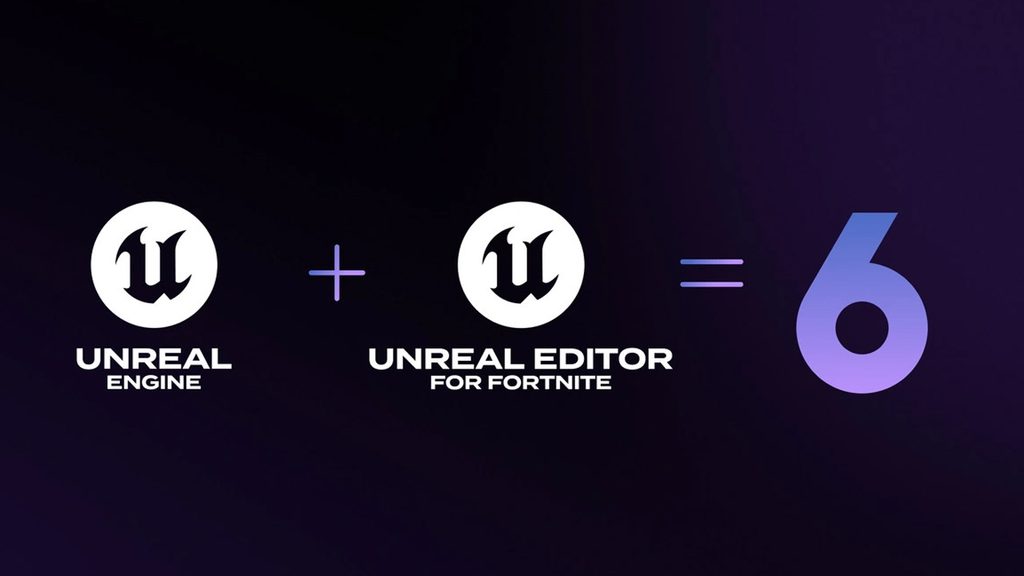
UE6 will bring together the AAA capabilities of UE5 and Unreal Editor for Fortnite (UEFN) in a single engine, move gameplay programming to Verse, and integrate AI tools directly into the development process.
The release of Unreal Engine 5.8 during the same presentation marked the first tangible step toward this transition. Its experimental Unreal MCP plugin allows large language models such as Claude to connect to the editor through an open standard and access Blueprints, assets, levels, materials, and meshes. It can assist with tasks such as asset creation, testing, and optimization.
Epic summed up this approach with the following statement: “The interface is open, and so is the choice of model: build with Claude, Gemini, or whichever models best fit your needs.”
Version 5.8 is also positioned as the final major planned release of UE5. The presentation additionally showcased diffusion-based workflows that use depth and normal maps captured from 3D scenes to guide image and video generation. Epic plans to release these capabilities early next year.
The Road to UE6
Around the same time, Epic provided a more detailed look at its roadmap through an official blog post titled “The road to Unreal Engine 6.”
According to the post, written by Marcus Wassmer, who leads Epic’s development team, UE5 and UEFN will merge into a single product, Unreal Engine 6, over the next two years. The post also introduces Scene Graph, a new Verse-based gameplay framework.
The Early Access release is targeted for late 2027, with the full release expected 12 to 18 months later. No new official UE5 release is currently planned after version 5.8, although Epic is keeping the possibility of 5.9 open.
On the AI side, the goal is to reduce time-consuming manual setup tasks, such as creating levels, character rigs, particle systems, and skinning weights, while preserving the creative control developers need.
To achieve this, UE6 will include tools and workflows that allow developers to bring their own preferred models. The engine’s capabilities will integrate with Claude, Gemini, and other models through MCP. Epic Developer Assistant will also be available as an optional, ready-to-use solution.
Epic says it is already using AI internally for tasks such as code generation, automated root-cause analysis of crashes and CIS pipeline failures, and automatic test generation.
A Major Transformation
Things clearly accelerated in the autumn. On October 12, Bloomberg reported that Epic had told the team working on its Disney collaboration, featuring Marvel and Star Wars characters, to adopt an “AI first” production model and use tools such as Claude. However, people would remain responsible for managing and directing the work.
In a statement to Bloomberg, Epic Communications Director Jake Jones said the company was embracing AI-assisted development, led by Epic developers who remain “the visionaries and creative drivers of everything.”
Tim Sweeney also wrote on X that a major transformation was underway at Epic, with developers being repositioned for “maximum AI acceleration.” According to Sweeney, the goal is not to accomplish the same amount of work with fewer people. Instead, it is to enable everyone to create more content and better content, extending those benefits to all teams using Unreal Engine.
Bloomberg noted that this marked the first time a major game company had attempted to develop a game primarily using AI.
A Launcher Written with AI
One of the first tangible products of this direction arrived on October 14. The Epic Games Store team released a preview of the new Epic Games Launcher, introducing the announcement with a joke: “Programming is hard, so we vibe-coded a new launcher.”
According to Epic, the new launcher is significantly faster and more responsive than the current version. Cold launches are quick, switching between the library and store is smoother, and the application puts less strain on the system in the background.
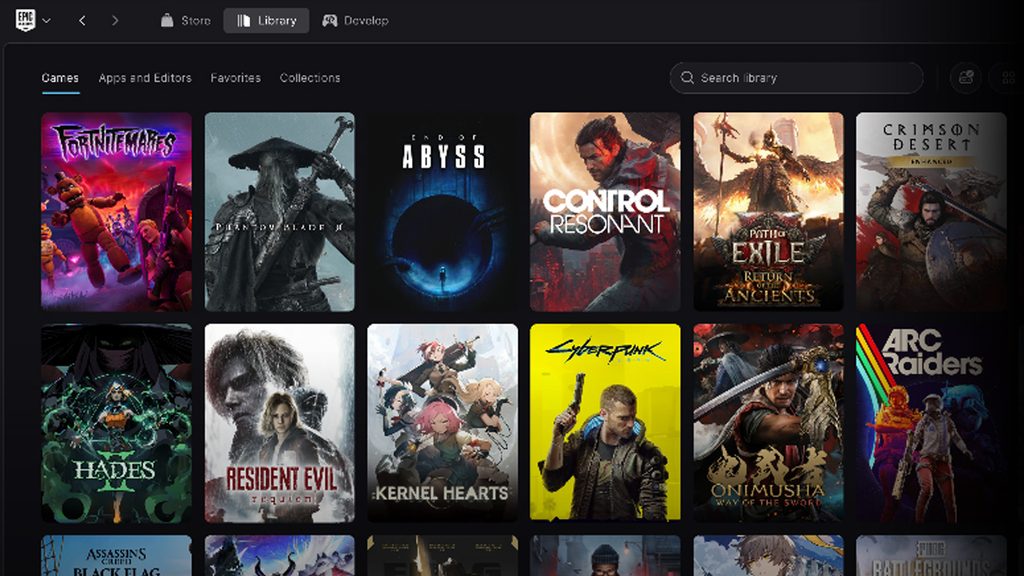
The preview is available for testing on Windows and macOS, as well as Linux for the first time. Epic describes the initial release as “not a yacht, but a speedboat” and says it will shape upcoming updates based on player feedback.
In the same announcement, Epic revealed that it had rebuilt Easy Anti-Cheat to bring Fortnite to Linux through the Epic Games Launcher. The company also plans to make these improvements available to other developers so they can bring their games to Linux as well.
The Vision of a Golden Age
Three days later, on October 17, Tim Sweeney shared the following message about the future of gaming:
Sweeney believes that games previously considered unfeasible because of their costs, as well as ideas that developers couldn’t bring to life with their available resources, will soon become possible.
MegaJam Is Coming
The community side of this vision followed five days later. On October 22, Epic announced the 2026 Epic AI MegaJam through the Epic Developer Community, under the title “Vibe your way to $50k.”
The four-day event will take place from November 12 to 15, with its theme being announced during the opening livestream on November 11.
Participants can work individually or in teams of up to five, using as many AI agents as they like to develop a playable game in Unreal Engine or UEFN. These agents can be connected to the editor through MCP.
Alongside a total of $65,000 in cash prizes, standout projects can receive a “Development Continuation Grant” of up to $50,000 per team. Participants retain ownership of their games.
Categories include Best Overall for both Unreal Engine and UEFN, Best Student Project, and the “Walkie-Talkie” award. The latter recognizes the best narrative-focused UEFN game featuring LLM-powered NPCs built with Fortnite’s Conversations system.
Participation is available online from anywhere in the world. In addition, in-person collaboration opportunities are planned for November 14-15 at Digital Jungle in San Francisco, where participants can work alongside teams from Anthropic, Google, Meshy, OpenAI, and SpaceXSI. Events are also planned for selected local community groups. To participate, you must be over 18 and have an active Epic Games account. Using AI, however, is entirely optional.
AI Is Now Writing the Engine Itself
The final week of October brought one of the most concrete developments in this story. Tim Sweeney confirmed on X that Epic is using AI tools to write code for Unreal Engine.
Marcus Wassmer, Head of Development, shared more details in an interview with This Week in Video Games. According to him, engineers are no longer writing most of the code manually. Instead, they use tools such as Claude Code and Codex to iterate on and deliver features while keeping performance and memory constraints in mind.
The results are tangible. Non-deterministic cooking bugs that had been a challenge for nearly a decade have almost disappeared. Shader compression work, which reduces patch sizes, has accelerated. And a D3D12 rendering layer rewrite that was expected to take one engineer between three and six weeks was completed in approximately one week.
AI tools are also being used to monitor Fortnite’s PC stability and flag problematic combinations of drivers and hardware.
Wassmer explained that most development work is currently taking place across the Fortnite, UEFN, and UE6 branches. A potential 5.9 update could also include changes developed with AI. Epic does not consider half-measures a viable approach and plans to share more openly how it is working.

EULA and Control
The story continued on the licensing front. At the end of October, Tim Sweeney wrote on X that Epic was working to remove the AI training restriction from the EULA terms covering Unreal Engine and MetaHuman outputs. He also emphasized that every game created with these tools is released under terms determined by the developer, who can choose whether to allow or restrict AI training.
Epic subsequently published an official announcement titled “UE devs can now choose to train AI models on their projects.” The Unreal Engine EULA was updated, allowing developers to choose to train AI models on their Unreal Engine and MetaHuman projects.
Epic removed two restrictions from Section 6e of the General Restrictions section. One concerned the use of Unreal Engine, including its source code, as input for generative AI training. The other concerned the use of MetaHuman characters and animation curves for AI training.
The change applies to all Unreal Engine versions. New users are automatically presented with the updated EULA, while existing users can accept it at any time through the acceptance page.
Epic particularly emphasizes that this update gives the company no rights over developers’ content or code. Fab sellers can continue to express their preferences using the “NoAI” label, while UEFN, Verse code, and island content remain subject to Fortnite’s developer rules.
Megascans Is Free Again
This opening on the licensing front has also extended to content libraries. On November 5, Quixel announced that the entire Megascans library was free again on Fab. It also updated the terms covering all Quixel assets, making it possible to train AI models on Megascans and Megaplants.
This means AI models can learn from real-world scans and help you create diverse, photorealistic environments for your projects.
Anyone who purchased Megascans or a Quixel Bundle on or after January 1, 2025, will receive a refund in the form of Epic account balance. These users will retain their licenses and the new AI rights.
So, What Do I Think as a Gaming Industry Analyst?
When I look at these developments together, what stands out to me is that Epic is approaching AI across three connected areas: the tools developers use, the development of the engine itself, and the licensing framework that determines how creators can use their work. This combination is more significant than any individual announcement because it suggests that AI is becoming part of the wider game development ecosystem rather than remaining a standalone feature.
I believe this transformation could change how development teams allocate their time. If AI can reduce repetitive tasks such as setup, testing, debugging, and certain engineering processes, developers may be able to focus more on creative direction, game design, and the overall player experience. The engineering examples shared by Wassmer are encouraging, although they are results reported by Epic itself. Their impact on other studios will ultimately depend on how effectively these tools are integrated into different production environments.
For smaller and independent teams, one of the biggest opportunities is that ideas previously considered too expensive or technically demanding may become more practical to explore. However, access to powerful AI tools does not automatically guarantee a successful game. Creative vision, production quality, and the ability to make the right decisions will remain essential.
Ultimately, I believe the competitive advantage in the coming years will not simply come from adopting AI, but from understanding where it can genuinely improve the development process and how to combine it effectively with human creativity. Epic’s moves in 2026 offer an interesting preview of this direction. With UE6 Early Access targeted for late 2027, the real test will be how these technologies translate into actual games and better development workflows.