
Simulation games continue to rank among Steam’s most resilient and diverse genres, with developers finding commercial success across an increasingly wide range of themes. In its latest analysis, AppMagic examines the performance of simulation games on Steam and highlights how the genre has evolved far beyond traditional management and vehicle simulators into one of the platform’s most versatile categories.
The analysis shows that simulation games are no longer defined by a handful of blockbuster franchises. Instead, the genre is increasingly driven by highly specialized experiences that appeal to dedicated audiences, allowing even unconventional concepts to achieve meaningful commercial results.
Niche Concepts Continue to Thrive
One of the strongest trends identified in the analysis is the growing success of niche simulation games. Rather than competing directly with mainstream releases, many developers are building experiences around highly specific professions, hobbies, and everyday activities.
From supermarket and storage management to crime scene cleanup, restaurant operations, and power washing, simulation games continue to demonstrate that almost any concept can attract an audience when paired with polished gameplay and a satisfying progression loop.
This expanding diversity has helped simulation become one of Steam’s broadest genres, offering developers numerous opportunities to target underserved player interests instead of entering heavily saturated categories.
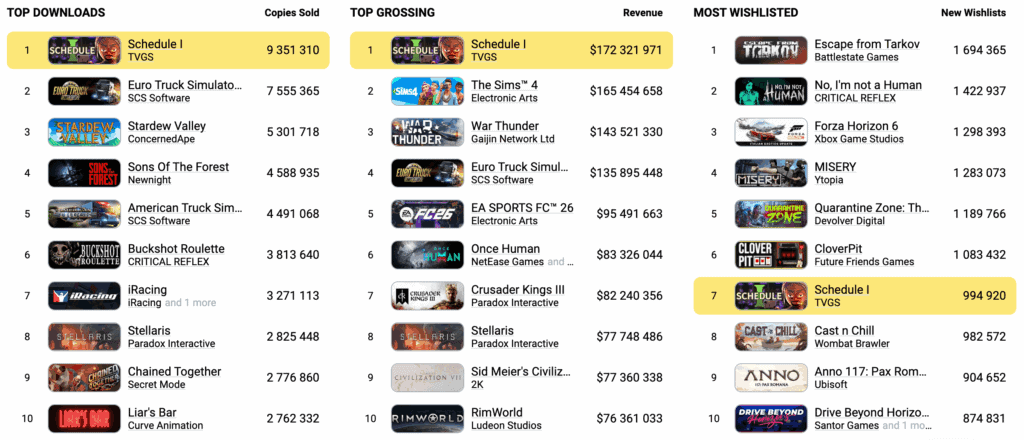
Source: AppMagic
Accessible Gameplay Meets Long-Term Engagement
Despite covering vastly different themes, many successful simulation games share a common design philosophy.
Rather than emphasizing fast-paced action or competitive multiplayer, they focus on clear gameplay loops, gradual progression, and continuous player satisfaction. Repetitive tasks are transformed into rewarding experiences through upgrades, automation systems, customization, and steady economic progression.
These mechanics encourage long play sessions while making games approachable for both casual players and dedicated simulation enthusiasts.
According to AppMagic’s analysis, this combination of accessibility and long-term engagement has become one of the genre’s defining strengths.
Independent Developers Continue to Shape the Genre
Simulation also remains one of Steam’s most accessible genres for independent studios.
Many successful releases are developed by relatively small teams that focus on a single well-executed concept rather than attempting to compete through production scale alone. Strong community feedback, Early Access development, and frequent post-launch updates continue to play an important role in refining gameplay systems and expanding content over time.
This development approach allows studios to build loyal communities while gradually improving their games based on player feedback.
Variety Creates a More Competitive Market
While traditional subgenres such as city builders, transport simulators, and farming games continue to perform well, the overall simulation landscape has become considerably more fragmented.
Players are increasingly embracing unconventional ideas, making originality an important competitive advantage. Games built around highly specific mechanics or professions can often stand out more effectively than broader simulation experiences that compete directly with established franchises.
As a result, success is becoming less dependent on choosing the “right” subgenre and more closely tied to identifying a unique gameplay fantasy and executing it well.
Steam Continues to Reward Simulation Innovation
Overall, the analysis reinforces simulation’s position as one of Steam’s healthiest long-term genres. Rather than relying on a few dominant franchises, the category continues to grow through a steady stream of creative releases exploring new professions, hobbies, and management systems.
For developers considering the PC market, simulation remains one of the platform’s most flexible genres. As player interest continues to expand beyond traditional simulators, opportunities increasingly lie in delivering distinctive concepts supported by polished progression systems and consistent post-launch support.
Read the full analysis on the AppMagic blog here.