
Direct-to-consumer (D2C) strategies have become one of the most discussed topics in the games industry. As studios search for new ways to strengthen player relationships, improve monetization, and gain more control over their commercial ecosystems, D2C is increasingly being positioned as a major opportunity.
Yet despite the growing attention, misconceptions remain. Some studios view D2C as a replacement for traditional platforms, while others assume it is only relevant for the largest publishers with dedicated LiveOps and commerce teams. The reality is often more nuanced.
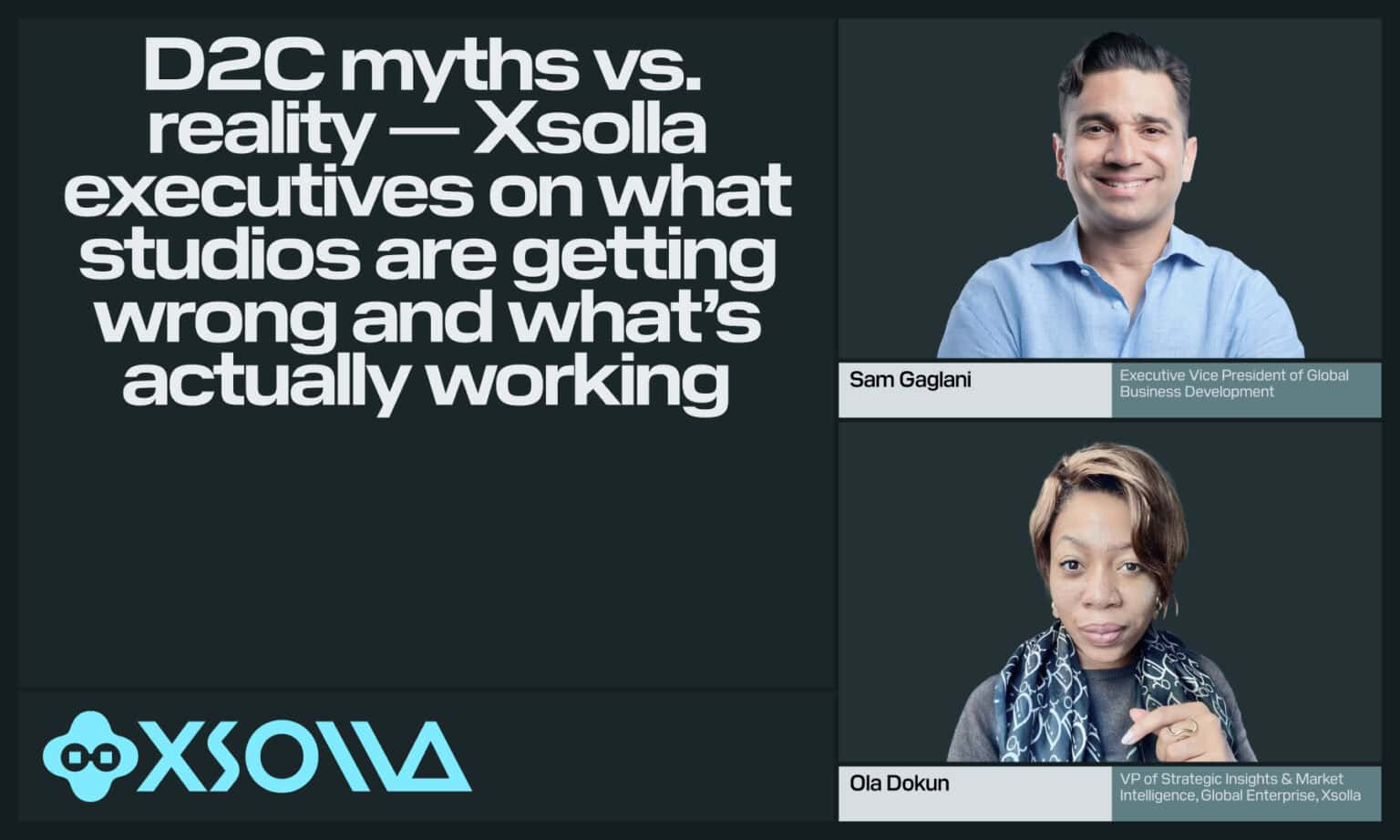
To better understand where D2C stands today and how studios should approach it, we spoke with Sam Gaglani, Executive Vice President of Global Business Development at Xsolla, and Ola Dokun, VP of Strategic Insights & Market Intelligence, Global Enterprise at Xsolla. They shared their perspectives on the most common D2C misconceptions, the operational realities behind successful implementations, and the metrics that matter most when building direct relationships with players.
D2C has become a buzzword in gaming. From where you each sit, how would you describe where the industry actually is with D2C right now — versus where the conversation is?
Sam: D2C sits in a transitional phase. The conversation often frames it as a near term replacement for traditional platforms, especially app stores. But, in reality, it’s not a wholesale shift, it’s an expansion layer. The vast majority of revenue still flows through closed ecosystems like Apple’s App Store and Google Play. Those platforms still dominate discovery, distribution, and trust at scale.
Where D2C is actually gaining traction is in specific, high leverage use cases. Midcore and hardcore titles with established player bases – think live service games with strong communities. For these studios, D2C isn’t about replacing app stores, it’s about owning the relationship with their most engaged players.
Ola: Yes, currently it is fair to say D2C is no longer experimental, the signal is clear that it works in the right contexts however it is still far from commoditized or “plug-and-play.” It’s an operating model change, not a feature rollout.
What’s often missing from the broader conversation is the operational complexity. Running a successful D2C channel requires more than spinning up a web store. It spans payments infrastructure that can handle localization, regulatory compliance, tax and fraud management, and multi-currency optimization. On top of that, it requires a re-architecture of LiveOps to drive traffic and conversion.
And this is often underweighted in the conversation, the operational surface area required to make that work at scale. D2C is frequently framed as a storefront decision, when in reality it’s a full-stack capability shift.
Sam: Exactly. The studios that are seeing success are treating it as a strategic capability, not a tactical add-on. Over the next few years, expect D2C to become more normalized as tooling matures and case studies stack up.
What’s the single most common misconception you hear from studios when D2C comes up?
Sam: The most common misconception I hear is that D2C is a clean break from traditional platforms, that once a developer launches a web shop, they can forget about Apple and Google entirely. In reality, that’s not how player behavior or distribution works. App stores will dominate discovery, onboarding, and trust. D2C is best understood as a complementary layer, not a replacement. Its an “and” statement not a replacement or even an “either or” statement – it is both.
Where studios get tripped up is assuming players will naturally migrate off-platform. They won’t, at least not without a compelling reason to do so. Successful D2C strategies are built around robust loyalty and rewards programs such as exclusive offers, better pricing, loyalty points, tiered perks, which give players a genuine reason to engage directly with the studio. The winning approach isn’t “either/or”, it’s orchestrating both channels to work together, with D2C capturing incremental value from their most engaged audience.
Ola: Another major misconception is treating D2C primarily as a technical implementation. In reality, the technology layer is relatively the easier part.
The harder challenge is operational. Once you move outside closed ecosystems, you inherit responsibility for the entire commercial stack: traffic acquisition, CRM, segmentation, conversion optimization, payment performance, fraud management, localization, tax compliance, and ongoing LiveOps execution.
Studios sometimes underestimate how much infrastructure the platforms abstract away for them today. In D2C, you own that complexity directly.
That’s why the studios seeing meaningful results tend to approach D2C as a cross-functional business capability rather than a bolt-on storefront initiative. It requires alignment across product, marketing, data, payments, and LiveOps because ultimately D2C is less about launching a store, and more about building a direct commercial relationship with the player.
Studios often assume D2C means going head-to-head with Steam. How do you reframe that?
Sam: That framing is off from the start. D2C isn’t about trying to outgun or replace Steam. If a studio approaches it that way, they’re solving the wrong problem. A better way to think about D2C is as relationship ownership, not storefront competition. Steam is a discovery and distribution powerhouse. It brings massive reach, built-in trust, and a frictionless purchase environment. None of that goes away. What D2C does is that it gives developers a parallel lane where they can deepen engagement with the players they’ve already acquired.
The most effective studios use Steam for what it’s exceptional at, then layer D2C on top to increase lifetime value. Think of Steam as the top of the funnel, and D2C as the retention and monetization engine alongside it.
What does a realistic D2C starting point actually look like for a studio that’s never done it?
Sam: For most studios a realistic D2C starting point is much smaller and much more focused than the hype suggests. It’s not a full-scale “launch your own platform” moment. It’s a controlled first step aimed at learning, not instant revenue transformation.
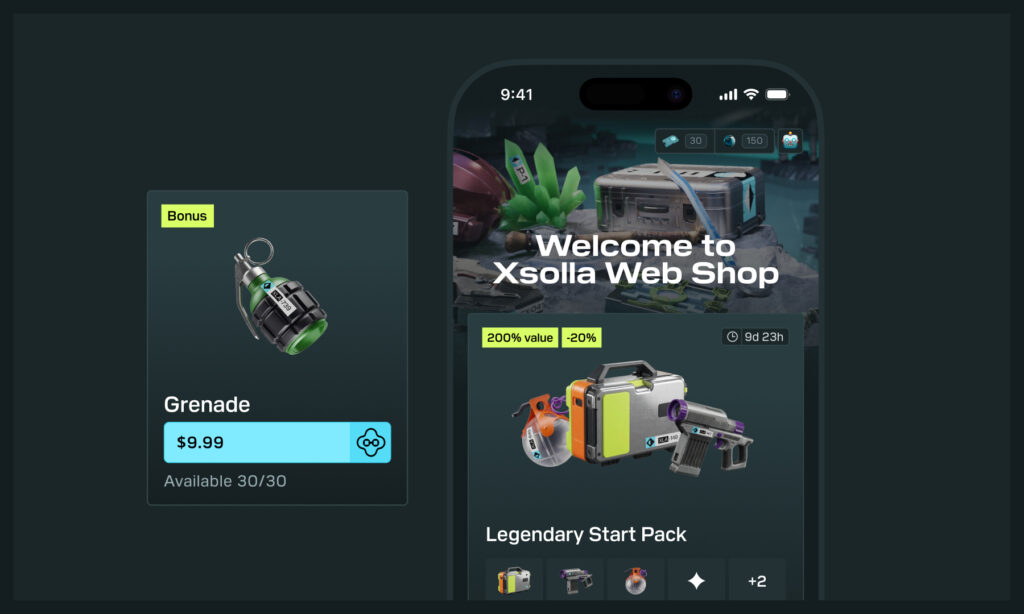
Start small, with existing players: Studios shouldn’t try to compete with platforms. Instead, D2C begins with a studio’s current audience, typically via a web shop offering a few targeted products or bundles.
Leverage proven infrastructure: The biggest early blocker isn’t strategy, it’s execution. Payments, tax, compliance, localization, and fraud can quickly become overwhelming. This is where Xsolla plays a key role, providing ready made global payments and web shop solutions so studios can launch quickly without building everything from scratch.
Focus on incentives and learning: Early D2C success comes from giving players a reason to convert and loyalty and rewards programs are central to that. Whether it’s exclusive content, better value, loyalty points, or tiered benefits, a structured reward system is what turns a one-time web shop visit into a recurring direct relationship.
Think beyond the storefront: Xsolla’s value isn’t just in transactions, it’s enabling the full D2C loop: storefronts, LiveOps support, and player engagement. That allows studios to move from a simple shop to a more mature, lifecycle-driven strategy over time.
In short, the realistic starting point is a focused experiment.
What’s the conversation you find yourself having most with studios who tried D2C, didn’t see results, and came back to figure out why?
Sam: The conversation usually starts with a hard truth: nothing was fundamentally wrong with D2C, the execution was incomplete.
Most studios that don’t see results treated D2C as a feature launch instead of a growth system. They stood up a web shop, often expecting it to immediately generate revenue alongside other alternative platforms, but didn’t build the surrounding engine needed to support it.
I often ask, “How are players getting to your D2C channel?” and the answer is usually vague. Unlike closed ecosystems, D2C doesn’t come with built-in discovery. Without CRM, in-game prompts, or LiveOps campaigns driving players to the webshop, even the best setup won’t convert.
So, the core conversation becomes a reset: they didn’t fail at D2C, they only implemented part of it. From there, it shifts into building the missing pieces – traffic, incentives, and ongoing operations – usually with better infrastructure and support in place.Once those elements come together, results tend to follow much more predictably.
What does the data say about mid-size and indie studios doing D2C — is the “it’s only for big publishers” assumption holding up?
Ola: A lot of the early narrative around D2C was that it was only economically viable for the largest publishers, the companies with massive LiveOps teams, sophisticated CRM infrastructure, and huge player bases. A few years ago, that was directionally true.
What’s changed is that the ecosystem around D2C has matured significantly. Payments infrastructure, tax handling, fraud prevention, localization, and LiveOps tooling are far more accessible today, which has lowered the operational barrier for mid-sized studios in particular.
So the data increasingly suggests that success in D2C is less about sheer company size and more about the quality of player engagement and IAP. A mid-sized studio with strong payer retention, a healthy live-service cadence, and a deeply engaged community can build a very effective D2C business, sometimes more effectively than a much larger publisher with weaker player affinity.
That said, scale still matters in one important way, execution capacity. D2C is not passive revenue. It requires ongoing CRM, segmentation, lifecycle marketing, experimentation, and LiveOps discipline. Studios that treat it as a strategic capability tend to outperform those that simply launch a web shop and expect players to migrate automatically.
So I’d say the “only for big publishers” assumption is increasingly outdated. The better question today is whether a studio has the engagement depth and operational readiness to sustain a direct relationship with its player.
When studios succeed at D2C, what shows up in the numbers that most people wouldn’t expect?
Ola: One of the biggest surprises is that the impact of D2C often extends well beyond the direct revenue flowing through the web store itself.
Most people naturally focus on the platform fee savings, but the more meaningful long-term effect is usually what happens to player behavior once studios establish a stronger first-party relationship. You often see increases in purchase frequency, higher average order values, and stronger retention among the most engaged cohorts because studios can create more personalized and flexible monetization experiences outside the constraints of the app stores.
Another underappreciated metric is payment performance. When studios introduce broader payment choice, localized pricing, regional payment methods, and alternative checkout flows, conversion rates in certain markets can improve materially. In some regions, the uplift from payment optimization alone can rival the benefit of reduced platform fees.
And then there’s the data advantage. D2C gives studios much richer first-party visibility into player behavior, which improves segmentation, CRM effectiveness, and LiveOps targeting. Over time, that can compound into better monetization efficiency across the entire ecosystem, including inside the app stores themselves.
So the companies that succeed with D2C usually realize that the real value is not just margin expansion. It’s greater commercial control, stronger player relationships, and a more intelligent operating model around monetization and engagement.
What metric do studios obsess over that actually isn’t the most important — and what should they watch instead?
Ola: A lot of studios initially over-index on the percentage of revenue shifting off-platform, essentially treating D2C success as “How much App Store revenue did we replace?”. While that is one lens, it doesn’t show you the full picture.
Additional meaningful metrics are around player quality and relationship depth. Things like repeat purchase behavior, retention of D2C-engaged cohorts, CRM engagement, lifetime value expansion, and overall monetization efficiency across channels.
In practice, the strongest D2C programs are usually not the ones with the highest off-platform penetration. They’re the ones where the most engaged players become even more engaged over time because the studio is delivering a better, more personalized commercial experience.
I’d also argue studios should pay much closer attention to operational metrics like payment acceptance rates, checkout conversion by region, and reactivation efficiency. Those are often the hidden drivers of revenue performance, especially internationally.
So the strategic mindset shift is moving from “How much revenue can we pull out of the stores?” to “How do we build a stronger long-term commercial relationship with our highest-value players?” That’s where the durable value tends to come from.
If a studio is on the fence about D2C — what’s the one thing you’d want them to walk away with?
Ola: I’d want them to walk away understanding that D2C is a player relationship strategy.
The studios that see the most success are not approaching it purely as a way to reduce platform fees. They’re using it to build a more direct, flexible, and data-rich relationship with their players over time.
That also means D2C doesn’t have to be an all-or-nothing decision. Studios sometimes assume they need to completely reorient their business around it from day one, when in reality the most effective approaches are usually incremental. Start with your most engaged cohorts, test value exchanges that genuinely resonate with players, and build operational maturity over time.
And importantly, not every game needs the same level of D2C investment. The strongest fit tends to be games with durable engagement, active LiveOps, and communities that already have high interaction outside the app itself.